

Daily Dose Of Jazz…
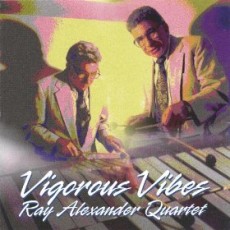
Ray Alexander was born on February 7, 1925 in Lynbrook, Long Island, New York. His mother was a concert pianist who began him on the instrument as a very young child. Asthma ended his ambitions to be a trumpeter but after hearing Gene Krupa his interest turned towards drums. He education also came from listening to Big Sid Catlett, Art Tatum, Dizzy Gillespie and Charlie Parker in the clubs.
Ray started his musical career as a drummer, playing with Claude Thornhill, Bobby Byrne, the Dorsey Brothers, Stan Getz, Joe Venuti, Mel Torme, Johnny Smith, Chubby Jackson, Stuff Smith and numerous others. Switching to the vibraphone he worked with George Shearing, Charlie Barnett, Bil Evans, Anita O’Day and Mel Lewis, as well as his own quartet.
In the early ’70’s he joined with Mousey Alexander and formed the Alexanders the Great quartet which was booked frequently at the new Half Note uptown, as well as gained notoriety and bookings through the city.
By 1983 Ray put out an album called “Cloud Patterns“, recorded live at Eddie Condon’s featuring Albert Daily on piano, Harvie Swartz on bass, Ray Mosca on drums and Pepper Adams on baritone saxophone. He would go on to work with Kenny Barron, Warren Vache Jr., Bob Kindred, Harvie Swartz, Oliver Jackson, Mac Chrupcala, John Anter and Marshall Wood, tour England and nearby European countries. Vibraphonist and drummer Ray Alexander passed away on June 9, 2002 in new Hyde Park, New York as a result of complications from elective surgery.

Give The Gift Of Knowledge
More Posts: drums,vibraphone
Daily Dose Of Jazz…
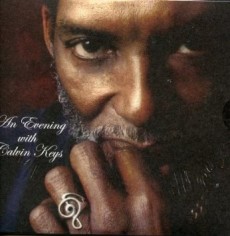
Calvin Keys was born on February 6, 1943 in Omaha, Nebraska. Getting caught teaching himself how to play on his uncle’s Gibson got him the gift of the instrument. By 16 he was playing pop and blues gigs professionally
In 1961 he teamed with organist Frank Edwards and after hearing Calvin play with Ahmad Jamal, Charles Earland invited him to play a special New York City performance.
By 1969 he was in Los Angeles, California gigging in the Persia Room with Red Holloway, co-led a band with Blue Mitchell and played the Doug/Jean Carn project Adam’s Apple. He went on to play with Oscar Brown Jr. at the Memory Lane club and began his association with Ray Charles.
In 1974 he began his musical relationship with Ahmad Jamal the lasted twenty years. He would go on to perform and record with Donald Byrd, Joe Henderson, Bobby Hutcherson, Eddie Marshall, Sonny Stitt, Pharoah Sanders, Leon Williams, Jimmy Witherspoon, Stanley Turrentine, George Coleman, Hadley Caliman, M.C. Hammer, Carmen McRae, Gloria Lynne, Woody Shaw, Jackie Ivory, Luther Vandross, Jackie Davis, Freddie Hubbard, Denise Perrier, James Van Buren, and many others.
As a leader and composer he has released a dozen albums for Black Jazz, Silverado, Wide Hive, Olive Branch, Life Force Jazz and Ovation Records, been a sideman on another nineteen and appears on three compilations. Guitarist Calvin Keys continues to compose, record and tour.
Put A Dose In Your Pocket
More Posts: guitar
Daily Dose Of jazz…
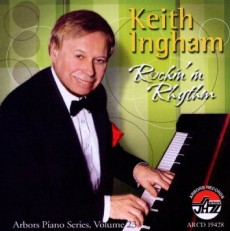
Keith Ingham was born February 5, 1942 in London, England. His first professional gigs occurred in 1964 playing with Sandy Brown, Bruce Turner, and Wally Fawkes throughout the decade.
Ingham played with Bob Wilber and Bud Freeman in 1974 and moved to New York City in 1978. During the 1980s he played with Benny Goodman, the World’s Greatest Jazz Band and Susannah McCorkle. He also worked with Maxine Sullivan, Marty Grsz, Harry Allen and Eddie Condon.
During the 1930s he record a series of albums for Jump Records, and in the 90s recorded a baker’s dozen sessions for Sackville, Stomp Off and Spotlight record labels. He continues to perform and record.
Jazz Is Global – Share
More Posts: piano
Daily Dose Of Jazz…
Manny Klein was born Emmanuel Klein on February 4, 1908. Not much is known about his youth and trumpet education but he began with Paul Whiteman in 1928. Active throughout the 1930s, he played with several major bands of the era including the Jimmy Dorsey, Tommy Dorsey and Benny Goodman.
By 1937 Klein had moved to California and worked with Frank Trumbauer’s orchestra and in early 1940 he appears on Artie Shaw And His Orchestra recordings. During this period he also did soundtracks and though received no credit, played trumpet for the film From Here To Eternity, and worked with musicians associated with West Coast cool jazz in the 1950s.
A versatile player who could play in almost any setting, including first trumpet in an orchestra, classical and pop, appearing on several Dean Martin recordings during the 1960s, and played piccolo trumpet on Hugh Montenegro’s hit version of the main theme to the film, The Good, the Bad and the Ugly.
Regarded as one of the most proficient players of his, or any generation, he possessed an uncanny ability to mimic the styles of many other prominent trumpeters, namely Bunny Berigan and Ziggy Elman. Trumpeter Manny Klein, most associated with swing, passed away at the age of 86 in Los Angeles, California on May 31, 1994.
Give A Gift Of Jazz – Share
More Posts: trumpet
Daily Dose Of Jazz…
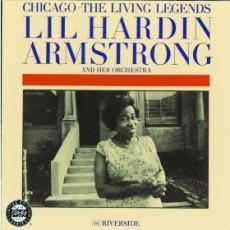
Lil Hardin Armstrong was born Lillian Hardin on February 3, 1898 in Memphis, Tennessee and grew up with her grandmother learning hymns, spirituals and classics on the piano, but she was drawn to pop music and later blues. Her initial piano instruction came from her third grade teacher, Miss Violet White, followed by enrollment in Mrs. Hook’s School of Music, but it was while attending Fisk University that she was taught a more acceptable approach to the instrument.
In 1918, Lil moved to Chicago and landed a job as a sheet music demonstrator at Jones Music Store for $3 a week. Shortly afterward bandleader Lawrence Duhé offered her $22.50 she joined him. From cabaret to the De Luxe Café to Dreamland playing behind Alberta Hunter and Ollie Powers. Replace by King Oliver’s Creole Jazz Band, he asked her to stay, which led to an engagement in San Francisco, back to Chicago playing eventually with Oliver again.
Hardin met Louis Armstrong when Oliver sent for him and subsequently were married in 1924. She took him shopping and taught him how to dress more fashionably, and finally convinced him to strike out on his own. Moving to New York City he joined Fletcher Henderson, while she stayed in Chicago with Oliver and then leading her own band.
Hardin, Armstrong, Kid Ory, Johnny St. Cyr and Johnny Dodds comprised the Hot Five recordings for Okeh Records. She would go on to record sessions with the same group as a leader for Vocalion, Columbia Records and New Orleans Wanderers. In the late 1920s Hardin and Louis parted ways and she formed a band with a cornet player she considered Louis equal, Freddie Keppard. In the 1930s, she sometimes billed herself as Mrs. Louis Armstrong, led an All Girl Orchestra, then a mixed-sex big band, which broadcasted nationally over the NBC radio network.
The same decade she recorded a series of sides for Decca Records as a swing vocalist, recorded with Red Allen, and back in Chicago collaborated with Joe Williams, Oscar Brown Jr., Red Saunders and Little Brother Montgomery. Throughout the rest of her career she continued to perform and record, and began writing an autobiography that she never completed. A month after attending Louis’ funeral in New York City, she was performing at a televised memorial concert for Louis, Lil Hardin Armstrong collapsed at the piano and died on the way to the hospital.
Pianist, composer, arranger, singer and bandleader Lil Hardin Armstrong, second wife and recording collaborator of Louis Armstrong in the 1920s, passed away on August 27, 1971. Her compositions have been sampled and revived by many and was inducted into the Memphis Music Hall of Fame in 2014.
Inspire A Young Mind