

Daily Dose Of Jazz…
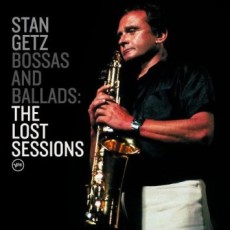
Stanley Getz was born on February 2, 1927 in Philadelphia, Pennsylvania but moved to New York City with his parents during The Depression. In school he was a straight A student finishing 6th grade close to the top of his class but his major interest was in musical instruments, and he felt a need to play every instrument in sight.
He played a number of them before his father bought him his first saxophone at the age of 13 and began practicing eight hours a day. Attending James Monroe High School, got accepted in the All City High School Orchestra of New York City, giving him a chance to receive private, free tutoring from the New York Philharmonic’s bassoonist, Simon Kovar.
By 1943 at age 16, he was accepted into Jack Teagarden’s band, becoming his ward because of his age. Getz also played along with Nat King Cole and Lionel Hampton, and after playing for Stan Kenton, Jimmy Dorsey, and Benny Goodman he became the Woody Herman’s soloist for two years in The Second Herd. Known as The Four Brothers alongside Serge Chaloff, Zoot Sims and Herbie Steward, he gained notoriety. Leaving Herman to strike out on his solo career, he led almost all of his recording sessions after 1950. However, it was during this period that having become involved with drugs and alcohol while a teenager, he was arrested in 1954 while attempting to rob a pharmacy to get a morphine fix.
Stan’s reputation was greatly enhanced by his featured status on Johnny Smith’s album Moonlight In Vermont and the single became a hit, staying on the charts for months. He went on to further popularity playing cool jazz with Horace Silver, Smith, Oscar Peterson and others. In his various bands were Roy Haynes, Al Haig, Tommy Potter, Dizzy Gillespie, Herb Ellis, Ray Brown and Max Roach.
In 1961 Getz became a central figure in introducing bossa nova to the American audience, teaming with guitarist Charlie Byrd who had just returned from Brazil. His album Jazz Samba with Charlie Byrd and Antonio Carlos Jobim became a hit, winning him a Grammy for Best Jazz Performance for Desifinado in 1963 that became his first million-copy seller. He would record Big Band Bossa Nova and Jazz Samba Encore! with Luiz Bonfa and get his second gold disc.
He recorded the album Getz/Gilberto with Jobim, Joao Gilberto and Astrud Gilberto winning two more Grammys for The Girl From Ipanema. What could have been a long partnership with his love affair with Astrud Gilberto, moving him away from bossa nova and back to cool jazz. By 1972, he recorded in the fusion idiom with Chick Corea, Tony Williams and Stanley Clarke.
In the mid-1980s he worked regularly in the San Francisco Bay area and taught at Stanford University as an artist-in-residence at the Stanford Jazz Workshop. In 1986, he was inducted into the Down Beat Jazz Hall of Fame. Tenor saxophonist Stan Getz died of liver cancer on June 6, 1991.

Dose A Day – Blues Away
More Posts: saxophone
Daily Dose Of Jazz…
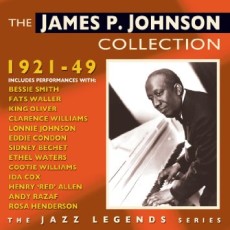
James P. Johnson was born James Price Johnson on February 1, 1894 in New Brunswick, New Jersey and was also known as Jimmy Johnson. A move to San Juan Hill, where Lincoln Center stands today, and subsequent move uptown by 1911, exposed him to the musical experience of New York City’s bars, cabarets and symphonies and listening to Scott Joplin attributed to his early influences. With perfect pitch and excellent recall he was soon able to pick out on the piano tunes that he had heard.
Johnson got his first job as a pianist in 1912, left school to pursue his career in music. From 1913 to 1916 Johnson spent time studying the European piano tradition with Bruto Giannini, spending the next four to five years studying other pianists and composing his own rags. In 1914, he met Willie “The Lion” Smith and became best friends. By 1920 he had gained a reputation as a pianist on the East coast on a par with Eubie Blake and Lucky Roberts, making dozens of piano roll recordings and recording for the Perfection, Artempo, Rythmodik, QRS and Aeolian labels.
James was a pioneer in the stride playing of the jazz piano. He developed into the favorite accompanist of Ethel Waters and Bessie Smith. He continued to compose and record during the 1920s and 1930s he recorded on W. C. Handy’s Black Swan label as well as Columbia. He branched out and became musical director for the revue Plantation Days, went to Europe with the show that toured for five years and made it to Broadway.
By the Depression Era his career slowed down somewhat and he found it difficult to adapt to the new swing era music gaining popularity. In the late 1930s Johnson slowly started to re-emerge with the revival of interest in traditional jazz, but suffering a stroke in 1940 took him out of the action until 1942 when he began to record, with his own and other groups with Eddie Condon, Yank Lawson, Sidney de Paris, Sidney Bechet, Rod Cless and Edmond Hall. He went on to record for jazz labels Asch, Black and White, Blue Note, Commodore, Circle and Decca, perform with Louis Armstrong and was a regular guest on the rudi Blesh This Is Jazz broadcasts.
He would teach Fats Waller his Carolina Shout composition, Duke Ellington learned it note for note from his piano roll and the tune became a right of passage for every contemporary pianist. Considered the last major rag pianist and the first major jazz pianist he became the bridge between the two styles. His influence led to the emergence of Art Tatum, Donald Lambert, Louis Mazetier, Pat Flowers, Cliff Jackson, Hank Duncan, Claude Hopkins, Count Basie, Ellington, Don Ewell, Jimmy Guarnieri, Dick Hyman, Dick Weststood, Ralph Sutton, Joe Turner, Neville Dickie, Mike Lipskin and Butch Thompson.
Pianist and composer James P. Johnson, who composed the Roaring Twenties theme song Charleston, along with If I Could be With You One Hour Tonight, and whose music has appeared in countless films, passed away on November 17, 1955 at age 61.
Take A Dose On The Road
More Posts: piano
Daily Dose Of Jazz…
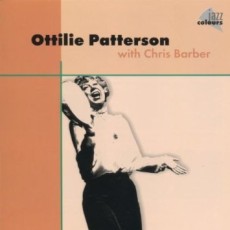
Ottilie Patterson was born Anna Ottilie Patterson on January 31, 1932 in Comber, County Down, Northern Ireland, the youngest of four children. With both sides of the family musical, she trained as a classical pianist from the age of eleven, but never received any formal training as a singer.
In 1949 Ottilie went to study art at Belfast College of Technology where a fellow student introduced her to the music of Bessie Smith, Jelly Roll Morton and Meade Lux Lewis. By 1951 she began singing with Jimmy Compton’s Jazz Band, and in 1952 she formed the Muskrat Ramblers with Al Watt and Derek Martin.
The summer of 1954, while on holiday in London, Ottilie met Beryl Bryden who introduced her to the Chris Barber Jazz Band. She joined the Barber band full-time in December of that year and her first public appearance was at the Royal Festival Hall the following January. Between 1955 and 1962 she extensively toured with Barber and issued many recordings both as a leader and vocalist with Barber, and whom she would marry and divorce 24 years later.
From approximately 1963 she began to suffer throat problems and ceased to appear and record regularly with her husband until officially retiring from the band in 1973. During this period she recorded some non-jazz/blues material and in 1969 issued a now sought after collectible solo LP, 3000 Years With Ottilie.
During her recording period she released nineteen singles, five EPs, four solo LPs, twenty albums with Barber, and performed on twenty-five other CD projects. Traditional jazz and blues singer Ottilie Patterson passed away June 20, 2011.
Give The Gift Of Knowledge
More Posts: vocal
Daily Dose Of Jazz…
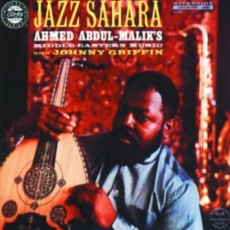
Ahmed Abdul-Malik was born Jonathan Tim, Jr. on January 30, 1927 in Brooklyn, New York. Taking violin lessons from his father, by age seven he was attending the Vardi School of Music and Art to continue his violin training. Over time he took up the piano, cello, bass, and tuba. He continued studying with local bassist Franklin Skeete before joining the High School of Music & Art in Harlem, where his skills on violin and viola earned him a spot in the All-City Orchestra.
In the mid-1970s, Abdul-Malik was a substitute teacher at Junior High School 281, in Bensonhurst neighborhood of Brooklyn as well as the strings instructor at Junior High School 117 in the Brooklyn neighborhood of Bedford-Stuyvesant under the supervision of Andrew Liotta. While seeking a teaching certification, in addition to study under Liotta in orchestration and composition, Abdul-Malik also taught Sudanese in the junior high school language department. In the late 1970s he taught individual students private instruction in jazz improvisation at New York University.
Abdul-Malik is noted for integrating Middle Eastern and North African music styles in his jazz music. He recorded six albums as a leader with Johnny Griffin, Lee Morgan, Curtis Fuller, James Richardson and Benny Golson. He also held down the sideman duties as the bassist performing and recording nineteen albums with Art Blakey, Randy Weston, Thelonious Monk, Earl Hines, John Coltrane, Walt Dickerson, Jutta Hipp, Odetta, Herbie Mann and Dave Pike among others.
As an oud player he was engaged as a musical ambassador by the United States Department of State to tour South America, and he also performed at an African jazz festival in Morocco. On October 2, 1993 double bassist and oud player Ahmed Abdul-Malik passed away at the age of 66.
Put A Dose In Your Pocket
Daily Dose Of Jazz…
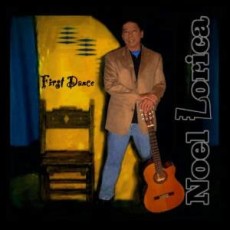
Noel Lorica was born on January 29, 1968 in Manila, Philippines and played in a rock band as a teenager. His mother urged him to take piano lessons but his love was always the acoustic guitar. Musically at that time he got exposed to the music of George Benson, Wes Montgomery, Paul Desmond, and the modern jazz instrumentalists. Leaving home he first migrated to San Francisco then went east and worked in New York and around Philadelphia.
He later moved to South Florida where he found Latin Beats and jazz influences were all around. Finding his perfect musical fit he started to concentrate on perfecting his craft through tireless practice and soulful dedication. His music today is an expression of his musical and personal journey.
Noel has received critical acclaim for his skill & artistry, has had two PBS specials, and with his band Treebo has played major festivals around the world. He has opened for Marcus Miller, has won Jazz Song of the Year and Best Jazz Instrumental solo, Best Instrumental Arrangement, and has been featured in Billboard and Italian Jazz magazines.The guitarist has released four albums and currently continues to perform jazz and Latin music.
Jazz Is Global – Share
More Posts: guitar