

Daily Dose Of Jazz…
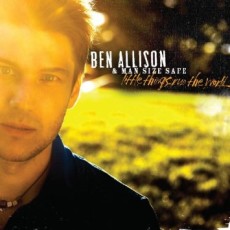
Ben Allison was born November 17, 1966 in New Haven, Connecticut and began guitar lessons at age nine at the Neighborhood Music School and privately with guitarist George Raccio. In the mid-Eighties he studied West African, Haitian and Cuban drumming traditions with Richard Hill and attended the ACES Educational Center for the Arts and Wilbur Cross High School. His senior high school year saw him studying with bassist Steve Swallow and too classes in 20th Century Music and Early Childhood Development at Yale University. In 1985 he attended New York University as a University scholar and pursued a degree in jazz performance and bass studies. During this period he studied with Joe Lovano, Dennis Irwin, Jim McNeely and Steve LaSpina.
By 1992, Allison and several colleagues formed the Jazz Composers Collective, a musician-run, non-profit organization dedicated to fostering the creation and performance of new music and building audiences for jazz. The Collective ran for 12 seasons, featured works of 50 composers, participation of more than 250 musicians and premiered more than 300 new works.
1996 saw the release of Ben’s debut album Seven Arrows as a leader, followed two years later with Medicine Wheel, Third Eye in 1999 and the rest is history as he has accumulated 11 albums under his name. Recording with the Collective members Frank Kimbrough, Ron Horton, Michael Blake, and Ted Nash, he would also record another dozen as co-leader or sideman with Lee Konitz, Jeremy Pelt, Larry Goldings, Mamadou Diabate, Curtis Stigers and Steve Bernstein.
As an educator, Allison began working as an adjunct professor and bass instructor at the New School University in 1996, has taught instrumental lessons and ensembles at the Third Street Music School, was a guest instructor at the Siena Jazz Foundation in Italy, the Souza Lima Ensino de Musica in Sao Paulo, Brazil and is a member of the Teaching Artists Collaborative at the Weill Music Center at Carnegie Hall, teaching music fundamentals to Harlem public school children..
Bassist, composer, bandleader, educator and activist Ben Allison is a three time Down Beat Critics Poll Rising Star, received the Bird Award, and serves on the board of the New York chapter of NARAS as VP and chairs Advocacy while continuing to perform and tour.

Give The Gift Of Knowledge
More Posts: bass
Daily Dose Of Jazz…
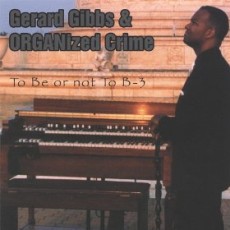
Gerard Gibbs was born on November 16, 1967 in Detroit, Michigan and his father introduced him to jazz organist Richard “Groove” Holmes at the age of three. At seven he met Holmes who then became his idol. Though he began his training at age nine in classical piano, his love for jazz never faded.
By 1981, while home recuperating from corrective leg surgery, Holmes surprised the young musician, took an immediate interest and began mentoring him and showing him the tricks of the trade. For the next decade until Holmes’ death, their relationship would grow only stronger. But Holmes was only Gerard’s first encounter with great organists and he would go on to be mentored by Jimmy Smith, rub shoulders with Joey DeFrancesco and Jimmy McGriff and jam with the Mighty Burner himself, Charles Earland. These experiences added to his development and arsenal of techniques.
Gibbs currently performs on the concert circuit with Marion Meadows, Ronnie Laws, James Carter, and lends his talents to Pieces Of A Dream. When not leading two jazz bands playing jazz at night and on weekends, he is busy as an Architectural Engineer for the City of Detroit. He plays keyboards in his contemporary jazz group RYX and organ with Gerard Gibbs and ORGANized Crime.
Put A Dose In Your Pocket
More Posts: organ
Daily Dose Of Jazz…
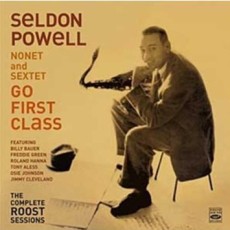
Seldon Powell was born on November 15, 1928 in Lawrenceville, Virginia. A classically trained saxophonist and flautist who studied at Juilliard in New York City, he went on to work briefly with Tab Smith in 1949 before joining and recording with Lucky Millinder the following year. For the next two years he would spend in the military and upon discharge became a studio musician.
A solid musician with the ability to move between genres from big band to hard bop to soul jazz and R&B, over a forty year career he would record four albums as a leader between 1956 and 1973 and another 60 album sessions as a sideman with Clark Terry, Johnny Hammond Smith, Buddy Rich, Louis Bellson, Neal Hefti, Billy Ver Planck, Sy Oliver,, Erskine Hawkins, Ahmed Abdul-Malik, Richard “Groove” Holmes, Gato Barbieri, Dizzy Gillespie, Gerry Mulligan,Benny Goodman, Woody Herman, roland Hana, Osie Johnson, Freddie Green, Gus Johnson, Sonny Stitt, Friedrich Gulda, Art Farmer, Cal Tjader, Billy Taylor, Ernie Wilkins, Panama Francis, Teri Thornton, Jimmy Forrest, Charlie Byrd, Oliver Nelson and the list goes on.
He recorded for Epic, Roost, Savoy, RCA, United Artists, Lion, Riverside, EmArcy, Golden Crest, Candid, ABC, New Jazz, Impulse, Solid State, Verve, 20th Century, Atlantic, and Sesac record labels. Tenor saxophonist and flautist who concentrated in the swing, progressive and soul jazz, big band and rhythm & blues genres passed away on January 25, 1997 in Hempstead, New York.
Jazz Is Global – Share
Daily Dose Of Jazz…
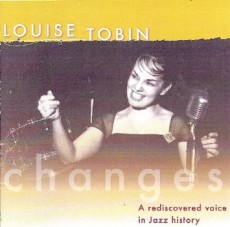
Born Mary Louise Tobin on November 14, 1918 in Aubrey, Texas and at age fourteen in 1932 she won a CBS Radio Talent Contest. Following a tour with society dance orchestras in Texas, she joined Art Hicks and his Orchestra in 1934. At that time, Harry James was playing first trumpet in the band and a year later she and James were married.
Tobin brought Frank Sinatra to James’ attention in 1939 after hearing him sing on the radio. James subsequently signed Sinatra to a one-year contract at $75 a week. While she was singing with trumpeter Bobby Hackett at Nick’s in the Village, jazz critic and producer John Hammond heard her and brought Benny Goodman to a performance and soon joined the Goodman band.
Louise went on to record There’ll Be Some Changes Made, Scatterbrain, Comes Love, Love Never Went To College, What’s New? and Blue Orchids. Johnny Mercer wrote Louise Tobin Blues for her while she was with Goodman and was arranged by Fletcher Henderson. In 1940 Tobin recorded Deed I Do and Don’t Let It Get You Down with Will Bradley and His Orchestra.
By 1945 Tobin was recording with Tommy Jones and His Orchestra, Emil Coleman and His Orchestra and through the decade performed and recorded with Skippy Anderson’s Band at the Melodee Club in Los Angeles, and with Ziggy Elman and His Orchestra.
Taking a long hiatus to raise her children, Louise came back in 1962 at the Newport Jazz Festival, met second husband Peanuts Hucko, acquired a regular gig at Blues Alley on Washington, DC and moved to Denver, Colorado and opened the Navarre Club as co-owners. They would go on to lead and sing with the Glenn Miller Orchestra, touring worldwide with Louise singing and recording various numbers with the band.
In 2008 Tobin donated her extensive collection of original musical arrangements, press clippings, programs, recordings, playbills and photographs to create the Tobin-Hucko Jazz Collection at Texas A&M University-Commerce.
Give A Gift Of Jazz – Share
More Posts: vocal
Daily Dose Of Jazz…
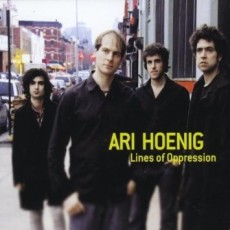
Ari Hoenig was born November 13, 1973 in Philadelphia, Pennsylvania to a vocalist father and violinist mother. He was exposed to classical and other music at an early age, playing piano and violin. He went on to explore rock and metal drums as a teenager before settling into jazz.
Hoenig attended Pennsylvania Governor’s School of the Arts in summer of 1990, followed by attending the University of North Texas College of Music for three years and was a member of the highly regarded One O’Clock Lab Band.
Relocating to New York he began playing with Shirley Scott and went on to record with Mike Stern, Kenny Werner, Richard Bona, Dave Liebman, Chris Potter, Joshua Redman, Tigran Hamasyan, Ethan Iverson, Mark Turner, Fred Hersch, Snarky Puppy, Kurt Rosenwinkel, Pat Martino, Wynton Marsalis, Pat Metheny and many others.
Ari has performed at the Dominican Republic Jazz Festival alongside Gonzalo Rubalcaba and Chucho Valdes, and has appeared with his Punk Bop Band with Jonathan Kreisberg and Gilad Hekselman. Drummer, composer and educator Ari Hoenig continues to record, perform and tour.
Inspire A Young Mind
More Posts: drums