


Daily Dose Of Jazz…
William John Evans was born August 16, 1929 in Plainfield, New Jersey and grew up in a turbulent household of abuse. While staying with his aunt family somewhere between age 3 and five he soon began to play what he had heard during his brother’s class and soon he would also receiving piano lessons. At age 7, Bill began violin lessons and also flute and piccolo but eventually dropped those instruments, though it is believed they later influenced his keyboard style.
From age 6 to 13 Evans would only play classical music scores of Mozart, Beethoven and Schubert. During high school he was exposed to Stravinsky and Milhaud but also the jazz of Tommy Dorsey and Harry James. At 13 he stood in for a sick pianist in Buddy Valentino’s rehearsal band where he got his first deviation from the written music, in an arrangement of Tuxedo Junction, leading him to listen to Earl Hines, Coleman Hawkins, Bud Powell, George Shearing, Stan Getz and Nat King Cole among others.
Bill was soon playing dances and weddings throughout New Jersey and then formed his own trio, met Don Elliott, and bassist George Platt who taught him the harmonic principles of music. He would go on to study at Southeastern Louisiana University and in 1955 he moved to New York City where he worked with bandleader and theorist George Russell. In 1958, he joined the Miles Davis Sextet, where he was to have a profound influence. In 1959, the band, then immersed in modal jazz recorded Kind of Blue, the best-selling jazz album of all time.
In late 1959, Evans left the Miles Davis band and began his career as a leader with Scott LaFaro and Paul Motian, a group now regarded as a seminal modern jazz trio. In 1961, ten days after recording the highly acclaimed Sunday at the Village Vanguard and Waltz for Debby, LaFaro died in a car accident. After months of seclusion he re-emerged with bassist Chuck Israel. In 1963, Evans recorded his first innovative solo project Conversations with Myself, and in ’66 met bassist Eddie Gomez who he would work with for eleven years.
He would work with Don Elliott, Tony Scott, Mundell Lowe, Jerry Wald, Lucy Reed, George Russell, Dick Garcia, Art Farmer, Barry Galbraith, Milt Hinton, Joe Puma, Charles Mingus, Oliver Nelson, Eddie Costa, John Coltrane, Cannonball Adderley, Paul Chambers, Philly Joe Jones, Sam Jones, Marc Johnson, Tony Bennett, Marty Morell, Joe LaBarbera and the list goes on.
Despite his success as a jazz artist, Bill suffered personal loss and struggled with drug abuse. Both his girlfriend Elaine and his brother Harry committed suicide, and he was a long time user of heroin and later cocaine. As a result, his financial stability, personal relationships and musical creativity all steadily declined during his later years.
On September 15, 1980 pianist, compose and arranger Bill Evans who played in the modal, third stream cool and post-bop genres, passed away at age 51in New York City from complications due to peptic ulcer, cirrhosis, bronchial pneumonia and untreated hepatitis. His recordings for Riverside, Fantasy and Verve record labels left a seminal collection for the avid and casual listener, he was inducted in the Down Beat Jazz Hall of Fame, was nominated for 31 Grammys, winning seven awards, and was posthumously awarded the Grammy Lifetime Achievement Award.

Give The Gift Of Knowledge
More Posts: piano
Daily Dose Of Jazz…
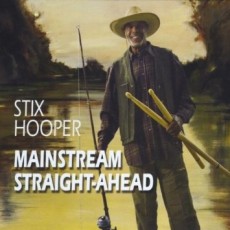
Stix Hooper was born Nesbert Hooper on August 15, 1938 in Houston, Texas. He developed an interest in music, drums and percussion at a very early age and starting in junior high, under the direction of George Magruder, the school’s band director, he began devoting much of his time to the study of all aspects of music including composition and song writing.
Studying at Phyllis Wheatley High School, spearheaded by band director, Sammy Harris, Stix eventually formed a band called the Swingsters, later on the Modern Jazz Sextet. While matriculating at Texas Southern University he received continual coaching from members of the Houston Symphony Orchestra and other local professional musicians.
A move to the West Coast, he studied music at California State University, Los Angeles and also received coaching from well-known private instructors and his personal mentors. During this time the Jazz Crusaders were formed eventually becoming the Crusaders, a world-renowned entity.
Hooper has performed, collaborated, composed with and produced for a wide range of music greats, including Arthur Fielder, George Shearing, the Royal Philharmonic Orchestra of London, B.B. King, Grant Green, Grover Washington, Jr., Quincy Jones, Marvin Gaye, Nancy Wilson, The Rolling Stones and numerous others.
He is credited with creating an original style of drumming called “Jazz Funk” that has been incorporated in jazz as well as other musical genres. In addition, Stix Hooper has contributed through his work with the National Academy of Recording Arts and Sciences serving as the National Vice Chairman and the first African American to do so, having previously served three terms as President of the Los Angeles Chapter of NARAS, the first ever three term President, and only the second African American President of that chapter.
Among the numerous acknowledgements and accolades he has garnered are 12 Grammy nominations, No. 1 awards from various music media, named one of the top drummers/musicians by Down Beat, Playboy and other publications, and has received an invitation to the White House, keys to major US cities and several international honors. Soul jazz, jazz funk and mainstream drummer Stix Hooper continues to compose, perform, record and tour.
Put A Dose In Your Pocket
More Posts: drums

Daily Dose Of Jazz…
Ben Hirsh Sidran was born in Chicago, Illinois on August 14, 1943 and raised in Racine, Wisconsin. Attending the University fo Wisconsin he became a member of The Ardells along with Steve Miller and Boz Scaggs. When Miller and Scaggs left Wisconsin for the West Coast and stardom, he stayed behind to earn a degree in English literature. After graduating in 1966, he enrolled in the University of Sussex, England to pursue a PhD degree in American Studies.
Sidran rejoined Miller in an English recording studio the next year, playing on the album Children of the Future and while in England, he was a session musician for Eric Clapton, The Rolling Stones, Peter Frampton and Charlie Watts. When Scaggs and Jim Peterman departedfrom Miller’s band in 1969, he joined as a full-time keyboardist. After a brief stint in Los Angeles, where he began his career as a recording artist, he returned to Madison in 1971 and has kept the university town as a home-base ever since, playing often with such Madison-based talents as drummer Clyde Stubblefield and his keyboardist-composer son, Leo.
Over the years, while continuing to travel, perform and produce, he taught the business of music courses at the University and, beginning in 1981, hosted a variety of jazz programs for NPR, including the Peabody Award Winning “Jazz Alive” series and for VH1 television where his “New Visions” series in the early 1990s won the Ace Award.
As a musician and a producer Ben has released thirty-four solo recordings and collaborated with jazz and pop artists that include Mose Allison, Van Morrison, Diana Ross and Rickie Lee Jones. His written works include the book “Black Talk,” (on the sociology of black music in America), the memoir “A Life in the Music,” “Talking Jazz,” a collection of his historic interviews with jazz musicians.
He authored “There Was a Fire: Jews, Music and the American Dream,” a cultural history of the Jewish contribution to American popular music during the 20th century and a finalist for the 2012 National Jewish Book Award. He has recorded 33 albums for Capitol, Blue Thumb, Arista, Bluebird/RCA, Horizon, Polystar, Island, Go Jazz, Nardis and Bonsai record labels. Pianist, organist, vocalist, writer and educator Ben Sidran continues to expand his legacy or performance and education.
Jazz Is Global – Share
More Posts: piano

Daly Dose Of Jazz…
Mulgrew Miller was born August 13, 1955 in Greenwood, Mississippi. Growing up in a home with a piano he played tunes on the piano from the age of six, playing by ear. He had piano lessons from the age of eight and during his childhood he played blues and R&B for dances, and gospel music in a church. His principal influence on piano at this stage of his life was Ramsey Lewis.
While in high school, Miller formed a trio that played at cocktail parties and around the age of fourteen after hearing Oscar Peterson on the Joey Bishop Show he decided to become a jazz pianist. After graduating from Greenwood High School, he attended Memphis State in 1973 on a band scholarship. He played euphonium and met pianists Donald Brown and James Williams who introduced him to the music of well-known players such as Wynton Kelly, Bud Powell, and McCoy Tyner.
He would go on to study with Madame Margaret Chaloff but left her tutelage to play with Ricky Ford and Bill Pierce. By 1976 he was the substitute for the regular pianist in the Duke Ellington Orchestra but left in in 1980 after being recruited by vocalist Betty Carter, then joined Woody Shaw’s band from 1981 to 1983, with whom he made his 1981 he made his studio recording debut, on Shaw’s United. During the early 1980s he also accompanied vocalist Carmen Lundy and played and recorded with saxophonist Johnny Griffin.
Mulgrew joined Art Blakey’s Jazz Messengers in 1983 under the recommendation of Terence Blanchard and Donald Harrison. Although struggling to fit in with the dominating rhythm section his playing matured during his tenure. His recording career as a leader began in 1985, with Keys to the City, the first of Miller’s several Landmark Records recordings. He left Blakey to become Tony Williams’ pianist in 1986 and remained busy forming his own bands Wingspan and later Trio Transition with Reggie Workman and Freddie Waits
He would go on to work with Wallace Roney, Frank Morgan, Benny Golson, Steve Nelson and Donald Byrd, and toured internationally and domestically with the New York Jazz Giants with Jon Faddis, Tom Harrell, Lew Tabackin, Bobby Watson, Ray Drummond and Carl Allen. He continued to accompany and record with vocalists including Dianne Reeves and Cassandra Wilson, and played and recorded with saxophonist Joe Lovano.
For several years after he had turned 40, Miller concentrated on composing and playing his own music. In 1997 he toured Japan with 100 Golden Fingers, a troupe of 10 pianists, then joined bassist Niels-Henning Orsted Pederson in 1999 to record duets based on 1940s performances by Duke Ellington and Jimmy Blanton. He signed with Maxjazz producing albums as a leader with Derrick Hodge, Rodney Green, Karriem Riggins, as well as trio projects and touring with bassist Ron Carter and guitarist Russell Malone, and as sideman with John Scofield, Kluvers Big Band, Yusef Lateef and Archie Shepp.
As an educator Mulgrew became heavily involved in music education as the Director of Jazz Studies at William Patterson University from 2005, and was the Artist in Residence at Lafayette College, from which he was awarded an honorary doctorate in Performing Arts. Pianist Mulgrew Miller’s list of accomplishments continued with his recording as a leader, working with his own trio and quintet until his passing on May 29, 2013 in Allentown, Pennsylvania from a stroke at the age of 57.
Give A Gift Of Jazz – Share
More Posts: piano

Daily Dose Of Jazz…
Thurman Green was born on August 12, 1940 in Texas where he learned to play the trombone. He spent time playing in Los Angeles, California with swinging big bands including the Clayton-Hamilton Jazz Orchestra and was an occasional member of the Horace Tapscott Quintet, unfortunately one of the groups no one bothered to record. He was open-eared enough to play quite credibly in free settings now and then.
In 1962, Green and baritone saxophonist Hamiet Bluiett were jamming buddies at the Navy School of Music in Washington D.C. but they soon went their separate ways hoping to team up again some day. He wpould perform and record with Willie Bobo, Donald Byrd, Ella Fitzgerald, Bobby Hutcherson and Jean-Luc Ponty.
Some thirty-two years later, in 1994, Bluiett who had been recording for the Mapleshade label was able to give his old friend his first opportunity to lead his own record date, Dance of the Night Creatures. It is a shame that it took over four years for the music to finally come out because on June 19, 1997, bebop trombonist Thurman Green suddenly died at age 57.
Inspire A Young Mind
More Posts: trombone