

Daily Dose Of Jazz…
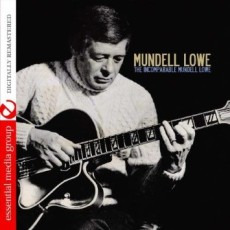
Mundell Lowe was born April 21, 1922 in Laurel, Mississippi and in the Thirties he played country music and Dixieland jazz. He later played with big bands and orchestras, and on television, and in the 1960s he composed music for films and television in New York City Los Angeles.
Mundell has performed and/or recorded with with a Who’s Who list not limited to Billie Holiday, Bobby Darin, Lester Young, Charlie Parker, Bill Evans, Helen Humes, Charles Mingus, Stan Getz, Doc Severinsen, Kai Winding and Sarah Vaughan. He also worked with Carmen McRae, Benny Carter, Herb Ellis, Tal Farlow, Barry Manilow, Andre Previn, Ray Brown, Kiri Te Kanawa, Tete Montoliu, Harry Belfonte and numerous others.
During the late 1970s and early 1980s Lowe was also a well-respected teacher at Dick Grove Music Workshop, later the Grove School of Music, in Studio City, California, teaching guitar as well as film scoring.
Lowe was responsible for introducing the pianist Bill Evans to producer Orrin Keepnews resulting in Evan’s first recordings as a leader. He is a regular featured performer at the annual W.C. Handy Music Festival and a member of the W.C. Handy Jazz All-Stars. He was inducted into the Mississippi Music Hall of Fame, was conferred an honorary Doctorate of Arts from Millsap College and proclaimed Mundell Lowe Day as July 18 by his home town of Laurel. The guitarist continues to teach, perform and record.

Inspire A Young Mind
More Posts: guitar
Daily Dose Of Jazz…
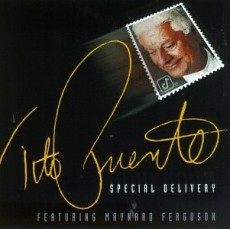
Tito Puente was born Ernesto Antonio Puente on April 20, 1923 at Harlem Hospital in New York City and spent the majority of his childhood in Spanish Harlem. As a child his mother sent him to 25-cent piano lessons and by the age of 10, he switched to percussion, drawing influence from jazz drummer Gene Krupa. He later created a song-and-dance duo with his sister Anna in the 1930s, intending to become a dancer, but an ankle tendon injury prevented him pursuing dance as a career. When the drummer in Machito’s band was drafted to the army, Puente subsequently took his place.
After serving three years in the Navy during WW II, Tito used the GI Bill to study music at Juilliard School of Music, taking conducting, orchestration and theory. During the 1950s, Puente was at the height of his popularity, and helped to bring Afro-Cuban and Caribbean sounds, like mambo, son, and cha-cha-cha to mainstream audiences. He moved into more diverse sounds, including pop music, bossa nova and others, eventually settling down with a fusion of Afro-Cuban and Latin jazz genres that became known as “salsa” (a term that he disliked).
Tito has received the key to the City of New York, the James Smithson Bicentennial Medal from the Smithsonian and been inducted into the National Congressional Record. He has won five Grammy Awards, and won a Grammy at the first Latin Grammy Awards for Best Traditional Tropical Album for Mambo Birdland. He was posthumously awarded the Grammy Lifetime Achievement Award in 2003 and has his timbales on display at theSmithsonian.
He has had a post office in Spanish Harlem named after him, an amphitheater in San Juan Puerto Rico, performed at the closing ceremonies for the 1996 Olympics, appeared as himself on the Simpsons episode “Who Shot Mr. Burns?”, and has a star on the Hollywood Walk of Fame,
In early 2000, he shot the music documentary Calle 54. After a show in Puerto Rico, percussionist, timbale player and bandleader Tito Puente suffered a massive heart attack and was flown to New York City for surgery to repair a heart valve but complications developed and he died during the night of May 31 – June 1, 2000.
Put A Dose In Your Pocket
More Posts: timbales
Daily Dose Of Jazz…
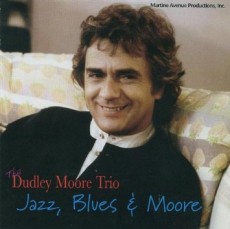
Dudley Stuart John Moore was born on April 19, 1935 in London, England. Notably short in stature and born with clubfeet he was the butt of children’s jokes. He became a choirboy at the age of six and by eleven he earned a scholarship to the Guildhall School of Music where he took up harpsichord, organ, violin, musical theory and composition. He rapidly developed into a highly talented pianist and organist and was playing the pipe organ at local church weddings by the age of 14. He attended Dagenham County High School where he received musical tuition from a dedicated teacher, Peter Cork, who would also become a lifelong friend and confidant.
Moore’s musical talent won him an organ scholarship to Magdalen College, Oxford and it was during his university years that he developed a love of jazz. He soon became an accomplished pianist and composer and began working with John Dankworth and Cleo Laine. During the 1960s he formed the Dudley Moore Trio, with drummer Chris Karan and bassist Pete McGurk. Moore’s admitted principal musical influences were Oscar Peterson and Erroll Garner. Mastering the latter’s cadence he recorded songs like Baubles, Bangles and Beads, My Blue Heaven, Indiana and Autumn Leaves among others. The trio performed regularly on British television, made numerous recordings and had a long-running residency at Peter Cook’s London nightclub, The Establishment.
Dudley became an American household name in his role as Arthur but as his star waned he opted to concentrate on the piano, continuing to work as a composer and pianist, writing scores for a number of films and giving piano concerts. Moore co-owned the fashionable restaurant 72 Market Street OysterBar & Grill in Venice, California and played the piano whenever he was there.
In June 2001, he was appointed a Commander of the Order of the British Empire (CBE). Pianist, composer, actor and comedian Dudley Moore passed away on March 27, 2002 as a result of pneumonia, secondary to immobility caused by progressive supranuclear palsy in Plainfield, New Jersey.
Take A Dose On The Road
More Posts: piano
Daily Dose Of Jazz…
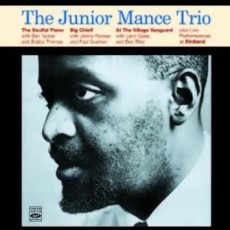
James Edward Rowser was born on April 18, 1926 in Philadelphia, Pennsylvania. As a professional jazz bassist he played with Philly Joe Jones from 1954, with Dinah Washington in 1956-57 and from 1957 to 1959 with Maynard Ferguson, as well as Red Garland.
By 1963 he was touring Mexico with Benny Goodman and followed with a stint in 1964 accompanying Friedrich Guida in South America. He would go onto play out the decade with Al Cohn, Zoot Sims and Les McCann, with whom he recorded frequently.
The consummate sideman, bassist Jimmy Rowser can list 97 recording sessions to his name. He has played or recorded with Ray Bryant, Yusef Lateef, Junior Mance, Hank Mobley, Lee Morgan, Illinois Jacquet, Hilton ruiz, Eddie Harris, Cannonball Adderley, Herb Ellis, Sonny Criss, Ben Riley and Albert “Tootie” Heath.
Dose A Day – Blues Away
More Posts: bass
Daily Dose Of Jazz…
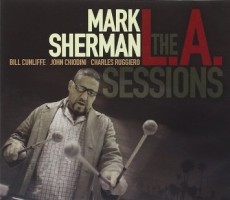
Mark Sherman was born April 17, 1957 in Manhattan, New York City to a Juillliard trained soprano mother who performed with the Cleveland and Boston symphonies, so it was natural that he studied classical piano as a child.
Sherman graduated from The High School of Music and in 1975, then went on to study classical percussion at Juilliard. He performed in ensembles under the direction of Leonard Bernstein, Sir George Solti, Zubin Mehta and Herbert Von Karajan. While there he would jam regularly with Wynton Marsalis. During the course of his career, Sherman also studied with Elvin Jones, Rohland Kohloff, Justin Diccocco, Roland Hanna and Jackie Byard among others.
While still in his teens, Mark played drums in a trio with pianist Kenny Kirkland who he introduced to Wynton. At 21, he began working on Broadway and in New York’s active studio scene, playing percussion, piano, drums and vibraphone. In 1980 he released his first album Fulcrum Point on Unisphere records. The decade saw him in studio working on commercial jingles.
Sherman spent a lot of his time in the studio in the 1980s, working on commercial jingles. Pianist Mike Renzi took him under his wing, connecting him with Peggy Lee and other singers performing with Lee, Tony Bennett, Mel Torme, Lena Horne and Ruth Brown. In 1986 he signed with Columbia Records and released his major label debut, A New Balance.
He continued to perform with Peggy Lee in the early 1990s, began a seven-year playing relationship with Larry Coryell, became an active studio musician, and played on numerous films and Broadway soundtracks. Reemerging as a leader playing vibraphone, he also continued his active career as a sideman, recording with Capathia Jenkins, Jennifer Holiday, Ann Hampton Callaway, Liz Minnelli and others.
Sherman continued to release his own albums on Miles High Records, won the Rising Star (Vibes) category in the Down Beat Critics Poll in 2007, 2008, 2009 and 2010 and has been a Jazz Ambassador for the U.S. State Department and Jazz at Lincoln Center.
Vibraphonist, pianist and drummer Mark Sherman is currently on the faculty of Juilliard jazz program, New Jersey City University and the New York Jazz Workshop.
Inspire A Young Mind
More Posts: drums,piano,vibraphone