

Daily Dose Of Jazz…
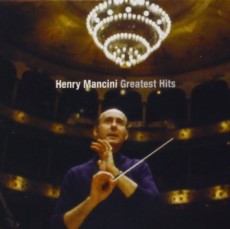
Henry Mancini was born Enrico Nicola Mancini on April 16, 1924 in the Little Italy neighborhood of Cleveland, Ohio and was raised in the steel town of West Aliquippa near Pittsburgh, Pennsylvania. He began piccolo lessons at age eight, by 12 began piano lessons and played flute in the Aliquippa Italian immigrant band, “Sons of Italy”. After graduating from high school he went to Juilliard School of Music and after one year of study was drafted into the Army, where in 1945 was part of the liberation force of a southern Germany concentration camp.
After the war years Mancini entered the music industry as a pianist and arranger for the newly re-formed Glenn Miller Orchestra. He went on to broaden his skills in composition, counterpoint, harmony and orchestration during subsequent studies. By 1952 he joined the Universal Pictures music department and over the next six years contributed music to over 100 movies, most notably The Glenn Miller Story, The Benny Goodman Story, Touch of Evil and The Creature from the Black Lagoon. It was also during this period that he wrote his first hit single for Guy Lombardo and His Royal Canadians titled I Won’t Let You Out of My Heart.
Henry left Universal International to work as an independent composer and arranger in 1958 and soon scored the television series Peter for writer and producer Blake Edwards. This was the genesis of a relationship in which Edwards and Mancini collaborated on 30 films over 35 years and was one of several pioneers introducing jazz elements in the late romantic orchestral film and TV scoring prevalent at the time.
Mancini’s scored film songs Moon River, Days of Wine and Roses, The Pink Panther, A Time For Us, Baby Elephant Walk, and the Love Theme from Romeo and Juliet as well as many TV shows and movies such as the Thorn Birds, Peter Gunn and Remington Steele. Among his many singers he worked with frank Sinatra, Tony Bennett, Julie London, Peggy Lee among a host of others. He recorded over 90 albums, eight certified gold by the RIAA, a twenty-year contract with RCA that culminated in 60 commercial albums. Many of his songs have become jazz standards, most notably, Charade, Moment To Moment, Two For The Road, Love Story, Slow Hot Wind, Moonlight Sonata, The Pink Panther, The Days of Wine and Roses and Moon River.
Composer, arranger and conductor Henry Mancini died of pancreatic cancer in Los Angeles, California on June 14, 1994. He was working at the time on the Broadway stage version of Victor/Victoria, which he never saw on stage. Mancini was nominated for an unprecedented 72 Grammys, winning 20; nominated for 18 Academy Awards, winning four; won a Golden Globe Award, nominated for two Emmys, was posthumously Grammy Lifetime Achievement Award and honored with a 37 cent postage stamp in 2004.

Put A Dose In Your Pocket
Daily Dose Of Jazz…
Hassan A. Shakur, born J.J. Wiggins on April 15, 1956 in Los Angeles, California, is the son of pianist Gerald Wiggins. He learned to play bass standing on a chair at age four and with his father as a guide developed a high sensitivity and wide range of expression in jazz.
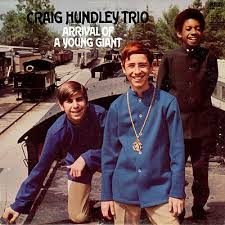
By age twelve he became the bassist for the Craig Hundley Trio, appearing on television shows, such as, the Today show, Johnny Carson, Jonathan Winters, Ted Mack Amateur Hour and the Della Reese show. The Trio recorded an album for World Pacific Records. At eighteen, he joined the Duke Ellington Orchestra under the direction of Mercer Ellington and to this day continues to perform with the Orchestra.
Shakur has performed with not only his father but Ella Fitzgerald, Dizzy Gillespie, Milt Jackson, Billy Eckstein, Al Grey, Sarah Vaughn, Joe Williams, Pearl Bailey, Louie Bellson, Herb Ellis and many others. He was bassist for the Broadway show “Me and Bessie” with Linda Hopkins, “Black and Blue” with Ruth Brown and Linda Hopkins, and the Duke Ellington shows “Sophisticated Ladies” and “Queenie Pie”.
Hassan is a longtime member of the Bill Easley Quartet, recording several albums, and also performs regularly with Monty Alexander on tours in the United States, Europe and Japan. He is a favorite on the cruise lines and has played Montreux, Kool, North Sea Nice, Concord, Hollywood Bowl and Saratoga jazz festivals.
He is adept at playing several instruments but Hassan Shakur’s remarkable technique, flexibility and talent for creating improvisational styles on the bass that are uniquely identifiable with him as a musician.
Take A Dose On The Road
More Posts: bass
Daily Dose Of Jazz…
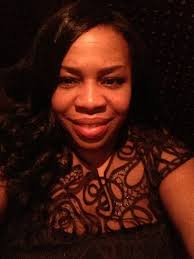
Coco Rouzier was born on April 14, 1966 in Washington, DC and began singing as a child by imitating the sounds that came from her mother. She sang in the Concert Choir at Kelly Miller Jr. High School taught her harmony. While working summers in musical theater she learned acting and subsequent immersion into cabaret taught her to and learned to connect intimately with the audience.
While at Howard University, Rouzier won the amateur singing contest and that led her straight to the Apollo Theater in New York City where she performed on “It’s Showtime at the Apollo”. New York City become her home, where she discovered jazz and started to swing with The Jerry Kravat NY Orchestra, now called Tribeca Rhythm.
Coco’s performances have garnered her the labels of a Jazz Diva in France, the Soulful Swinging Songstress in America, and The Jewel in China. She has performed in Norway on some of stages her heroes stood decades before. As yet she has not led her own recording session to showcase her own style she has developed and for the past 15 years. Vocalist Coco Rouzier continues to perform for audiences around the world with a blend of straight-ahead swing, blues and old-school soul.
Dose A Day – Blues Away
More Posts: vocal
Daily Dose Of Jazz…
Rusty Jones was born Isham Russell Jones II on April 13, 1942 in Cedar Rapids, Iowa and began playing drums at the age of thirteen and continued on throughout his college years choosing traditional and modern jazz as his preferred mode of music.
He went “on the road” after graduating college in 1965 from the University of Iowa with a degree in history and political science, to “get it out of his system”, but he never stopped his pursuit of a musical vocation. He moved to the Chicago area in 1967.
Jones appeared with Chicago musician Judy Roberts from 1968 to 1972, soon after becoming a member of George Shearing, then accompanied pianist Marian McPartland, then free-lanced throughout Chicago with several bands, touring the United States and Europe. He has worked with Patricia Barber, Adam Makowitz, Larry Novak, Ike Cole, Clifford Jordan, Danny Long, Johnny Gabor, Frank D’Rone, Art Hodes, Buddy DeFranco, Mark Murphy, Eddie Higgins, Red Holloway, Anita O’Day Stephane Grappelli, Ira Sullivan and J. R. Monterose, and the list goes on.
Between 1958 and 2004 this consummate sideman has been a part of nearly four-dozen recording sessions, all while performing and touring the U.S. and the world. Drummer Rusty Jones currently, appears quite regularly around the Chicago area with the Johnny Gabor Trio featuring vocalist Connie Marshall.
Dose A Day – Blues Away
More Posts: drums
Daily Dose Of Jazz…
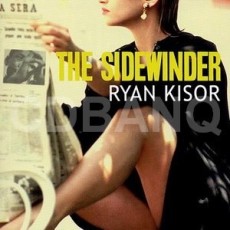
Ryan Kisor was born April 12, 1973 in Sioux City, Iowa and learned trumpet from his father. He started playing in a local dance band, the Eddie Skeets Orchestra, at age ten. By 12 he was taking classical trumpet lessons, met Clark Terry when he was 15 while attending his summer jazz camp, and played with all-star high school bands. In 1990, he won the Thelonious Monk Institute’s trumpet contest at the age of 17, performing against Nicholas Payton and Marcus Printup.
Following this he was signed by Columbia Records and released his first two albums, 1992’s Minor Mutiny and 1993’s On the One. Following this, Kisor entered the Manhattan School of Music and studied under Lew Soloff among others.
He has played in New York with the Mingus Big Band, Michel Camilo Big Band, with Gerry Mulligan, Wynton Marsalis, Wycliffe Gordon, Horace Silver and Walter Blanding. Since 1994 he has been a member of the Jazz at Lincoln Center Orchestra, has released fifteen albums as a bandleader and continues to perform and record.
Inspire A Young Mind
More Posts: trumpet