

Daily Dose Of Jazz…
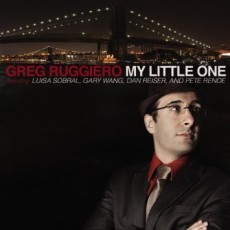
Greg Ruggiero was born on April 11, 1977 in Albuquerque, New Mexico and and studied the guitar as a youth. Then at the age of twenty-seven he decided to make his jazz mark in the clubs of New York City and moved to Brooklyn in 2004. It was just three years later that he released his debut record as a leader “Balance” on the jazz label Fresh Sound New Talent.
As a sideman he has recorded with Luisa Sobral, Mark Turner, Nasheet Waits, Greg Osby, Matt Brewer, Logan Richardson, Nick Halley and Gavin Fallow and has several projects that are still in production. Greg has the honor of featured artist at the Canjazz Festival in Galicia, Spain; taught workshops, recorded two records, and performed in concert.
As an educator he sits on the New School University Applied Music faculty, has taught at the Academy of Creative Education in Los Angeles, California, and has been a guest artist and clinician at the Crossties Jazz Festival hosted by Delta State University in Greenville, Mississippi along with Mulgrew Miller.
Ruggiero was a part of the Jazz of Enchantment radio program and educational series as one of the top 20 Jazz artists associated with his home state of New Mexico, along with Frank Morgan, Bobby Shew, Rob Wilkerson and Matt Brewer. Greg has performed with Matt Brewer, Logan Richardson, and many others.
Of late, Greg has renewed his passion for the jazz standard repertoire leading his trio or quartet. Taking license from the classic vocal performances of Billy Holiday, Nat Cole, Sinatra and Ella Fitzgerald to name a few, his passion has led the guitarist to release his sophomore project “My Little One”, a collection of original music set to lyrics.

Put A Dose In Your Pocket
More Posts: guitar
Daily Dose Of Jazz…
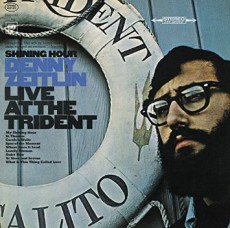
Denny Zeitlin was born on April 10, 1938 in Chicago, Illinois and grew up in the suburb of Highland Park. He began improvising on the piano at age two and was composing before elementary school. His father played piano by ear, his mother was his first piano teacher. He began formal study in Western classical music at age six, switching to jazz in the eighth grade. By the time he was in high school, he was playing professionally in and around Chicago.
While in college at the University of Illinois and Urbana-Champaign he was playing with Ira Sullivan, Johnny Griffin, Wes Montgomery, Joe Farrell, Wilbur Ware and Bob Cranshaw. Denny’s mentors included Billy Taylor and George Russell, while Bil Evans supported him by recording his composition “Quiet Now” and giving title to his 1970 album.
Zeitlin began his recording career when signing with Columbia Records in 1963 while studying medicine at John Hopkins University. His debut as a feature pianist was on the Jeremy Steig album Flute Fever along with Ben Riley and Ben Tucker. After moving to San Francisco in 1964 he recorded four albums as a leader for the label. He stood out from the crowd for the unbridled creativity of his work, the richness of his harmonic palette, and the sheer beauty of his piano tone.
Between 1968 and 1978, Denny ventured into electronic keyboards, synthesizers and sound altering devices, integrated them into his music and resulted in the release of Jazzy Spies in 1969 on the first season of Sesame Street. It featured the voice of Grace Slick. He would go on to be awarded Down Beat’s highest award for his Expansion album, score the music for the 1978 remake of Invasion of the Body Snatchers, and by the end of the decade returned focus to acoustic music.
Since 1968, Zeitlin has been on the teaching faculty at the University of California, San Francisco as a clinical professor of psychiatry, has a private practice, and is the founder of Control-Mastery Theory. He does all this while pursuing his passion for jazz, touring internationally and recording more than thirty-five albums to date tha include upwards of 100 original compositions. He is a first-place winner of the Down Beat International Jazz Critics Poll in 1965 and 1974.
Take A Dose On The Road
More Posts: piano,synthesizer
Daily Dose Of Jazz…
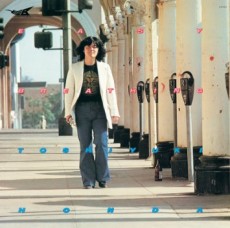
Toshiyuki Honda was born on April 9, 1957 in Tokyo, Japan. A professional saxophonist while still a university student, he released his debut album in 1978 as a leader titled “Burnin’ Wave”.
Honda is one of Japan’s best-known saxophonists and has since recorded with a host of world-celebrated musicians including Chick Corea, Freddie Hubbard, and Christopher Cross among others. He is widely known for his composing and arranging, having scored for television dramas, commercials, movies, and classical music genres.
He has received the Japan Academy’s highest honors for his work on the soundtrack for the movie, Marusa no onna. Toshiyuki’s “Concerto du vent”, a work commissioned by classical saxophonist Nobuya Sugawa, was recorded with the BBC Philharmonic Orchestra. The album was subsequently released on Chandos, a label for classical masterpieces.
Honda has released numerous original albums and soundtracks. One of his latest releases is with the Hyper Chamber Music Unit, “SMILE!” and has composed a work commissioned by Band Restoration 2012. Composer, arranger and producer Toshiyuki Honda continues to perform, record and tour in between utilizing his other talents.
Dose A Day – Blues Away
More Posts: saxophone
Daily Dose Of Jazz…
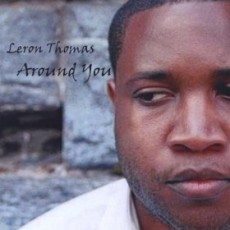
Leron Thomas was born on April 8, 1979 in Houston, Texas and his musical journey began with inspiration fro his family rich with respect and understanding of quality music. He graduated from Houston’s High School for the Performing and Visual Arts and ventured to New York City to develop as a trumpet player and composer, enrolling in Manhattan’s The New School.
While studying, Leron’s own music was evolving and maturing and began performing professionally with various artists including Bilal, Billy Harper, Charles Tolliver and Roy Hargrove. The quality of his original compositions was enhanced when playing live alongside talented peers Robert Glasper, Damion Reid, Vicente Archer, Marcus Strickland, Harold O’Neal, Isaac Smith, Reggie Quinerly and Omer Avital.
After matriculation through The New School in 2003 he remained in Manhattan to pursue his professional career as a writer and trumpeter. Thomas expanded his scope of playing and has worked with many artists from a variety of genre’s including Michael Stipe, Lauryn Hill, Bobby Watson and Mos Def, to name a few. Subsequently he found ways to liberate himself through a natural, fluid progression into writing and performing ‘other music’. These compositions required his personal trumpet tone along with his vocals to emphasize the diverse sound.
Since 2004 he has developed this genre-crossing music incorporating jazz, blues, pop, country, electro-pop and rock. With eight independently released projects and critical acclaim, he explores a range of artistic media. Having composed for film, he is featured in an independent short film 2010 and appears on Gilles Peterson’s Brownswood Bubblers Eight. Trumpeter Leron Thomas continues to compose, perform and record.
Inspire A Young Mind
More Posts: trumpet
Daily Dose Of Jazz…
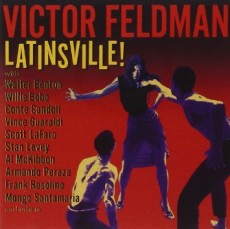
Victor Stanley Feldman was born on April 7, 1934 in Edgware, London, England and caused a sensation as a musical prodigy when he was discovered at aged seven. His family members were all musical and his father founded the Feldman Swing Club in 1942 to showcase his talented sons. His first professional appearance was playing drums at No. 1 Rhythm Club as a member of the Feldman Trio with brothers Robert on clarinet and Monty on piano accordion.
At eight years old the drummer was featured in the films King Arthur Was A Gentleman and Theatre Royal, in 1944 he was featured as “Kid Krupa” at a Glenn Miller AAAF band concert when he was 10, and went on to play vibraphone for Ralph Sharon Sextet and the Roy Fox band. Victor eventually made piano his instrument of choice and became best known.
Feldman recorded with Ronnie Scott’s orchestra and quintet from 1954 to 1955, and then in 1955 came to the U.S. He first worked with Woody Herman, then with Buddy Defranco. He recorded some thirty albums as a leader and recorded with Benny Goodman, George Shearing, Milt Jackson, Blue Mitchell, Lalo Schifrin, John Klemmer Sam Jones, Cannonball Adderley and others, as well as, Miles Davis on Seven Steps To Heaven, having composed the title track. He was a part of the 5-LP recording of Shelly Manne Black Hawk sessions in 1959.
Feldman settled in Los Angeles permanently and specialized in the lucrative session work for the film and recording industry. He also branched out to work with a variety of musicians outside of jazz, working with artists such as Frank Zappa, Steely Dan, Joni Mitchell, Tom Waits and Joe Walsh through the Seventies and Eighties.
Vibraphonist, drummer, percussionist, pianist and composer Victor Feldman died on May 12, 1987 at his home in Woodland Hills, California at age 53, following a heart attack. In 2009, he was inducted into the Musicians Hall of Fame and Museum in Nashville, Tennessee.
Give A Gift Of Jazz – Share
More Posts: drums,percussion,piano,vibraphone