

Daily Dose Of Jazz…
Brent Jensen was born on February 12, 1960 in Boise, Idaho. By 1986 on a grant from the Idaho Commission on the Arts he was studying in New York City with Lee Konitz.
Throughout his career Brent has performed with jazz artists including Gene Harris, Bobby Shew, Gary Foster, Dave Peck, Joe LaBarbera, John Clayton, Wycliffe Gordon, Warren Vache, Curtis Stigers, John Stowell, Kristin Korb, Jamie Findlay, Duck Baker, Dianne Schuur and many others.
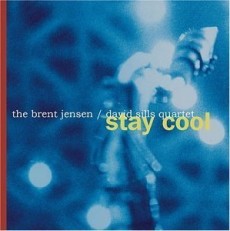
Jensen has charted to #1 with his debut recording, The Sound of a Dry Martini: Remembering Paul Desmond, and Stay Cool, his sophomore release both on Origin Records. By his fifth CD for Origin, One More Mile he teamed up with Seattle musicians, pianist Bill Anschell, bassist Jeff Johnson and drummer John Bishop. This he followed in 2009 with the release of We Couldn’t Agree More is a collection of duets with Seattle pianist Bill Anschell.
He would go on to be a featured winner of the Woodwinds on Fire international talent search conducted by Jazziz magazine in 1996. Soprano saxophonist Brent Jensen is an Assistant Professor of Music at the College of Southern Idaho in Twin Falls, is the Artistic Director for the CSI Jazz Summit and the Jazz Saturdays workshop series.

Take A Dose On The Road
More Posts: saxophone
Daily Dose Of Jazz…
Matt Dennis was born on February 11, 1914 in Seattle, Washington. His early exposure to music came from the family business of vaudeville, his mother who was a violinist and his father a singer. In 1933 he joined Horace Heidt’s orchestra as a vocalist and pianist. Later he would form his own band, with Dick Haymes as vocalist.
Dennis became a vocal coach, arranger, and accompanist for Martha Tilton and then worked with a new vocal group, The Stafford Sisters. Jo Stafford, one of the sisters, joined the Tommy Dorsey band in 1940 and persuaded Dorsey to hire him as arranger and composer. He would go on to wrote prolifically, with 14 of his songs recorded by the Dorsey band in one year alone, including “Everything Happens To Me”, an early hit for Frank Sinatra.
With four years in the U.S. Air Force in World War II behind him, Matt returned to music writing and arranging. He got a boost from his old friend Dick Haymes, who hired him to be the music director for his radio program, and with lyricist Tom Adair wrote songs for Haymes’ program.
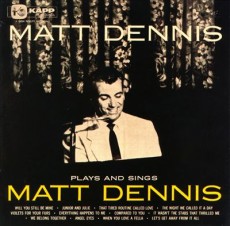
Dennis made six albums, most of which are out of print; however, his 1953 song Angel Eyes that he composed with lyricist Earl Brent has become a frequently recorded jazz standard. Added to that list of standards are Will You Still Be Mine, The Night We Called It A Day and Violets For Your Furs.
Composer, pianist, arranger, singer and bandleader Matt Dennis passed away on June 21, 2002 in Riverside, California at the age of 88.
Dose A Day – Blues Away
Daily Dose Of Jazz…
Zoltan Sagi was born in Hungary on February 10, 1956. He attended the Guildhall School of Music studying clarinet with Robert Earle and later Frank Allen at Warwick University. Self-taught on saxophone, he draw much of his inspiration from Johnny Hodges, Cannonball Adderley and Stan Getz.
His early career was spent playing in dance bands and in New Orleans jazz genre playing in festivals stateside and overseas. This was followed by a period as an educator as Director of Music and a country music service manager. He spent two and a half years extensively touring the world with Chris Barber.
Zoltan has recorded numerous CD’s and other recordings as a freelance session musician and has also appeared with such musicians as Earl Warren, Benny Waters, Kenny Davern, Bob Humphrey Lyttleton, Marty Grosz, Digby Fairweather, Duncan Swift, , Janusz Carmello, Bill Coleman, Greg Abate, Alan Barnes, Paul Degville and John Barnes among many others.
Has worked extensively both in this country and abroad. His experience spans from New Orleans jazz to jazz fusion. Sagi has been a part of several groups including Harlem, Swing Syndicate and The Charleston Chasers. Clarinetist Zoltan Sagi also plays all saxophones and currently performs with the Sticky Wicket Big Band, the Big Chris Barber Band, the Stars of British Jazz and with his own quartets and trios.
Inspire A Young Mind
Daily Dose Of Jazz…
Bill Evans was born William D. Evans on February 9, 1958 in Claredon Hills, Illinois to a father who was a classical piano prodigy. Until junior high school he studied classical clarinet but early in his studies he was able to hear such artists perform live as Sonny Stitt and Stan Getz at the jaz Showcase in Chicago. He attended Hinsdale Central High School and studied with tenor saxophonist Vince Micko. His stylistic influences include Sonny Rollins, Joe Henderson, John Coltrane, Steve Grossman and Dave Liebman.
Evans attended the University of North Texas and William Patterson University where he studied with Miles Davis alum Dave Liebman. His move to New York City in 1979 saw him spending countless hours in lofts playing jazz standards and perfecting his improvisational style. By the age of 22 he joined Miles Davis and was part of his musical comeback in the early to mid-1980s, recording on The Man With The Horn, We Want Miles, Star People and Decoy.
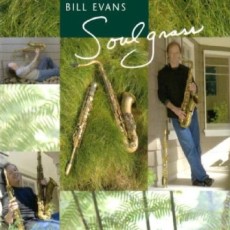
During the 1980s and 1990s Bill was a member of the jazz fusion group Elements. Beginning in 1990 Evans has been touring with his own band playing close to 90 concerts a year worldwide. He has recorded over 17 solo CD’s, received two GrammyAward nominations for his albums Soul Inside and Soulgrass, and recorded an award-winning CD called Bill Evans – Vans Joint with the WDR Orchestra in 2009.
Tenor and soprano saxophonist Bill Evans has played a wide variety of music with his solo projects including bluegrass influenced jazz, funk and contemporary groove and has played, toured and recorded with Herbie Hancock, Michael Franks, Gil Evans, Willie Nelson, Mick Jagger, Les McCann, Mark Egan, Danny Gottlieb, Ian Anderson, Randy Brecker, The Allman Brothers and Medeski, Martin and Wood to name a few. He continues to perform, tour and record.
Give A Gift Of Jazz – Share
Daily Dose Of Jazz…
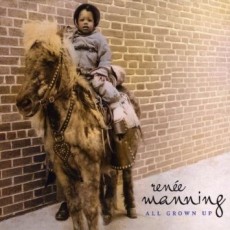
Renée Manning was born on February 8, 1955 and bred in Brooklyn, New York. She attended New York’s Music and Art High School as a teenager and by the ’70s she became employed on albums by hard bop/soul-jazz players like tenor saxophonist David “Fathead” Newman and cornetist Nat Adderley.
Her most visible association came in the 1980s, when she started a five-year gig as a featured vocalist for the Mel Lewis Jazz Orchestra at the Village Vanguard, after hearing her sing at another local nightspot Mikells. In 1991 Renée recorded her first solo album As Is for Ken Music, a small independent New York jazz label. Her success subsequently led to Ken releasing her second album, Uhm…Uhm…Uhmmmm.
Her big band associations and collaborations have included the Chico OFarrill Afro Cuban Orchestra, The George Gruntz Concert Jazz Band, Dukes Men, a large ensemble project with Lester Bowie and Earl McIntyre and the Mingus Big Band. Manning has worked with Jon Faddis, Sir Roland Hanna, Mark Murphy, Howard Johnson, Joe Williams, Don Cherry, Sheila Jordan, Howard Johnson, Ray Anderson, McCoy Tyner, Pharoah Sanders, Carmen McRae, Louis Hayes, Dizzy Gillespie and Avery Sharpe to name a few.
She has toured Europe, played New York, London and Copenhagen clubs, recorded two albums as a leader and numerous others as a featured vocalist, performed at numerous jazz festivals, created a 15 piece ensemble called Unsung Heroes and was a part of the WBGOs children series with her and Earl McIntyre’s group Jazzimon.
Aside from performing and composing, Manning teaches vocal technique privately and master classes. She’sone of only two vocalists taught by the legendary teacher Carmine Caruso, her method is quite unique, and incredibly effective. She is currently on staff as vocal and choir instructor at the Brooklyn Conservatory with students from 8 to 80.
Jazz Is Global – Share
More Posts: vocal