


Daily Dose Of Jazz…
Roberta Piket was born on August 9, 1966 in Brooklyn, New York. Her father, the composer Frederick Piket, gave her first piano lessons when she was seven. She began playing jazz in her early teens, studying jazz piano with Walter Bishop, Jr and classical piano with Vera Wels. After graduating from prestigious Hunter College High School, she entered the joint double-degree program at Tufts University and the New England Conservatory of Music, earning a Bachelor’s Degree in Computer ScienceAll Postsfrom the former and a Bachelor’s Degree in Jazz Studies from the latter. She studied privately with Fred Hersch, Stanley Cowell, Jim McNeely, Bob Moses, Richie Beirach and Sofia Rosoff.
Roberta’s swinging and inventive straight-ahead jazz playing as well as her powerful and sensitive work in creative improvised music has gained her the respect of the jazz community. She has been a side woman performing or recording with David Liebman, Rufus Reid, Billy Hart, Michael Formanek, Lionel Hampton, Mickey Roker, Billy Mintz, Harvey Wainapel, Eliot Zigmund, Benny Golson, Ratzo Harris and the BMI/NY Jazz Orchestra.
Having appeared twice on Marian McPartland’s Piano Jazz, Piket has performed in Europe and japan as well both as a side woman and leader of her own trio and was a finalist in the Thelonious Monk BMI Composers’ Competition. She has released ten albums under her own name and frequently make the “best of” lists of the major jazz magazines and earning rave reviews in Jazz Times, Downbeat, the Washington Post, and Jazziz. A musical pioneer in several ways, Roberta is the first and only woman leader with a release on the prestigious Criss Cross label.
As an educator Roberta hold master classes at the Eastman School of Music, Rutgers University, Cal Arts, Duke University, the Northwestern University Composers’ Colloquium, among others around the world; has taught at the Litchfield Jazz Camp and the Vermont Jazz Center and has coached ensembles at Long Island University and maintained several private students.
Pianist and composer Roberta Piket occasionally performs on B3 organ, as she continues to record, perform and tour throughout Europe America and Japan.

Give A Gift Of Jazz – Share
Daily Dose Of Jazz…
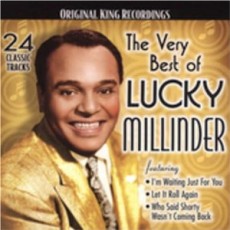
Lucky Millinder was born Lucius Venable Millinder on August 8, 1910 in Anniston, Alabama but was raised in Chicago, Illinois. While a teenager in the 1920s he worked in clubs, ballrooms, and theatres in Chicago as a master of ceremonies and dancer. He first fronted a band in 1931 for an RKO theater tour, and in 1932 took over leadership of Doc Crawford’s orchestra in Harlem, New York City, as well as freelancing elsewhere.
The Thirties saw Lucky touring Europe with his own orchestra and playing residencies in Monte Carlo and Paris, returning to New York to lead the Mills Blue Rhythm Band, discovering Rosetta Tharpe, teaming with Bill Doggett’s group, established a residency at the Savoy Ballroom and signed a contract with Decca Records, in which Dizzy Gillespie sat in the trumpet seat.
Millinder would record “Trouble In Mind” in 1941 with Rosetta Tharpe, as well as his #1 hit “When The Lights Go On Again (All Over The World)” followed by “Apollo Jump” and “Sweet Slumber”. But by the mid-1940s the band was drifting towards what would be known as rhythm and blues and was comprised of saxophonist Bull “Moose” Jackson, Tab Smith, Eddie “Lockjaw” Davis and pianist Sir Charles Thompson and singer Wynonie Harris. Their recording of “Who Threw The Whiskey In The Well” became the group’s biggest hit in 1945, staying at #1 on the charts for 8 weeks. Vocalist Ruth Brown replaced Wynonie for a short period until her solo career took flight.
Throughout the decade the band continued to remain popular and toured all the large R&B auditoriums, changed labels a few times until their last big hit was “I’m Waiting Just for You” with Annisteen Allen in 1951. A year later Lucky was working as a radio deejay, continued to tour and took over the leadership of the Apollo Theater band for a while. Retiring from performing he recorded his final sessions in 1960 and became active in music publishing, and in public relations for a whiskey distillery.
Swing and rhythm and blues bandleader Lucky Millinder, never learned to read or write music, nor play an instrument and rarely sang, it is said it was his showmanship and musical taste made his bands successful. He passed away from a liver ailment in New York City on September 28, 1966. Twenty years later he would posthumously be inducted into the Alabama Jazz Hall of Fame.
Jazz Is Global – Share
More Posts: bandleader
Daily Dose Of Jazz…
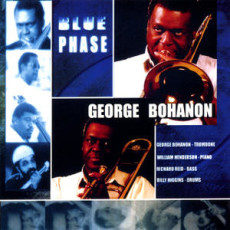
George Roland Bohanon, Jr. was born on August 7, 1937 in Detroit, Michigan. The jazz trombonist and session musician studied in his youth and by his late teens he was a part of Detroit’s Workshop Jazz ensemble, with Johnny Griffin, Paula Greer, David Hamilton, Lefty Edwards and Herbie Williams.
Following his appearance on several Motown recordings, together with leading musicians such as Hank Cosby of the Funk Brothers, George moved to California.
In 1962, he replaced Garnett Brown in the Chico Hamilton Quintet. 1963 and 1964 witnessed two recorded albums for Motown’s unsuccessful jazz Workshop label, “Boss: Bossa Nova” and “Bold Bohanon”, with the latter be unreleased according to several sources.
By 1971, he was a member of the Ernie Wilkins Orchestra playing alongside trombonist Benny Powell that backed Sarah Vaughan on her album “A time In My Life”. Between 1984 and 1993, Bohanon played in orchestras backing Frank Sinatra. He has performed and/or recorded as a sideman with Charles Kynard, Hampton Hawes, Stanley Clarke, Ry Cooder, Etta James and Diana Krall. Trombonist George Bohanon continues to perform and record.
Put A Dose In Your Pocket
More Posts: trombone
Daily Dose Of Jazz…
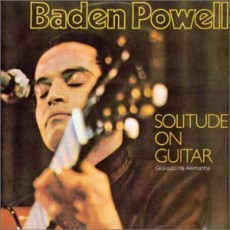
Baden Powell de Aquino was born on August 6, 1937 in Varre-Sai in the state of Rio de Janeiro, Brazil. Simply known as Baden Powell, his father, a scouting enthusiast, named him after Robert Baden Powell founder of the boy scouts. Growing up in a Rio suburb from age three, proved profoundly influential, as his house was a stop for popular musicians. He started guitar lessons with Jayme Florence, a famous choro guitarist in the 1940s, and soon proved to be a young virtuoso, winning many talent competitions before he was a teenager. Fascinated by swing and jazz, his main influences were firmly rooted in the Brazilian guitar canon.
By fifteen, he was playing professionally, accompanying singers and bands in various styles. In 1955, Powell was playing with the Steve Bernard Orquestra at the Boite Plaza, formed the new Hotel Plaza Trio with Ed Lincoln and with their young musician friends took part in after-hours jam sessions, gaining notice in the growing Brazilian jazz scene.
Achieving much wider fame in 1959 by convincing Billy Blanco to put lyrics to one of his compositions resulted in a song called “Samba Triste” and quickly became very successful for Baden. In 1962, he met the poet-diplomat Vinicius de Moraes and began a collaboration that yielded some true classics of 1960s Brazilian music. Together they transcended the prevailing bossa nova by fusing Afro-Brazilian with samba. During those years he released several recordings on Brazilian French and German labels and his 1966 “Tristeza on Guitar”, is considered by many to be a high point in his career.
Powell would go on to be the house guitarist for Elenco Records, the guitarist on Elis Regina’s TV show “O Fino da Bossa”, partner with poet Paulo Cesar Pinheiro and produced another series of Afro-Brazilian inspired music, tour Europe and record profusely until his health began failing him due to alcohol and cigarette abuse and his star dimmed. Returning home to Brazil he continued to record and perform and a renewed public recognition of his work came around that time. However, after many years of abuse, and he fell terminally ill and on September 26, 2000 guitarist and vocalist Baden Powell passed away in Rio de Janeiro of pneumonia triggered by diabetes.
His recordings span five decades beginning with his first appearances as accompanist on a handful of big band and samba recordings from the 1950s. He recorded his first solo album in 1959, but it was released in 1961. H e leaves us with a discography of some 55 recordings as a leader and numerous more as a sideman. He was one of Brazil’s most prominent and celebrated guitarists.
Give The Gift Of Knowledge
Daily Dose Of Jazz…
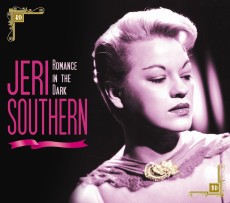
Jeri Southern was born Genevieve Hering on August 5, 1926 in Royal, Nebraska and began playing piano at age three. At age six she started formal study in classical piano and studying classical piano and voice at Sacred Heart in Omaha, Nebraska. It was during this period that her interest in jazz developed.
Southern began her career at the Blackstone Hotel in Omaha, then joined a United States Navy recruiting tour during WWII. In the late 1940s, she worked the Chicago club scene, once playing piano for Anita O’Day and where she became known for torch songs.
Signing with Decca Records in 1951, Jeri became known both for jazz and pop, rising to the height of her career during the decade. In 1955 her recording of “An Occasional Man”, reached #89 in the Billboard pop chart and in 1957 she had a Top 30 hit with “Fire Down Below”, that also hit #22 on the UK Singles Chart.
After her switch to Capitol Records, Southern found more success performing interpretations of Cole Porter with Billy May arrangements of some of the more humorous examples. She also sang in a few films
By the 1960s Jeri gave up the performing side of the music industry opting to teach instead, leaving a catalogue of more than two-dozen recordings. She would later move to Hollywood, California and work on film composing with Hugo Friedhofer. She wrote Interpreting Popular Music At The Keyboard during her final years.
Pianist and vocalist Jeri Southern passed away in Los Angeles, California of pneumonia on August 4,1991, at the age of 64.
Take A Dose On The Road