

Daily Dose Of Jazz…
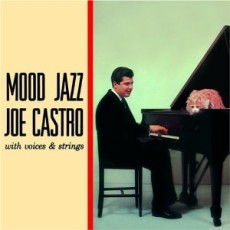
Joe Castro was born Joseph Armand Castro on August 15, 1927 in Miami, Arizona. He went to school in Pittsburgh, California in the bay area north of Oakland. He began playing piano professionally at the age of 15, enrolled at San Jose State University but matriculation was interrupted twice—first by a stint in the army from 1946 to 1947 and then when he formed his first jazz trio working on both the West Coast and in Hawaii.
In 1956 Castro moved to New York City where his trio successfully appeared in the city’s top jazz clubs—Basin Street, The Embers, The Hickory House and Birdland, receiving critical acclaim from Leonard Feather and Dave Brubeck. In 1958, he moved to Los Angeles to be associated almost exclusively with Teddy Edwards, Billy Higgins and Leroy Vinnegar.
Castro recorded his debut album “Mood Jazz” in 1956 and would go on to perform extensively with The Teddy Edwards Quartet while also making two of his own recordings as a leader for Atlantic Records.
In the early 1960s, tobacco heiress/jazz enthusiast Doris Duke and her long-term boyfriend, Castro, along with silent partner and friend Duke Ellington, formed record company Clover Records and music publishing company Jo-Do. Castro’s third album as a leader, entitled Lush Life was the only album released on Clover Records. Clover also released a 45-rpm single of the tracks “Lush Life” and “Bossa Nova All The Way” both taken from the same album.
By 1966, Jo-Do, Clover, and the Castro-Duke relationship had failed, and all three were shortly dissolved and the sides remain unreleased to this day. Renowned bassist Oscar Pettiford recorded an original entitled “The Pendulum at Falcon’s Lair” in 1956.
From 1959 to 1960 Castro also backed vocalists Anita O’Day and June Christy and was music director for Tony Martin from 1961 to 1963. Other sidemen for Castro’s trios and quartets included Chico Hamilton, Red Mitchell, Ed Shonk and Howard Roberts.
Castro moved to Las Vegas in the 1970s and continued to accompany vocalists and play in Las Vegas pit bands until he became the musical director for the Tropicana Hotel’s Folies Bergere. After Castro retired from the Tropicana, he continued to perform in jazz combos in Las Vegas and California until his death on December 13, 2009.

Jazz Is Global – Share
More Posts: piano
Daily Dose Of Jazz…
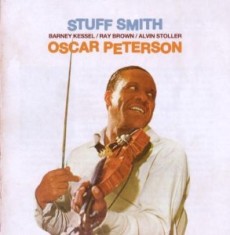
Hezekiah Leroy Gordon Smith was born August 14, 1909 in Portsmouth, Ohio and was better known in the jazz circles as violinist Stuff Smith. He studied violin with his father, cites Louis Armstrong as his primary influence and inspiration to play jazz, and like Armstrong, was a vocalist as well as instrumentalist.
In the 1920s, Smith played in Texas as a member of Alphonse Trent’s band. After moving to New York he had a regular gig with his sextet at the Onyx Club starting in 1935, performed with Coleman Hawkins as well as with younger musicians such as Charlie Parker, Dizzy Gillespie and later Sun Ra.
After signing with Vocalion in 1936, Stuff had a big hit with “I’se A Muggin'” and was billed as Stuff Smith and his Onyx Club Boys. He recorded for Decca in 1937 and Varsity in 1939-1940. He is well known for the song “If You’re A Viper” and is featured in several numbers on the Nat King Cole Trio album, After Midnight.
Part of Smith’s performance at what is considered the first outdoor jazz festival, the 1938 Carnival of Swing on Randall’s Island turned up unexpectedly on audio engineer William Savory’s discs, which were self-recorded off the radio at the time, then long-sequestered.
Smith was critical of the bebop movement, although his own style represented a transition between swing and bebop. He is credited as being the first violinist to use electric amplification techniques on a violin. He contributed to the 1938 tune “It’s Wonderful” often performed by Louis Armstrong and Ella Fitzgerald throughout their careers.
He moved to Copenhagen in 1965, performed actively in Europe, record with Oscar Peterson, Niels-Henning Orsted Pederson, Kenny Drew, Alex Riel, Stephane Grappelli and Jean Luc Ponty among others until his passing away in Munich on September 25, 1967.
Stuff Smith, one of the jazz industry’s preeminent violinists of the swing era is one of the 57 jazz musicians photographed in the 1958 portrait “A Great Day In Harlem”.
Put A Dose In Your Pocket
Daily Dose Of Jazz…
Harold “Doc” West was born on August 12, 1915 in Wolford, North Dakota. He learned to play piano and cello as a child before switching to drums. By the 1930s he was playing in Chicago with Tiny Parham, Erskine Tate and Roy Eldridge. Towards the end of the decade he filled in for Chick Webb when he was unable to lead his own orchestra.
The early 1940s Doc played with Hot Lips Page and on the emerging bebop scene at Minton’s Playhouse in New York City alongside Dizzy Gillespie, Charlie Parker, Tiny Grimes and Don Byas. He played with Oscar Pettiford in 1944 and stood in for Jo Jones occasionally in Count Basie’s orchestra.
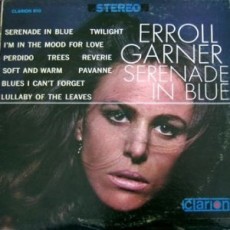
He appears on recordings led by Slam Stewart, Leo Watson, Wardell Gray, Billie Holiday, Big Joe Turner, Jay McShann and Erroll Garner, leaving a small but impressive catalogue as a sideman. Drummer Doc West passed away on May 4, 1951 in Cleveland, Ohio while on tour with Roy Eldridge.
Take A Dose On The Road
Daily Dose Of Jazz…
John Anthony Pompeo, better known as Johnny Rae or John Rae was born on August 11, 1934 in Saugus, Massachusetts and grew up in music, as his mother played piano in night clubs in the Boston area. His area of musical study in jazz led him to become a drummer and vibraphonist. Graduating from East Boston High School in 1952, he went on to study piano at the New England Conservatory and timpani at Berklee College of Music.
Johnny joined Herb Lee’s R&B band right out of high school, gigged with Slim Gaillard and Milt Buckner, played drums and vibes with Al Vega and Jay Migliori. Upon the recommendation of MJQ’s John Lewis, he teamed up with to play with George Shearing, alongside Toots Thielemans, Al McKibbon on bass and three Latin percussionists that included conguero Armando Peraza. It was during this period that Peraza taught him to play timbales.
He played with Johnny Smith, Ralph Sharon, Cozy Cole and Herbie Mann throughout the Fifties. The next couple of decades were equally commanding of his talents by Cal Tjader, Stan Getz, Gabor Szabo, Charlie Byrd, Earl Hines, Art Van Damme, Anita O’Day and Barney Kessel among many others. Though mainly concentrating in the context modern jazz, he never wandered far from Latin music and the Latin jazz percussion he played.
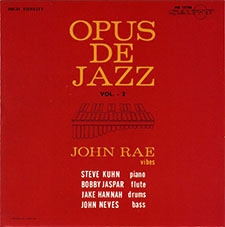
Though he was on more than three-dozen recording sessions, Johnny only recorded one as a leader, “Opus De Jazz, Volume 2” in 1960 for Savoy. A second release under his name was in actuality him fronting Herbie Mann’s band for contractual reasons.
Since the 1980s Rae has worked in music education, has authored several instruction books and was a disc jockey in San Francisco for many years. He assembled a tribute band to Tjader called Radcliff (Tjader’s middle name) and led the band until his death. Johnny Rae, drummer and vibraphonist passed away in 1993 in San Francisco, California.
Dose A Day – Blues Away
More Posts: drums,percussion,timbales,vibraphone
Daily Dose Of Jazz…
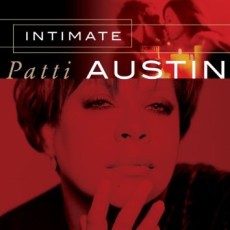
Patti Austin was born on August 10, 1950 in Harlem, New York City to a jazz musician father and grew up on Long Island. She made her debut at the Apollo Theater at age four and had a contract with RCA Records when she was five. Quincy Jones and Dinah Washington have proclaimed themselves as her godparents. But it was a reluctant outing as a teenager to hear one of Judy Garland’s last concerts and the experience-helped focus her career, giving her the desire to interpret a lyric like that.
By the late 1960s Austin was a session musician and commercial jingle singer. During the 1980s, she was signed to Jones’s Qwest Records and began her most prolific hit-making period. By this time she was both one of the leading background session vocalists and also was known as Queen of The Jingles for such companies as Burger King, Almay, KFC, McDonald’s, Avon, Stouffers, Maxwell House and the US Army.
Charting twenty R&B songs between 1969 and 1991, hitting #1 for her hits “Do You Love Me?” / “The Genie”, Baby Come To Me” – a duet with James Ingram, and also hits with “How Do you Keep The Music Playing”, again teaming with Ingram and “It’s Gonna Be Special”. She would sing background for Billy Joel’s “Just The Way You Are” along with Luther Vandross, Jocelyn Brown and Chaka Khan. She would be enlisted to sing duets with Michal Jackson, George Benson, Luther, Frankie Valli & The Four Seasons, Narada Michael Walden and Johnny Mathis.
Austin would be seen leading a new group of Raelettes for the 2006 album “Ray Charles + Count Basie Orchestra = Genius”; participating in the AVO Session Basel tribute to Ella Fitzgerald, and after nine nominations, winning her first Grammy Award for Best Jazz Vocal Album for her 2008 album Avant Gershwin.
Patti co-produced and was one of over 70 artists singing on “We Are The World: 25 for Haiti” to raise awareness and aid for those affected by the 2010 earthquake. In 2011 she released a mostly covers album project titled “Sound Advice” re-working Bob Dylan, Michael Jackson, Brenda Russell, Bill Withers and Don McLean songs and a female take on “My Way” among others.
No to be idle Austin co-wrote and sings in the star-studded L.O.V.E. – Let One Voice Emerge, encouraging especially younger Americans to get out there and exercise their right to vote; has been seen in the Bridges/Coppola film “Ticker: The Man And His Dream, and appears in the Academy Award-winning documentary film “20 Feet From Stardom” in 2013. She continues to perform, compose and tour.
Inspire A Young Mind
More Posts: vocal