

Daily Dose Of Jazz…
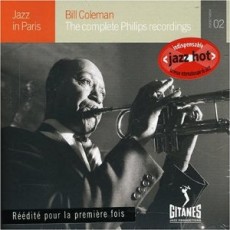
Bill Coleman was born William Johnson Coleman on August 4, 1904 in Paris, Kentucky. In 1909 his family moved from Kentucky to Cincinnati and his first musical explorations were on clarinet and C melody saxophone, but he eventually settled on trumpet. He studied with Cincinnati trumpeter Theodore Carpenter and played in an amateur band led by trombonist J.C. Higginbotham. He began professional work in Cincinnati with bands led by Clarence Paige, Wesley Helvey and then Lloyd and Cecil Scott.
In 1927 he traveled to New York City and played with the Scott brothers to New York City, and continued to work with them until 1929, when he joined the orchestra of pianist Luis Russell. His first recording session was with Russell and he soloed on the tune “Feelin’ the Spirit”. Over the next couple of years he floated between Russell and Scott participating in recording sessions with each of them. By 1933 Bill was on his first European tour with Lucky Millinder, then in October returned to New York, worked with the bands of Benny Carter and Teddy Hill and sat in on a recording session with Fats Waller and laying down a number of memorable sides.
Coleman returned to Europe, played a residency in Paris with entertainer and vocalist Freddy Taylor, recorded with guitarist Django Reinhardt and made several freelance sessions under his own name. In late 1936 he traveled to Bombay, India playing with Leon Abbey’s Orchestra, then back to Paris to join saxophonist William T. Lewis. Returning to the States found him playing with Benny Carter, Teddy Wilson, Andy Kirk, Ellis Larkins, Mary Lou Williams, Sy Oliver, John Kirby, Lester Young, Billie Holiday and Coleman Hawkins.
Due to racial segregation Bill Coleman returned to France in 1948 and lived out his days there touring and performing in clubs and concert halls all over Europe. In 1974 he received the Ordre National du Merite and in 1978, he performed at the first Jazz in Marciac festival (along with tenor saxophonist Guy Lafitte, later becoming an honorary president of the festival organization.
Jazz trumpeter Bill Coleman passed away in Toulouse, France on August 24, 1981. His sound and phrasing were immediately recognizable with a style of the swing era musicians.

Dose A Day – Blues Away
More Posts: trumpet
Daily Dose Of Jazz…
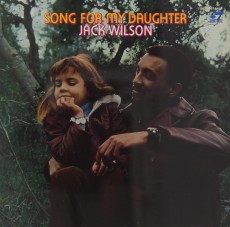
Jack Wilson was born in Chicago, Illinois on August 3, 1936 but grew up in Fort Wayne, Indiana from the age of seven. From 1949-54, he studied piano with Carl Atkinson at the Fort Wayne College of Music where he was introduced to the music of George Shearing.
Wilson later picked up the tenor saxophone and played in the Central High School band. He began performing locally leading small combos. By his fifteenth birthday, he had become the youngest member ever to join the Fort Wayne Musicians Union, Local 58. At 17, James Moody hired him to play a two-week stint as a substitute pianist.
After graduating from Central High, Jack spent a year-and-a-half at Indiana University, where he met Freddie Hubbard and Slide Hampton. Then touring with a rock ‘n roll band, he wound up in Columbus, Ohio and connecting with then unknown Nancy Wilson and Rahsaan Roland Kirk.
After a year in Columbus, he moved to Atlantic City and led the house band at the Cotton Club, adding organ to his musical arsenal. At the Club he met Dinah Washington and worked with her from 1957-58.
A return to Chicago, Wilson was playing with Gene Ammons, Sonny Stitt, Eddie Harris and Al Hibbler and holding down the gig at the Persian Lounge. Drafted into the Army, he went to Fort Stewart, GA. and became the first Black music director for the Third Army Area, playing tenor saxophone in the army band.
In 1961, jack received an honorable medical discharge due to diabetes, returned to Dinah Washington’s band for a year and encouraged by Buddy Collette moved to Los Angeles, California. It was here he worked with Gerald Wilson, Lou Donaldson, Herbie Mann, Johnny Griffin, Sammy Davis Jr., Sarah Vaughan, Lou Rawls, Eartha Kitt, Julie London, as well as Sonny & Cher. He composed and recorded the title track for Earl Anderza’s debut album Outa Sight!
Wilson recorded his debut as a leader for Atlantic Records with The Jack Wilson Quartet featuring Roy Ayers followed by a sophomore project, then three for the label’s subsidiary Vault Records and three albums for Blue Note including the classic Easterly Winds in 1967. From there he focused on work with vocalist Esther Phillips, went back to the studio for Discovery Records, and returned to be a sideman with Lorez Alexandria, Tutti Camarata and Eddie Harris.
His final recording session simply titled In New York, took place on June 4, 1993 and featured legendary drummer Jimmy Cobb. Composer and pianist Jack Wilson died on October 5, 2007 due to complications from his life with diabetes.
Inspire A Young Mind

Daily Dose Of Jazz…
Carl Saunders was born August 2, 1942 in Indianapolis, Indiana and his first five years were mostly spent on the road with his uncle, trumpeter-bandleader Bobby Sherwood. Sherwood’s orchestra had hits with “Elks Parade” and “Sherwood’s Forest”.His mother, Gail (Bobby’s sister) sang for the Sherwood Orchestra and with Stan Kenton, among others. By the time he was five, he and his mother settled in Los Angeles; living with Carl’s aunt Caroline and her husband, tenor-saxophonist Dave Pell. At the time, Saunders heard the records of Pell’s Octet and was influenced by the style and phrasing of trumpeter don Fagerquist.
Saunders began playing trumpet in the seventh grade and he quickly found that he had a natural ability, mostly learning to play by ear and never having any lessons. He played in school bands, and after he graduating high school, went to work with Stan Kenton’s Orchestra, spending much of 1961-62 on the road.
After spending part of 1962-63 traveling once again with Bobby Sherwood playing drums, Carl settled in Las Vegas and over the next 20 years played with Ella Fitzgerald, Tony Bennett, Frank Sinatra, Paul Anka, Robert Goulet, Si Zentner, Harry James, Maynard Ferguson, Benny Goodman, Dan Terry and Charlie Barnet, to name a few.
A move to Los Angeles in 1984 saw Saunders playing lead trumpet with bill Holman’s Orchestra, a position he still holds. He has also worked with Supersax, the Bob Florence and Gerald Wilson big bands, the Phil Norman Tentet, as well as Buddy Rich, and Clare Fischer. In 1994, he became a member of the Dave Pell Octet and leads his own groups –quartet, sextet and big band.
As an educator the trumpeter enjoys working with kids and conducting clinics. Carl currently has seven albums released and plans to continue playing, composing and recording the straight ahead jazz that he loves most.
Give A Gift Of Jazz – Share
More Posts: mellophone
Daily Dose Of Jazz…
Elmer Crumbley was born on August 1, 1908 in Kingfisher, Oklahoma. The trombonist joined the Dandie Dixie Minstrels in 1926 in between stints with bandleader Lloyd Hunter and his Serenaders. By 1930 Elmer made it east to Kansas City and the George E. Lee band.
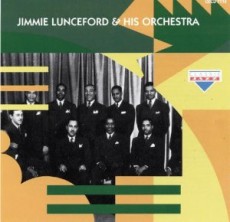
During the 30s he continued to work with Lloyd Hunter as well as with western swing pioneer Tommy Douglas in Nebraska, then with Bill Owens, Jabbo Smith and in Chicago with Erskine Tate. He led an ensemble in Omaha in 1934 then joined up with Jimmie Lunceford, enjoying a thirteen-year stint playing with band mates Eddie Wilcox, Lucky Millinder and Erskine Hawkins.
By the late ’50s Crumbley was touring Europe with Sammy Price and became part of the combo scene at the Apollo in Harlem. The Sixties saw him playing with Cab Calloway and Earl Hines, keeping him in slide oil.
Little is known about him after this period and trombonist Elmer Crumbley passed away in 1993 at the age of 85.
Jazz Is Global – Share
More Posts: trombone
Daily Dose Of Jazz…
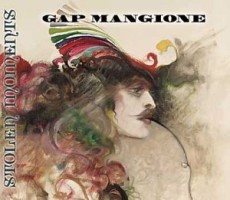
Gaspare “Gap” Mangione was born July 31, 1938 in Rochester, New York and learned to play the piano as a child. Along with his Grammy-winning flugelhornist brother Chuck, they started performing together as the Jazz Brothers in 1958 and eventually recorded three albums for Riverside Records.
In 1968, Gap Mangione released his first solo album, “Diana in the Autumn Wind”, featured new compositions and arrangements, and was conducted by Chuck Mangione. The 1970s brought more solo albums along with tours with his own group and many as featured pianist in his brother’s orchestral performances.
By the Eighties, Gap began spending less time on the road and more time playing in and around Rochester. In 1990, he formed the Gap Mangione New Big Band, which remains the premier dance and concert big band in the Rochester area. The New Big Band has released four recordings since 1998.
Many major rappers and producers, including Jaylib, Talib Kweli, Guerilla Black, Ghostface Killah, Slum Village and People Under The Stars have sampled Gap’s “Diana in the Autumn Wind” for their recent works.
Gap Mangione has received the Artist of the Year Award from the Arts & Cultural Council of Greater Rochester, continues to make regular appearances at Rochester locations, among them the Woodcliff Hotel and Spa, Pier 45 at the Port, as well as the Rochester International Jazz Festival. The composer, arranger, bandleader and pianist continues to play with his brother.
Put A Dose In Your Pocket
More Posts: piano