

Daily Dose Of Jazz…
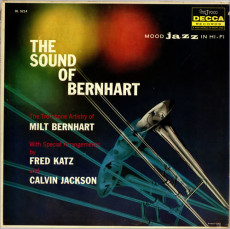
Milt Bernhart was born on May 25, 1926 in Valparaiso, Indiana and began his musical career with the tuba. By high school he switched to trombone and by 16 he was working in Boyd Raeburn’s band and later gigged with Teddy Powell.
After a tour in the Army he worked, off and on, with Stan Kenton for the next ten years. He is perhaps most associated with Kenton, but in 1955 he had his first album as a leader. In 1986 he was elected President of the Big Band Academy of America.
Widely known as a mild-mannered and humorous musician his brief period with Benny Goodman was one area that brought out his ire. Except for the Army’s basic training, Milt indicates working with Goodman was “the bottom” of his first 23 years of life, referring to him as a bore and could not abide Goodman’s public humiliation of tenor saxophonist Wardell Gray or his segregated treatment at a Las Vegas club.
West coast jazz trombonist Milt Bernhart, who supplied the exciting solo heard in the middle of Sinatra’s popular 1956 recording of “I’ve Got You Under My Skin” conducted by Nelson Riddle, passed away on January 22, 2004 in Glendale, California.26-2004

Jazz Is Global – Share
More Posts: trombone
Daily Dose Of Jazz…
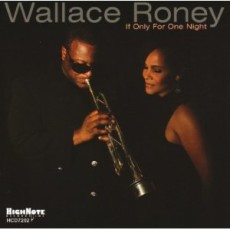
Wallace Roney was born May 25, 1960 in Philadelphia, Pennsylvania and at the age of 4 it was discovered he had perfect pitch. He began his musical and trumpet studies at the Settlement School of Music, then from the age of 7 studied with Sigmund Herring of the Philadelphia Orchestra and under the watchful eye of Eugene Ormandy was regularly presented at the Settlement recitals with the Philadelphia Brass Ensemble.
Having already made his recording debut at 14 by the time he entered the Duke Ellington School of the Arts in Washington, D.C., Wallace made his mark in D.C. as a gifted local performer by his graduation. He studied with Langston Fitzgerald of the Baltimore Symphony, attended Howard University and Berklee College of Music, took lessons from Clark Terry and Dizzy Gillespie.
Wallace studied with Miles Davis from 1985 until his death in ’91 and credits Miles as having helped to challenge and shape his creative approach to life as well as being his music instructor, mentor and friend and holds the distinction of being the only trumpet player Davis ever personally mentored.
With all of his skills and early accomplishments, Roney early career was bleak, bordering on homelessness, until he got a call to tour with drummers Tony Williams and Art Blakey. This shot in the arm culminated in him becoming one of the most in-demand trumpeters on record, movie and commercial recording sessions. In 1979 and again in 1980, Wallace Roney won the Down Beat Award for Best Young Jazz Musician of the Year. In 1989, and again in 1990, Wallace won Down Beat Magazine’s Critic’s Poll for Best Trumpeter to Watch.
He has played with Herbie Hancock, Ron Carter, Wayne Shorter, Elvin Jones, Jay McShann, Walter Davis Jr., Sonny Rollins and Curtis Fuller to name the short list and has recorded on over 250 sessions by the time he turned 40. The hard bop and post bop trumpeter Wallace Roney continued to perform, record and tour until he passed away at age 59 from complications arising from COVID~19 on March 31, 2020 in Paterson, New Jersey.
Give A Gift Of Jazz – Share
More Posts: trumpet
Daily Dose Of Jazz…
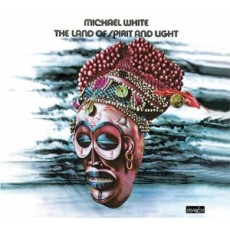
Michael White was born On May 24, 1933 in Houston, Texas and grew up in Oakland, California. He took up the violin when he was nine years old and not becoming known until 1965 when he played with the John Handy Quintet at the Monterey Jazz Festival. He would go on to record three albums with Handy.
White was among the first to play the violin in avant-garde jazz and by the late 1960s became one of the first jazz violinists to play jazz-rock fusion with his band Fourth Way. He has played with musicians such as Sun Ra, Prince Lasha, McCoy Tyner, Eric Dolphy, Wes Montgomery, Kenny Dorham, Joe Henderson, Alice Coltrane, Pharoah Sanders and Richard Davis. In early 2007, The Michael White Quintet’s “Mechanical Man” won in The 6th Annual Independent Music Awards for Best Jazz Song.
Now living in Kobe, Japan, Michael has experienced a long period of obscurity. However, in the mid 1990s he was involved in a reunion of the Handy Quintet, and recorded an album as co-leader with Bill Frisell titled “Motion Picture” and in 2006 White released his ninth album “Voices”.
Violinist Michael White has recorded nine albums as a leader and nine as a sideman with John Coltrane, The Dead Science, Sonny Simmons, The Fourth Way and John Handy. He still records and performs.
Put A Dose In Your Pocket
More Posts: violin
Daily Dose Of Jazz…
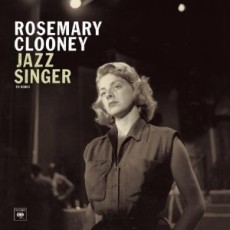
Rosemary Clooney was born on May 23, 1928 in Maysville, Kentucky. When she was fifteen, her parents split up and along with her sister, Betty remained with their father. In 1945, the Clooney sisters won a spot on Cincinnati, Ohio’s radio station WLW as singers. They sang in a duo for much of her early career. Clooney’s first recordings in 1946 were for Columbia Records. She sang with Tony Pastor’s big band. Clooney continued working with the Pastor band until 1949 when making her first as a solo artist a month later still for Columbia.
In 1951, her record of “Come On-a My House”, produced by Mitch Miller, became a hit. It was her first of many singles to hit the charts, despite the fact that Clooney hated the song passionately. She had been told by Columbia Records to record the song, and that she would be in violation of her contract if she did not do so.
Around 1952, Rosemary recorded several duets with Marlene Dietrich and by ’54 she was starring in the movie White Christmas with Bing Crosby, Danny Kaye and Vera-Ellen. She went on to appear on radio and television, including her own half-hour show featuring the Nelson Riddle Orchestra.
Leaving Columbia Records in 1958 for MGM Records doing a number of recordings, then some for Coral Records. Her career languished in part due to depression and drug addiction in the early Sixties but she signed with RCA Victor until 1963, on to Reprise in ‘64, Dot Records in 1965 and moved to United Artist Records in ’66.
Clooney’s career revived in 1974, when she appeared with Bing Crosby on his 50th anniversary in show business. By 1977, she recorded an album a year for the Concord Jazz record label.
Throughout her career Rosemary Clooney continued to perform on radio, sing jingles for television commercials, guest starred on nighttime dramas, parodied on Saturday Night Live, received a Primetime Emmy nomination, collaborated with Barry Manilow, founded the Rosemary Clooney Music Festival, received a Grammy Lifetime Achievement Award and recorded until her death on June 29, 2002.
Give The Gift Of Knowledge
More Posts: vocal
Daily Dose Of Jazz…
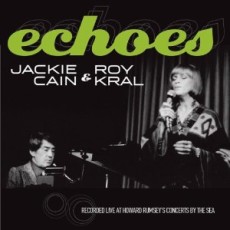
Jackie Cain was born May 22, 1928 in Milwaukee, Wisconsin. By the time she was 18, the blonde and extremely attractive high school graduate decided she wanted to be a jazz singer. The year was 1946 when a friend took her to Chicago and introduced her to Roy Kral, a pianist and arranger who was going places. He took a good look at her, but according to legend wasn’t the least bit interested until he heard her sing.
Liking something about each other, they became a duo using their first names Jackie & Roy and became one of the most enduring combinations in jazz, beginning in the late ’40s when the team began interacting as fellow members of intriguing saxophonist Charlie Ventura’s band. The two continued working together, off and on, until Kral’s death from congestive heart failure at the age of 80 in 2002. The following year Jackie was still going strong, performing at an 85th birthday event for jazz pianist Marian McPartland.
The appeal of Jackie & Roy was about voices, but more accurately about voicings. The two vocalists, who became husband and wife in 1949, sang like twin songbirds but with ranges an octave apart. This blend would be effective in any singing style, but was uniquely suited to the style of jazz vocalese. Along with goofy singer Eddie Jefferson, Jackie & Roy were innovators in a type of jazz singing that is distinct from scat singing.
Her syllables or sheer vocal sounds along with a great sense of humor created enjoyable performances and funniest material. She recorded commercials for Plymouth, recorded Paul Simon and Donovan material, and by 1990 had appeared on over 50 recordings. She has also studied both flute and cello.
Take A Dose On The Road
More Posts: vocal