

Daily Dose Of Jazz…
Eric Revis was born on May 31, 1967 in Los Angeles, California. He grew up listening mostly to funk and rock music and it was not until when he was 14 years of age that he picked up an electric bass and taught himself how to play. He attended Southern University as biology major for a year, Eric relocated to San Antonio, TX where he got a regular gig playing 6 nights a week.
While working the gig Revis got turned onto jazz, notably Kind Of Blue, which influenced him to switch to acoustic bass. He studied under Ellis Marsalis at the University of New Orleans but came to prominence attending the legendary school of Betty Carter in the mid-1990s.
In 1997, Eric met Branford Marsalis at a recording session with Russell Gunn. So impressed with the young bassist asked he Eric to join him on his recording, Bug Shot along with Kenny Kirkland and Jeff “Tain” Watts. The rest is history and the jazz bassist and composer has been a member of Branford Marsalis’s ensemble since 1997.
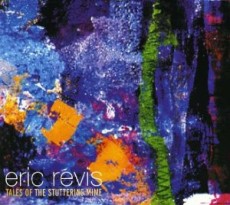
He released his debut album as a leader in 2004 titled Tales of the Stuttering Mime, has a sideman catalogue of thrity albums performing with Branford Marsalis, Kurt Rosenwinkel, Jeff “Tain” Watts, Joe Locke, Ralph Peterson, Orrin Evans, Frank McComb, J.D. Allen, Winard Harper, Sherman Irby and Russell Gunn among others. He has directed the Jazz Ensemble at Trinity University, in San Antonio, Texas from 2007/2008. He continues to perform, record and tour.

Put A Dose In Your Pocket
More Posts: bass

Daily Dose Of Jazz…
Sidney De Paris was born on May 30, 1905 in Crawfordsville, Indiana, the younger brother of trombonist Wilbur De Paris. A distinctive trumpeter who fit into both New Orleans jazz and swing settings, he was particularly expert with mutes. He was also a versatile musician, playing tuba, cornet, flugelhorn and singing from time to time.
From 1926 on into the Sixties, Sidney worked with Charlie Johnson’s Paradise Ten, Don Redman, Zutty Singleton, Benny Carter, Art Hodes, Jelly Roll Morton and Sidney Bechet. He recorded on the famed Panassie sessions of 1938 and as a leader recorded some highly enjoyable and freewheeling sessions in the Forties for Commodore and Blue Note.
He played with his brother Wilbur’s New New Orleans Jazz Band through the ’50s before ill health forced his retirement in the 1960s. Trumpeter Sidney De Paris passed away on September 13, 1967 in New York City.
Give The Gift Of Knowledge
More Posts: trumpet

Daily Dose Of Jazz…
Sean Jones was born on May 29, 1978 in Warren, Ohio. Among his first musical experiences were the gospel music he heard in church where he sang and performed with the Saint James’ Church of God in Christ choir. As a beginning musician, Jones started on the drums and switched to trumpet in the fifth grade after his grandmother told him about his grandfather playing that instrument during World War II. He developed an interest in jazz around the same time, after receiving two albums by Miles Davis from his band instructor, namely Kind of Blue and Tutu.
By the time he entered high school Sean had decided to pursue a career as a professional musician, and studied classical trumpet as well as jazz. In 2000, Jones obtained an undergraduate degree in classical trumpet performance from Youngstown State University and later a master’s degree from Rutgers University.
As a session musician he has performed with several notable ensembles and musicians, including Tia Fuller, Gerald Wilson, Joe Lovano, Tom Harrell, Jon Faddis, Jimmy Heath and Frank Foster. He has had a six-month stint with the Lincoln Center Jazz Orchestra, after which Marsalis offered him a position with the ensemble as lead trumpeter, became a music professor at Duquesne University.
Sean is featured on Nancy Wilson’s Grammy winning “Turned To Blue”, has released five albums for Mack Avenue Records as a bandleader, has played the Monterey, Detroit International and Montreal International Jazz Festivals and currently holds the position of Interim Artistic Director for the Cleveland Jazz Orchestra and held a position as Associate Professor of Jazz Trumpet at Oberlin Conservatory for the 2012-13 academic year. He continues to perform, record, teach and tour.
Take A Dose On The Road
More Posts: trumpet
Daily Dose Of Jazz…
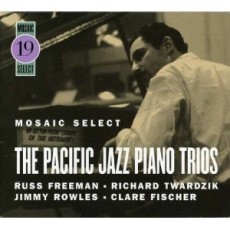
Russell Donald Freeman was born on May 28, 1926 in Chicago, Illinois. He was initially classically trained, but later turned toward jazz of a largely bop style. His reputation as a jazz pianist grew in the 1940s when he worked with Art Pepper, Shorty Rogers and Chet Baker. Among his best work is his extensive collaboration with Shelly Manne, especially in the 1950s and 1960s.
Freeman wrote “The Wind” with original lyrics by Jerry Gladstone and was performed as an instrumental piece during the 1950s and 1960s by the likes of Chet Baker, Leo Wright and Stan Getz as well as sung by vocalist June Christy. Russ’s piano is featured on the 1954 recording of “The Wind,” which has since become a jazz standard, for the album Chet Baker With Strings and Deep I A Dream: The Ultimate Chet Baker Collection, the latter he is featured on seven cuts. In 1991, Mariah Carey wrote her own lyrics to Freeman’s “The Wind” for her album Emotions.
Russ Freeman, bebop and cool jazz pianist, remained busy in music throughout his life, transitioning from jazz pianist to film scoring and composition before his death on June 27, 2002 in Las Vegas, Nevada.
Dose A Day-Blues Away
More Posts: piano
Daily Dose Of Jazz…
Ramsey Emmanuel Lewis, Jr. was born on May 27, 1935 in Chicago, Illinois and began taking piano lessons at the age of four. By 15 he joined his first jazz band, The Cleffs. The seven-piece group provided Lewis his first involvement with jazz and he would later join Cleffs drummer Isaac “Redd” Holt and bassist Eldee Young to form the Ramsey Lewis Trio.
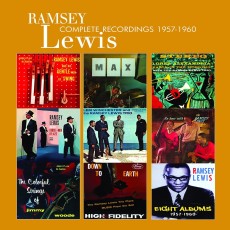
The trio started as primarily a jazz unit and released their first album, Ramsey Lewis And The Gentlemen of Swing, in 1956. Following their 1965 single hit “The In Crowd” that reached #5 on the pop charts and the album #2 they concentrated more on pop material. Young and Holt left in 1966 to form Young-Holt Unlimited and were replaced by Cleveland Eaton and Maurice White.
By 1966, Lewis was one of the nation’s most successful jazz pianists, topping the charts in addition to “The In Crowd” with Hang On Sloopy” and “Wade In The Water”. All three singles each sold over one million copies and were awarded gold discs. Many of his recordings attracted a large non-jazz audience and in the 1970s, he often played electric piano, although by later in the decade he was sticking to acoustic and using an additional keyboardist in his groups.
In addition to recording and performing, Lewis hosted a syndicated morning show on Chicago “smooth jazz” radio station WNUA. His weekly syndicated Legends of Jazz, featured recordings from artists such as David Sanborn, George Duke, Herbie Hancock, Charlie Parker, Dizzy Gillespie, Kurt Elling, Al Jarreau and Miles Davis.
Ramsey has appeared on the Red Hot Organization’s compilation album, Stolen Moments: Red Hot + Cool, his Ramsey Lewis Morning Show became part of Broadcast Architecture’s Smooth Jazz Network, his Legends of Jazz became a television series, he is the artistic director of Jazz at Ravinia, serves on the Board of Trustees for the Merit School of Music and The Chicago High School for the Arts. His Ramsey Lewis Foundation helps connect at-risk children to the world of music. He continues to perform, record and tour.
Inspire A Young Mind
More Posts: piano