

Daily Dose Of Jazz…
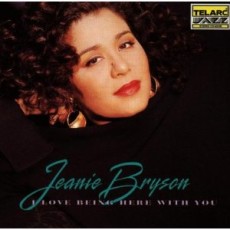
Jeanie Bryson was born March 10, 1958 in New York City, the daughter of songwriter Connie Bryson and Dizzy Gillespie. While matriculating through Rutgers University and studying with jazz pianist Kenny Barron, she began to be increasingly influenced by jazz.
Bryson has performed throughout North and South America, Europe, Israel and Japan and has received international critical acclaim. In addition to her own recordings on Telarc, Bryson has recorded with Etta Jones, Larry Coryell, Grover Washington Jr., Terence Blanchard and Kenny Burrell among others.
Her vocals are a combination of jazz, pop and Latin music and her repertoire is firmly rooted in The Great American Songbook and she has paid tribute to the legacies of Peggy Lee and Dinah Washington. Her “Déjà Blue” project showcased the velvet, sweet, laid-back and melodic voice.
While she continues to perform Jeanie is working on her newest project, “The Dizzy Gillespie Songbook”, a loving and fitting tribute that celebrates her father’s life, his music, and his legacy. She continues to perform and record.
More Posts: vocal
Daily Dose Of Jazz…
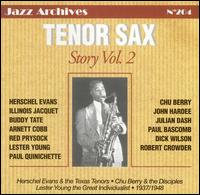
Herschel “Tex” Evans was born March 9, 1909 in Denton, Texas but spent much of his childhood in Kansas City, Kansas learning to play alto saxophone. It was his trombone and guitar-playing cousin, Eddie Dunham who convince him to switch to the tenor, which ultimately established his reputation.
After perfecting his craft in the famous jam sessions held in the jazz district between 12th and 18th streets in Kansas City, Evans returned to Texas in the 1920s and joined the Troy Floyd orchestra in San Antonio in 1929. He stayed with the band until it dispersed in 1932. Evans performed for a time with Lionel Hampton and Buck Clayton in Los Angeles, and in the mid-1930s returned to Kansas City to become a featured soloist in Count Basie’s big band.
For the next three years Herschel’s reputation as a tenor saxophonist was at its peak. His musical duels with fellow band member Lester Young are considered jazz classics. Count Basie’s popular “One O’Clock Jump” featured the contrasting styles of the two musicians and brought to each the praise of both critics and the general public. Evans’s greatest single success was his featured solo on Basie’s hit “Blue and Sentimental”.
Evans also made records with such notable jazz figures as Harry James, Teddy Wilson and Lionel Hampton. Evans has been credited with influencing fellow tenorists Buddy Tate, Illinois Jacquet, and Arnett Cobb. Although not a prolific composer, Evans wrote a number of popular works including the hits “Texas Shuffle” and “Doggin’ Around”. On February 9, 1939, at the age of 29, he died of heart disease in New York City.
More Posts: saxophone
Daily Dose Of Jazz…
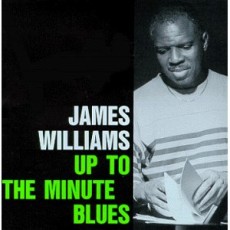
James Williams was born on March 8, 1951 in Memphis, Tennessee and grew up listening to the sounds of Ray Charles, Stevie Wonder, Marvin Gaye and King Curtis. He started playing piano at age 13 and hometown hero Phineas Newborn was his primary influences of jazz piano. He served as organist at the Eastern Star Baptist Church for six years early in his career. He went on to matriculate through Memphis State University with fellow piano students Mulgrew Miller and Donald Brown. It was here that he began playing jazz.
After graduating he immersed himself in the city’s jazz community, performing with Frank Strozier, Jamil Nasser, George Coleman, Harold Mabern, Jr., and other local greats. In 1973 he became a faculty member at the Berklee College of Music, played with Alan Dawson’s group alongside visiting musicians such as Milt Jackson, Art Farmer and Sonny Stitt. His first album as a leader came in 1977 and the next year he joined Art Blakey’s Jazz Messengers, remaining there for four years.
In the early 1980s in Boston he played with Thad Jones, Joe Henderson, Clark Terry, Chet Baker and Benny Carter but by 1984 James was in New York City gigging with Dizzy Gillespie, Freddie Hubbard and Kenny Burrell, Ray Brown, Tony Williams, Elvin Jones and Art Farmer, to name a few.
He would form his own group, the “Intensive Care Unit”, with Christian McBride, Billy Pierce and Tony Reedus. It was during this period in 1984 that he penned and recorded one of his most famous jazz compositions on the Sunnyside label is “Alter Ego”.
By 1999 he was Director of Jazz Studies at William Paterson University, where he remained until his death of liver cancer on July 20, 2004, age 53.
More Posts: piano
Daily Dose Of Jazz…
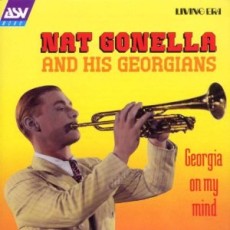
Nathaniel Charles Gonella was born March 7, 1908 in East London, England and took up cornet as a child while at St. Mary’s Guardian School, an institution for underprivileged children. His first professional job interrupted his stint as a furrier’s apprentice when he joined Archie Pitt’s Busby Boy’s Band in 1924. He remained with the band until 1928, and it was during this period that he became acquainted with the early recordings of Louis Armstrong and the New Orleans jazz style.
Nat played and recorded with many prominent jazz musicians, including Billy Cotton, Archie Alexander, Digby Fairweather, Lew Stone, Bob Bryden and Roy Fox. His distinctive vocal style was reminiscent of his idol, Louis Armstrong, though his voice was often eclipsed by his achievements as a bandleader and trumpeter.
Gonella’s standing grew even more quickly after the formation of his own band, “The Georgians”, in 1935, taking the name from his highly popular recording of “Georgia On My Mind” in 1932. He later formed a big band and quickly became a headliner on the variety circuit.
Nat flirted briefly with bebop but returned to the variety stage until a revival of tradition jazz came in the late Fifties. His performing and recording success lasted until the advent of The Beatles in the Sixties, however he toured the northern club circuit and over the next thirty years he continued to sing occasionally with various bands until his death in Gosport on August 6, 1998 at age 90.
More Posts: bandleader,mellophone,trumpet,vocal
Daily Dose Of Jazz…
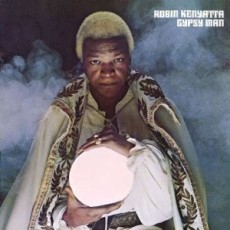
Robin Kenyatta was born Robert Prince Haynes on March 6, 1942 in Moncks Corner, South Carolina but grew up in New York City, learning to play the alto saxophone. He played with Bill Dixon in the 1960s and playing with his project “The October Revolution in Jazz”. Later that decade he played with Jazz Composer’s Orchestra, Roswell Rudd, Sonny Stitt, Archie Shepp and Buddy Miles among others.
By the 1970s he was playing with Alan Silva and Andrew Hill; for a brief time he experimented with instrumental pop music during this decade as well. He moved to Europe during the Seventies, finding it easier to make a living as a jazz musician.
Later in his career he would play with musicians such as Dizzy Gillespie, B. B. King, Dr. John and George Benson; played the Montreux Jazz Festival and went with his own groups on a European tour.
Kenyatta would go on to lead a jazz school in Lausanne, Switzerland during this period. In 2002 Kenyatta returned to the USA becoming active as a director of music in Boston. He died on October 28, 2004 at the age of 62 in Lausanne, leaving behind a catalogue of thirteen albums as a leader and eight as a sideman.
More Posts: saxophone