

Daily Dose Of Jazz…
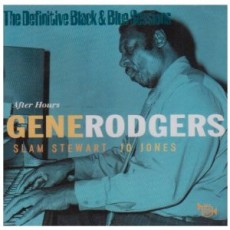
Gene Rodgers was born on March 5, 1910 in New York City. He worked professionally as a pianist from the mid-1920s and over the next few years made recordings with Clarence Williams and King Oliver while also playing with Chick Webb and Teddy Hill.
Rodgers started his own variety show in the 1930s, doing tours of Australia and England recording with Benny Carter in 1936 while in the latter. Upon his return to the States in ‘39 he played with Coleman Hawkins, Zutty Singleton and Erskine Hawkins into the early 40s. During the Forties he worked in Hollywood appearing in the film Sensations of 1945 with Cab Calloway and Dorothy Donegan. After this he worked mainly in New York, leading a trio for many years.
Rodgers appears, with opening title credits, in the 1947 film “Shoot To Kill”, and appearing in the film are two of his compositions “Ballad of the Bayou” and later is “Rajah’s Blues”.
Rodgers recorded sparingly as a leader; he did two sides for Vocalion in 1936, four in a session for Joe Davis in 1945, and albums as a trio leader for EmArcy, Black & Blue Records and 88 Up Right. He played with the Harlem Blues and Jazz Band in 1981-82.
Gene Rodgers, pianist and arranger, best known for his contributions on Coleman Hawkins’ 1939 recording of “Body and Soul”, passed away on October 23, 1987 in New York City.
More Posts: piano
Daily Dose Of Jazz…
Jason Marsalis was born on March 4, 1977 in New Orleans, Louisiana and is the youngest son of pianist Ellis Marsalis. Inheriting the virtuosity and compositional skills associated with the Marsalis family, Jason developed a distinctive, polyrhythmic drumming style. His first professional gig was with his father at the age of twelve, he studied classical percussion at Loyola University in New Orleans, and has worked as a sideman with straight-ahead combos, funk fusion bands, with Casa Samba, a Brazilian percussion ensemble and even a Celtic group.
Jason introduced percussionist Bill Summers to trumpeter Irvin Mayfield and together they co-founded the wildly successful Los Hombres Calientes. Then, at the height of that band’s popularity he left to join up with acclaimed pianist Marcus Roberts.
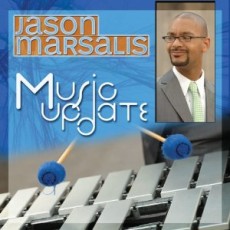
Most recently, Jason has been playing vibraphone, releasing his first album as a leader on vibes in 2009 titled “Music Update”. Earning 4.5 out of 5 stars in Downbeat Magazine, it showcases Jason playing the vibes with his working quartet as well as several over-dubbed drum ensembles titled the “Disciplines”.
Jason also continues to work as a sideman with among others Marcus Roberts, Ellis and Delfeayo Marsalis, John Ellis, Dr. Michael White and Shannon Powell. Along with his father and brothers, he is a recipient of the 2011 NEA Jazz Masters Award and is featured in the non-fiction film on New Orleans jazz culture, “Tradition Is A Temple”.
More Posts: drums,vibraphone
Daily Dose Of Jazz…
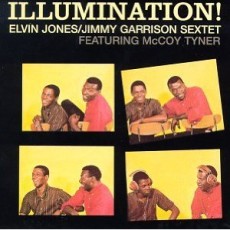
Jimmy Garrison was born on March 3, 1933 in Miami, Florida but grew up in Philadelphia where he learned to play the bass, coming of age during that city’s thriving jazz scene that including McCoy Tyner, Reggie Workman, Henry Grimes and Lee Morgan. He played around Philadelphia with local groups until 1958 when Philly Joe Jones brought him to New York City.
During the time he would freelance with Lennie Tristano, Benny Golson, Bill Evans and Kenny Dorham but got seriously noticed when he joined Ornette Coleman at the Five Spot. Garrison’s long association with Ornette Coleman produced his first recording with him on “Ornette on Tenor” and “Art of the Improvisers”.
Jimmy would go on to play and record with Archie Shepp and Pharoah Sanders but his greatest collaboration was his six-year collaboration with the John Coltrane Quartet when he replaced Reggie Workman. In concert with Trane he would play unaccompanied solos, sometimes as a prelude to a song before the other musicians joined in.
He and drummer Elvin Jones have been credited with eliciting more forceful playing than usual from Coleman on the albums “New York Is Now” and “Love Call”. Before his passing he would play with Kenny Dorham, Curtis Fuller, Jackie McLean, Lee Konitz, Hampton Hawes, Benny Golson and Tony Scott. Bassist Jimmy Garrison passed away on April 7, 1976.
More Posts: bass
Daily Dose Of Jazz…
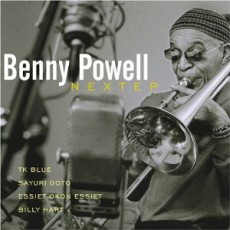
Benjamin Gordon Powell Jr. was born on March 1, 1930 in New Orleans, Louisiana. He first played professionally at age 14 and by 18 he was playing with Lionel Hampton. In 1951 he left Hampton’s band and joined Count Basie, where he remained until 1963. Powell takes the trombone solo in the bridge of Basie’s 1955 recording of “April In Paris”.
After leaving Basie, Benny freelanced in New York City and from 1966 to 1970 he was a member of the Thad Jones-Mel Lewis Jazz Orchestra, playing Monday nights at the Village Vanguard. Among other engagements, he played in the house band of the Merv Griffin Show, relocating to Los Angeles, California when the show moved to the West Coast in 1970.
During this period Powell did extensive work as a session musician working with Abdullah Ibrahim, John Carter and Randy Weston. In the 80s he moved back to New York and added educator to his resume becoming part of the Jazzmobile and later, in 1994 teaching at the New School for Jazz and Contemporary Music.
Benny Powell, tenor and bass trombonist, died following back surgery on June 26, 2010 in Manhattan, New York City. He was 80 years old.
More Posts: trombone
Daily Dose Of Jazz…
Donald Rafael Garrett was born on February 28, 1932 in El Dorado, Arkansas but was raised in Chicago, Illinois. While in high school he first studied clarinet and then bass under Captain Walter Dyett. By the late 50s he was working closely with Muhal Richard Abrams, becoming a member of his Experimental Band in the Sixties.
It was during this time that he worked with Ira Sullivan, Eddie Harris, Dewey Redman and Rahsaan Roland Kirk but by the mid-sixties he relocated to San Francisco and formed a band called Sound Circus. He stayed on the West coast into the 70s working with such jazz greats as Archie Shepp, Sonny Rollins, Pharoah Sanders and numerous more including performing and recording on four John Coltrane albums – Om, Kulu Se Mama, Selflessness and Live In Seattle.
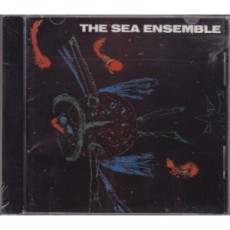
In 1971 he formed the Sea Ensemble with Zusaan Kali Fasteau and embarked on a world tour for the next several years, the duo funding their travels with Fasteau giving music lessons and Garrett skillfully making bamboo flutes. Throughout his career he studied Turkish music, added flute to his instrumental repertoire, became an educator, writer, researcher and continued to perform and record with Johnny Griffin, Sonny Stitt, Joe Henderson, Billy Bang and other great jazz musicians.
Donald Garrett, multi-instrumentalist best known for his work with John Coltrane and the free jazz musicians and improvisers of the 60s and 70s, passed away on August 17, 1989.
More Posts: saxophone