

Daily Dose Of Jazz…
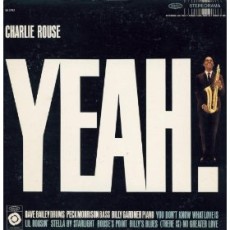
Charlie Rouse was born on April 6, 1924 in Washington, DC. He played tenor saxophone and flute, developing a distinctive nasal tone complimenting a bop-oriented style. Rouse moved very little, looked straight-ahead and wore a solemn expression when he played. He became highly influential by association with Thelonious Monk from 1959 to 1970. He would later become a founding member of Sphere, a band that paid tribute to Monk’s music.
Throughout the forties Rouse worked with Billy Eckstine, Dizzy Gillespie, Duke Ellington, made his recording debut with Tadd Dameron, and as the 50’s opened he was a part of Count Basie’s octet, and worked with Clifford Brown and Oscar Pettiford. He co-led the Jazz Modes with Julius Watkins and would go on to work with Mal Waldron. He would record, as a leader gaining some recognition by the eighties; with Carmen McRae on her classic Carmen Sings Monk project, and his last recording would be a Monk tribute concert.
The hard bop tenor and flautist died of lung cancer at the age of 64 in Seattle, Washington on November 30, 1988. Coincidently, Monk’s patroness NIca de Koenigswarter died the same day in New York City.
Daily Dose Of Jazz…
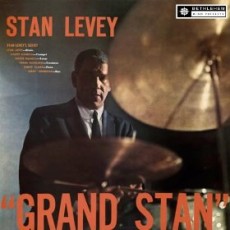
Stan Levey was born in Philadelphia, Pennsylvania on April 5, 1926, the son of a car salesman and boxing promoter. A self-taught prodigy, at age 16 Levey went to a local club where Dizzy Gillespie was headlining and convinced him to let him sit in on drums. So impressed was Dizzy that he offered the youngster an opportunity to join the group full-time. Taking some heat for recruiting a white, Jewish 16 year old to anchor his band, Dizzy simply responded – “show me a better black drummer and I’ll hire him”.
Levey joined the group, relocated to New York City with Dizzy, joined a small band led by Coleman Hawkins featuring Thelonious Monk, cut his first recording session with Art Tatum, played with Ben Webster and sat in with Woody Herman’s First Herd when regular drummer was unavailable.
In 1945 Levey joined Charlie Parker’s Quintet and when Dizzy and Charlie joined forces later that year they kept Levey and brought in bassist Al Haig and pianist Curly Russell. Considered the first and most innovative bebop lineup in history and it was during this period that classic standards like “A Night In Tunisia”, “Manteca” and Groovin’ High” were written.
During the late 40’s Levey toured with Norman Granz’s Jazz At The Philharmonic, in 1951 returned to Philly and formed his own band, worked five years with Stan Kenton, settled on the West coast joining Howard Rumsey’s Lighthouse All Stars and his drumming would influence the emerging West Coast jazz sound. He increased his session playing backing the likes of Sinatra, Fitzgerald, Holiday and Streisand. He played on over three hundred soundtracks for television and film, and turned his passion for photography into shooting a number of record covers.
Levey retired from music in 1973 to pursue his love of photography and he covered everything from fashion spreads to industrial photos to record jackets. On April 19, 2005 he passed away in Van Nuys, California at the age of 79. He never returned to music.

More Posts: drums
Daily Dose OF Jazz…
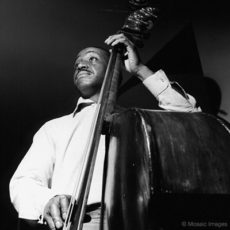
Gene Ramey, born April 4, 1913 in Austin, Texas, began playing trumpet in college but switched to the sousaphone when he played with George Corley’s Royal Aces, The Moonlight Serenaders and Terence Holder. It wasn’t until his move to Kansas City in 1932 that he took up the bass, studying with Walter Page.
Becoming a fixture in the Kansas City jazz scene, the double bassist played with Jay McShann’s orchestra from 1938 to 1943. Never a leader but a most sought after sideman, especially once he moved to New York, Ramey played with the who’s who of jazz including but not limited to Lester Young, Coleman Hawkins, Charlie Parker, Count Basie, Ben Webster, Hot Lips Page, Horace Silver, Thelonious Monk and Miles Davis.
His transition into bebop was easily accomplished due to the countless hours of daily practice with his friend Bird. They developed their style without drums, piano or other horns and Ramey was soon the first bassist to play the whole harmony chord while Bird ran his changes. Ramey is credited with stating that long before the jazz world started calling it bop he and Bird had created this pattern.
Ramey had a prolific career as a bassist for over three decades, never losing touch with Dixieland or swing as witnessed in his solos on recording sessions. Returning to Austin in 1976 his short-lived retirement led to lessons to local bassists, then to live performances and full-time musicianship until a heart attack caused his death on December 8, 1984.

More Posts: bass
Daily Dose Of Jazz…
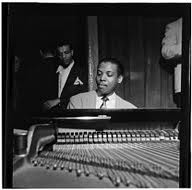
Kenny Kersey was born on April 3, 1916 in Harrow, Ontario into a musical family and studied piano and trumpet while attending the Detroit Institute of Musical Arts. In 1936, Kersey moved to New York City where he played with Lucky Millinder, Billy Hicks, Frankie Newton, Billie Holiday, Roy Eldridge, Red Allen and Cootie Williams.
In 1942 he replaced Mary Lou Williams as Andy Kirk’s pianist and Kirk recorded his composition “Boogie Woogie Cocktail”. He joined the Army from 1943 to 1945, where he occasionally played trumpet in military bands, then played from 1946 to 1949 with the Jazz at the Philharmonic touring ensembles. He continued to play with noted musicians through the 1950s, including Eldridge and Allen again, as well as Buck Clayton, Edmond Hall, Sol Yaged, and Charlie Shavers.
Kersey retired from music late in the 1950s after being diagnosed with a bone ailment. He recorded twelve tunes as a bandleader – four for Savoy in 1946, two for Clef in 1949, two for Circle in 1950, and four for Foxy in 1951 which featured Hot Lips Page and Paul Quinichette and as sidemen. Kenny Kersey passed away on April 1, 1983 in New York City.
More Posts: piano
Daily Dose Of Jazz…
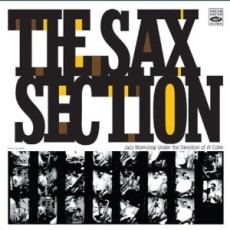
Abraham Samuel “Boomie” Richman was born on April 2, 1922 in Brockton, Massachusetts and began his career as a tenor saxophonist playing locally in his hometown. Moving to New York at twenty and within three years became a key soloist with the Tommy Dorsey Orchestra, a gig that lasted for six years at the height of the big band era. Playing a Selmer Tenor Mark VI saxophone with a baritone reed with a wide flare created a very expensive sound for the tenor who also played clarinet, bass clarinet, piccolo and flute.
Following his leaving the Dorsey band he were spent as a session player for the likes of Ella Fitzgerald, Tony Bennett, Nat King Cole, Frank Sinatra, Rosemary Clooney, Lena Horne, Sammy Davis, Benny Goodman, Peggy Lee, Judy Garland and Buddy Holly.
Richman played with Benny Goodman off and on throughout the early fifties. Upon his retirement from Goodman in 1956, he became the ‘first-call’ studio ace in New York City recording for television and radio commercials. This had him playing on shows hosted by Jimmy Dean, Perry Como, Dick Cavett, Patti Page, Pat Boone and Andy Williams. His last recording was for the movie The Godfather. His swing-based style remained unchanged well into the eighties when he retired from the music scene.

More Posts: saxophone