

Daily Dose Of Jazz…
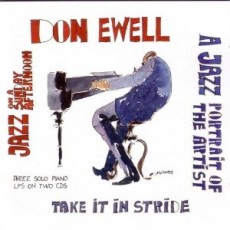
Don Ewell was born November 14, 1916 in Baltimore, Maryland. Playing stride piano, from 1956 to 1962, Ewell was a leading member of the Jack Teagarden band. Following Teagarden’s death Ewell did several European tours before moving back to New Orleans, playing clubs and hotels.
Ewell played with such musicians as Sidney Bechet, Kid Ory, George Lewis, George Brunis, Muggsy Spanier, Barbara Dane and Bunk Johnson among others.
He recorded a couple of albums as a leader for the Pumkin and Good Time Jazz labels and as a sideman with Willie “The Lion” Smith, Barbara Dane and Doc Evans. Pianist Don Ewell suffered two strokes before passing away on August 9, 1983.

More Posts: piano
Daily Dose Of Jazz…
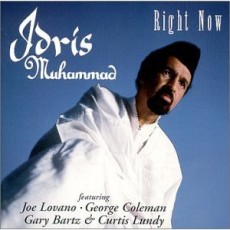
Idris Muhammad was born Leo Morris on November 13, 1939 In New Orleans, Louisiana. Learning to play drums in his youth, at fifteen he played on Fats Domino’s 1956 hit “Blueberry Hill” and by sixteen he turned professional, playing primarily soul and R&B during the early sixties. In 1965 he was a member of Lou Donaldson’s band, then went on to become the house drummer for Prestige Records from 1970-72.
As a sideman Idris would play with Johnny Griffin, Nat Adderley, George Benson, Paul Desmond, Pharoah Sanders, George Coleman and the Paris Reunion Band and record with Ahmad Jamal, Grant Green, Grover Washington, Jr., Hank Crawford, Benjamin Herman, Andrew Hill, Freddie Hubbard, Bobbi Humphrey, Gene Ammons, Rodney Jones and Houston Person among others.
Known for his funky playing style, as a leader he has recorded everything from post-bop to dance music for such labels as Prestige, Kudu, Fantasy, Theresa, and Lipstick. He changed his name in the 1960s upon his conversion to Islam and is endorsed by Istanbul Agop cymbals. Drummer Idris Muhammad continues to compose, record and perform.

More Posts: drums
Daily Dose Of Jazz…
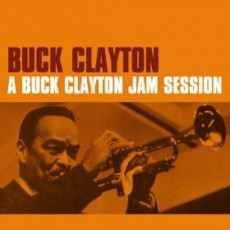
Buck Clayton was born Wilbur Dorsey Clayton in Parsons, Kansas on November 12, 1911 and played piano when he was six years old, switching to trumpet from the age of seventeen, being trained by Bob Russell of George E. Lee’s band and Mutt Carey, who would later emerged as a prominent west-coast revivalist in the 1940s.
In his early twenties Buck was based in Los Angeles, California, was briefly a member of Duke Ellington’s Orchestra and worked with other leaders. He later formed a band named “14 Gentlemen from Harlem” in which he was the leader of the 14-member orchestra.
From 1934 he was a leader of the “Harlem Gentlemen” in Shanghai and was treated as an elite personage. However, his experience was not always pleasant as he faced the racism he hoped to escape America by being discriminated against and attacked by American marines stationed there.
Returning to the States, Clayton joined Count Basie in Kansas City and from 1937 was in New York playing first trumpet with the band and freelancing recordings sessions with Billie Holiday, Lester Young and Sy Oliver. Following WWII he prepared arrangements for Count Basie, Benny Goodman and Harry James, and became a member of Norman Granz’s Jazz at The Philharmonic, performing with Coleman Hawkins and Charlie Parker.
Buck would spent time in Paris leading his own band, perform with Jimmy Rushing, Frank Sinatra, Mezz Mezzrow, Earl Hines, return to the States and embarked on a series of jam sessions with artists such as Kai Winding, J. J. Johnson and Frankie Laine and under his own name at Vanguard with Ruby Braff, Mel Powell and Sir Charles Thompson. He would go on to appear in The Benny Goodman Story, perform with Sidney Bechet, tour Europe, and record for Swingsville and tour with Eddie Condon.
Clayton underwent lip surgery and gave up playing the trumpet from 1972 to 1977, but quit again in 1979, working as an arranger and teaching at Hunter College. His semi-autobiography Buck Clayton’s Jazz World, co-authored by Nancy Miller Elliott, first appeared in 1986. In the same year, his new Big Band debuted at the Brooklyn Museum, touring internationally and contributing 100 compositions to the band book. Trumpeter Buck Clayton passed away quietly in his sleep in New York City on December 8, 1991.

More Posts: trumpet
Daily Dose Of Jazz…
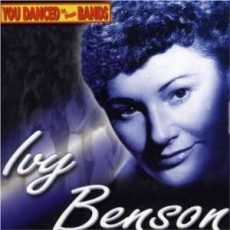
Ivy Benson was born on November 11, 1913 in Holbeck, Leeds, England. Her father Digger Benson, a musician who played with ensembles, began teaching her to play piano at the age of five. She played at working men’s clubs from the age of eight, billed as Baby Benson, and performed on BBC Radio’s Children’s Hour at nine years.
Ivy’s father had ambitions for her to become a concert pianist, but she was inspired to become a jazz musician after hearing a Benny Goodman record and learned to play clarinet and alto saxophone. Leaving school at 14, she took a job at the Montague Burton factory in Leeds, putting aside half a crown from her wages each week to save up for her first saxophone, supplementing her income by playing evenings in dance bands.
Benson joined a sextet, Edna Croudson’s Rhythm Girls in 1929, touring with them until 1935, followed by Teddy Joyce and the Girlfriends where she became a featured soloist. Moving to London in the late 1930s, she formed her own band and her first significant engagement was performing with the all-female revue Meet the Girls, starring Hylda Baker.
During World War II opportunities opened up and Ivy’s band became the BBC’s resident dance band in 1943 and was top of the bill at the London Palladium for six months in 1944. By wars end she was playing the VE Day celebration in Berlin, touring Europe and the Middle East performing for Allied troops, headlining variety theatres and performing at the 1948 Summer Olympics. Over the next thirty years the band experience much success with television appearances, a tribute on This Is Your Life, and a speaking role in the film The Dummy Talks.
The group disbanded in 1982 but she was honored as a fellow of Leeds Polytechnic, a plaque at her childhood home and a play, The Silver Lady, was based on her life. Retiring to Clacton-on-Sea, Essex, multi-instrumentalist Ivy Benson passed away on May 6, 1993 at age 79.
Daily Dose Of Jazz…
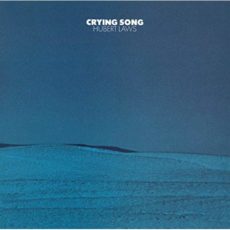
Hubert Laws was born November 10, 1939 in the Studewood section of Houston, Texas, the second of eight children. He grew up across the street from a honky-tonk called Miss Mary’s Place where his grandfather played harmonica and his mother, a pianist, played gospel music. He began playing flute in high school after volunteering to substitute for the school orchestra’s regular flutist. Becoming adept at jazz improvisation he played in the Houston-area jazz group the Swingsters, which eventually evolved into the Modern Jazz Sextet, the Night Hawks, and The Crusaders. At age 15, he was a member of the early Jazz Crusaders while in Texas from 1954–60. Multi-talented, he also played classical music during those years.
A scholarship to Juilliard School of Music in 1960 saw him studying music in the classroom and with master flutist Julius Baker. Laws went on to play with both the New York Metropolitan Opera Orchestra (member) and the New York Philharmonic Orchestra during the years 1969–72. In 971 he recorded renditions of classical compositions by Fauré, Stravinsky, Debussy, and Bach on the CTI album Rite of Spring with strings and enlisted the talents of Airto Moreira, Jack DeJohnette, Bob James, and Ron Carter.
During his years at Juilliard he played flute with Mongo Santamaría and began recording as a bandleader for Atlantic in 1964, releasing the albums The Laws of Jazz, Flute By-Laws, and Laws Cause. He has worked with In the Seventies he can also be heard playing tenor saxophone on some recordings.
The 1980’s saw the minor hit Family on CBS Records getting played on many UK soul radio stations. In the 1990s Hubert resumed his career, recording with opera singers Kathleen Battle and Jessye Norman. His albums on the Music Masters Jazz label—My Time Will Come in 1990 and Storm Then Calm in 1994 show a return to his old form of his early 1970s albums.
Over the course of his career he also recorded with Herbie Hancock, McCoy Tyner, Nancy Wilson, Quincy Jones, Paul McCartney, Paul Simon, Aretha Franklin, Ella Fitzgerald, Sarah Vaughan, Lena Horne, Leonard Bernstein, James Moody, Jaco Pastorius, Sérgio Mendes, Bob James, Carly Simon, George Benson, Clark Terry, Stevie Wonder, J. J. Johnson, The Rascals, Morcheeba Ashford & Simpson, Chet Baker, George Benson, Moondog, his brother Ronnie, Gil Scott-Heron, among others, and was a member of the New York Jazz Quartet. .
Laws has been honored with the Lifetime Achievement Awards from the National Flute Association and the National Endowment for the Arts in the field of jazz, as well as a recipient of the NEA Jazz Masters Award and three Grammy nominations. Flautist and tenor saxophonist Hubert Laws continues to compose, record and perform.
