

Daily Dose Of Jazz…
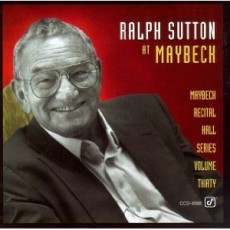
Ralph Earl Sutton was born on November 4, 1922 in Hamburg, Missouri. A stride pianist in the tradition of James P. Johnson and Fats Waller, he had a stint as a session musician with Jack Teagarden’s band before joining the Army during World War II.
After the war, he played at various venues in Missouri, eventually ending up in New York City at Eddie Condon’s club in Greenwich Village. Relocating to San Francisco in 1956, Sutton recorded several albums with Bob Scobey’s Dixieland band.
Ralph recorded for Riverside and Arbors Record labels as a leader and played and recorded with Johnny Varro, Ruby Braff and Dick Cary as a sideman. From the 1960s onward, he worked mostly on his own up until the time of his death on December 30, 2001 in Evergreen, Colorado. The following year pianist Ralph Sutton was inducted into the Big Band and Jazz Hall of Fame.

More Posts: piano

Daily Dose Of Jazz…
Jane Monheit was born November 3, 1977 in Oakdale, New York on Long Island. As a child, Jane spent her summers as a student at the Usdan Center For the Creative and Performing Arts, and is a recipient of their distinguished alumna award.
She began singing professionally while attending Connetquot High School in Bohemia, N.Y. from which she graduated in 1995. As a student at the Manhattan School of Music she studied voice under Peter Eldridge, graduated with honors. Monheit was the first runner up to Teri Thornton in the 1998 Thelonious Monk Jazz Institute’s vocal competition.
An international artist, Jane has performed at most of the major concert halls, cabarets and jazz venues around the globe. She has released seven albums and two DVDs, and has appeared as a guest artist on many others, as well as soundtracks for the movie “Sky Captain and the World of Tomorrow” singing Over The Rainbow.
Monheit has appeared on numerous television shows and also been a featured performer in the nationally televised Christmas at the White House, the Capitol Fourth of July Celebration, and The National Memorial Day Celebration.
Vocalist Jane Monheit has collaborated with artists such as Michael Bublé, Ivan Lins, Terence Blanchard and Tom Harrell and has been nominated twice for her recordings. She spends most of the year on tour with her band but also performs with the major symphonic orchestras throughout the country.

More Posts: vocal
Daily Dose Of Jazz…
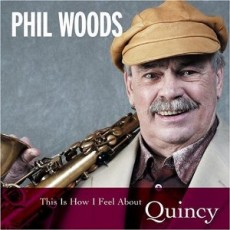
Phil Woods was born Philip Wells Woods on November 2, 1931 in Springfield, Massachusetts. He studied music with his great influence Lennie Tristano, at the Manhattan School of Music and at The Julliard School.
After moving to France in 1968, Phil led the avant-garde jazz group The European Rhythm Machine, and then returned to the United States in 1972 and unsuccessfully attempting to establish an electronic group formed a quintet, which is still performing with some changes of personnel.
Although Woods is primarily a saxophonist he is also a fine clarinet player and solos can be found scattered through his recordings. His pop credits include the alto solos on Billy Joel’s Just The Way You Are, Steely Dan’s Doctor Wu and Paul Simon’s Have A Good Time.
Phil has worked with the likes of Manny Albam, Kenny Burrell, Gary Burton, Ron Carter, Lou Donaldson, Bill Evans, Art Farmer, Dizzy Gillespie. Stephane Grappelli, Milt Jackson, Quincy Jones, Mundell Lowe, the Modern Jazz Quartet, Thelonious Monk, Oliver Nelson, Lalo Schifrin, Shirley Scott, Clark Terry and Ben Webster among others.
He has amassed 34 sessions as a sideman and nearly four-dozen albums as a leader and has been nominated for seven Grammy Awards and won one for Images: “Best Large Jazz Ensemble Performance”, and three for “Best Instrumental Jazz Performance, Individual or Group” for Live from the Show Boat, More Live, and At the Vanguard.
His 2005 documentary film “A Life in E Flat” – Portrait of a Jazz Legend” offers an intimate portrait of Woods during a recording session of the Jazzed Media album This is How I Feel About Quincy. In 2007, Phil received a “Jazz Master” award from the National Endowment of the Arts. Saxophonist, clarinetist and composer Phil Woods was married to Chan Parker, the widow of Charlie Parker, until her death in 1999. He continued to perform, record and tour until his passing on September 29, 2015 in East Stroudsburg, Pennsylvania.


Daily Dose Of Jazz…
Carmen Lundy was born November 1, 1954 in Miami, Florida and at the age of six began to study the piano. After joining her church junior choir, she decided to become a singer when she was 12 years old. While an opera major at the University of Miami she sang with a jazz band and her decision to sing vocal jazz was cemented.
Moving to New York in 1978 Carmen was hired by the Mel Lewis/Thad Jones Big Band and performed her first engagement at the Village Vanguard in Greenwich Village. Two years later she formed her own trio, performing with pianists John Hicks and Onaje Allan Gumbs. She has also performed with Walter Bishop Jr., Don Pullen, Mulgrew Miller, Terri Lyne Carrington, Courtney Pine, Bill O’Connell, Steve Berrios, Marian McPartland, Kenny Kirkland and numerous others.
Lundy recorded her first album of original compositions Good Morning Kiss in 1985 followed by her sophomore project Night and Day the next year featuring musicians Kenny Kirkland, Alex Blake, her brother Curtis Lundy, Victor Lewis, Rodney Jones and Ricky Ford.
Carmen played the lead role in the European tour of Duke Ellington’s Broadway musical, Sophisticated Ladies. Off-Broadway she portrayed Billie Holiday in Lawrence Holder’s They Were All Gardenias. She made her television debut in 1990 as the star of the CBS pilot-special Shangri-La Plaza in the role of Geneva.
A composer, arranger, producer, actress, painter, and sophisticated vocalist well known for her progressive bop and post-bop styling’s, Lundy has composed and published forty songs with favorites such as Quiet Times, Forgive Me, The Out Crowd, and Never Gonna Let You Go that have been recorded by Kenny Barron, Ernie Watts and Straight Ahead. With thirteen albums to her credit Carmen Lundy continues to focus on original material as she moves her three-decade career forward.


Daily Dose Of Jazz…
Ethel Waters was born in Chester, Pennsylvania on October 31, 1896 as a result of the rape of her teenaged mother, Louise Anderson by pianist and family acquaintance John Waters. Raised in poverty and never living in the same place for more than 15 months she had a difficult childhood.
Waters grew tall, standing 5’9½” in her teens, married at the age of 13, but soon left her abusive husband and became a maid in a Philadelphia hotel working for $4.75 per week. On her 17th birthday, she attended a costume party at a nightclub on Juniper Street and persuaded to sing two songs, she impressed the audience so much that she was offered professional work at the Lincoln Theatre in Baltimore, Maryland.
After Baltimore, Ethel toured on the black vaudeville circuit but success fell on hard times and she joined a carnival. Leaving that life in Chicago she headed to Atlanta, working the same clubs with Bessie Smith, singing ballads and popular songs instead of blues. But fame found her after her move to Harlem and its renaissance in the 1920s. She landed her first club gig in Harlem at Edmond’s Cellar, became an actress in the blackface comedy “Hello 1919”, and in 1921 became the fifth black woman to make a record, on the tiny Cardinal Records label. She later joined the Black Swan Record label where Fletcher Henderson was her accompanist.
She recorded for numerous labels over her career, played untold clubs and tours throughout the U.S. introducing standards like Dinah, Sweet Georgia Brown, Am I Blue and Black and Blue and worked with Duke Ellington. Film wooed her in 1933 with Rufus Jones for President featuring child star Sammy Davis Jr. in the title role. She went on to star at the Cotton Club singing Stormy Weather, had a featured role in the wildly successful Irving Berlin Broadway musical revue As Thousands Cheer in 1933, where she was the first black woman in an otherwise white show introducing Heat Wave and Supper Time to the world and was the highest paid performer on Broadway. In 1942 she starred in the Vincent Minnelli directed success Cabin In The Sky, reprising her 1940 stage role as Petunia.
Ethel Waters has three songs in the Grammy Hall of Fame, her version of Stormy Weather is on the Library of Congress’ National Recording Registry, was nominated for an Emmy for her performance in Route 66, was the second Black woman to be nominated for an Oscar for her role in Pinky, has a star approved but not funded on the Hollywood Walk of Fame, has written two autobiographies – His Eye is on the Sparrow and To Me, It’s Wonderful. The blues, jazz and gospel vocalist and actress passed away on September 1, 1977, aged 80, from uterine cancer, kidney failure, and other ailments in Chatsworth, California.

More Posts: vocal