

Daily Dose Of Jazz…
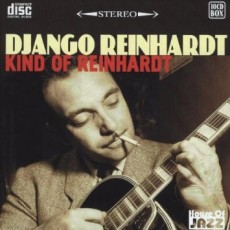
Jean Reinhardt better known as “Django” was born on January 23, 1910 in Liberchies, Pont-a-Celles, Belgium into a French family of Manouche Romani descent. His family made cane furniture for a living but it was comprised of several good amateur musicians. He spent most of his youth in Romani encampments close to Paris, where he started playing violin, banjo and guitar.
Reinhardt was attracted to music at an early age, first playing the violin. At age 12, he received a banjo-guitar as a gift and quickly learned to play by mimicking the fingerings of musicians he watched. By age 13, Reinhardt was able to make a living playing music. He received little formal education and acquired the rudiments of literacy only in adult life. His first known recordings, made in 1928, were of him playing the banjo.
At age 18 in 1928 Reinhardt was injured in a fire started by a knocked over candle. Over half his body suffered burns, two fingers and one leg were paralyzed and it was thought he would never walk or play again. But with therapy and practice he re-learned to play differently and walked with a cane.
The years between 1929 and 1933 were formative musically for Django when he became attracted to jazz listening to Louis Armstrong. Shortly thereafter he met Stephane Grappelli who had similar interests. The two became musical partners. In 1934, with an invitation by Hot Club de France secretary Pierre Nourry, he and Grappelli formed the Quintette du Hot Club de France. Over the years it hosted different players and adding a singer but for the most part allowed only stringed instruments.
In 1933, Reinhardt recorded two takes each of vocal numbers “Parce-que je vous aime” and “Si, j’aime Suzy”, continued to record into 1934, and in 1935 he and Stephane recorded sides for Decca Records. He played and recorded with Adelaide Hall, Coleman Hawkins, Benny Carter, Rex Stewart, Louis Armstrong, Dizzy Gillespie, and Duke Ellington.
By 1946, he was debuting at the Cleveland Music Hall as a special guest soloist with Duke Ellington and His Orchestra. As part of the U.S. tour Django also played two nights at Carnegie Hall, then secured an engagement at Café Society Uptown, where he played four solos a day, backed by the resident band drawing large audiences.
Returning to France in ’47, Reinhardt became re-immersed in Gypsy life, finding it difficult to adjust to the postwar world. Missing sold-out concerts, showing up without guitar or amplifier and wandering off were commonplace. However, during this period he continued to attend the R-26 artistic salon in Montmartre, improvising with his devoted collaborator, Stéphane Grappelli.
From 1951 until his death at age 43 on May 16, 1953 of a brain hemorrhage, Reinhardt retired to Samois-sur-Seine near Fontainbleau. He had continued to play in Paris jazz clubs and began playing electric guitar. (He often used a Selmer fitted with an electric pickup, despite his initial hesitation about the instrument.) His final recordings made with his “Nouvelle Quintette” in the last few months of his life show him moving in a new musical direction; he had assimilated the vocabulary of bebop and fused it with his own melodic style.

Give The Gift Of Knowledge
More Posts: guitar
Daily Dose Of Jazz…
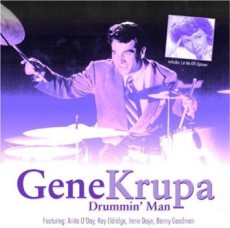
Gene Krupa was born Eugene Bertram Krupa on January 15, 1909 in Chicago, Illinois. Originally groomed for the priesthood by his parents, he He spent his grammar school days at various parochial schools and upon graduation, attended Saint Joseph’s College for a year, but later decided it was not his vocation. He studied with Sanford A Moeller and began playing drums professionally in the mid-1920s with bands in Wisconsin.
Gene broke into the Chicago scene in 1927, when he was picked by MCA to become a member of Thelma Terry and Her Playboys, the first notable American Jazz band to be led by a female musician. The Playboys were the house band at The Golden Pumpkin nightclub in Chicago and also toured extensively throughout the eastern and central United States.
Making his first recordings in 1927 with a band under the leadership of guitarist Eddie Condon and Red McKenzie, Krupa recorded others on the Chicago scene such as Bix Beiderbecke. His big influences during this time were Tubby Hall, Zutty Singleton and Baby Dodds.
By 1934 he joined Benny Goodman’s band, where his featured drum work made him a national celebrity. His tom-tom interludes on their hit “Sing, Sing, Sing” were the first extended drum solos to be recorded commercially. He made a cameo appearance in the 1941 film, Ball of Fire, in which he and his band performed an extended version of the hit Drum Drum Boogie, which he had composed with trumpeter Roy Eldridge. He also appeared in The Best Years Of Our Lives in 1946 during the waning years of the big band era.
1951 saw Gene leading a trio or quartet, appeared regularly with the Jazz At The Philharmonic band, never quite adjusted to be-bop, and by the end of the decade returned to Hollywood appearing in such films as The Glenn Miller Story, The Benny Goodman Story and had a biography starring Sal Mineo titled The Gene Krupa Story, featuring a cameo appearance by Red Nichols.
During the 1960s he played clubs in Washington, DC and New York but increasingly troubled by back pain, he retired in the late 1960s and opened a music school. He would give instruction to future KISS drummer Peter and Jerry Nolan of the New York Dolls. He occasionally played in public in the early 1970s until shortly before his death. Gene Krupa, big band drummer, band leader, actor and composer, known for his highly energetic and flamboyant style passed away on October 16, 1973.
Take A Dose On The Road
More Posts: drums
Daily Dose Of Jazz…
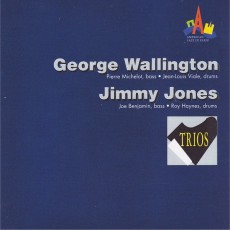
Jimmy Jones was born James Henry Jones on December 30, 1918 in Memphis, Tennessee and learned guitar and piano as a child. By the late 1920 he was playing in various orchestras in Chicago and played a trio with Stuff Smith in the mid 40s.
Following this period Jones would play with Don Byas, Dizzy Gillespie, J.C. Heard, Buck Clayton, Etta Jones and Sarah Vaughan into the early Fifties. He recorded with Clifford Brown in 1954 and toured Europe. During the Sixties he would play with Anita O’Day, Helen Merrill, Gil Evans, Dakota Staton, Morgana King, Harry Belafonte, Johnny Hodges, Clark Terry, Duke Ellington, Kenny Burrell and Cannonball Adderley on the short list.
Jimmy had a prolific career also as an arranger, working with Wes Montgomery, Nancy Wilson, Shirley Horn, Joe Williams, Billy Taylor and Chris Connor and recorded with Harry “Sweets” Edison, Ben Webster, Coleman Hawkins, Frank Wess, Milt Jackson and others. His recording catalog was limited as a leader releasing two album for the Riverside label in 1946. Jimmy Jones passed away on April 29, 1982 in Los Angeles, California.
Take A Dose On The Road
More Posts: piano
Daily Dose Of Jazz…
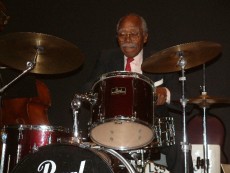
Butch Ballard was born George Edward Ballard on December 26, 1918 in Camden, New Jersey but grew up in Frankford, Pennsylvania. Following American Legion parades near his home, as a child he focused on the drummer and around 10 years old, his father bought him a set of drums. He took lessons for 75 cents each and continued his musical education Northeast High School in Philadelphia.
By 16 Ballard saw Herb Thorton, sat in and played and was invited to join a band by a man who heard him, and over the next few months rehearsed and played. In 1938, he started playing with Louis Armstrong’s band The Dukes, followed by stints with Cootie Williams, Ella Fitzgerald, Sarah Vaughan, Dinah Washington and Pearl Bailey.
Butch served in the Navy during WWII, then went to New York and worked with Eddie “Lockjaw” Davis, Eddie Vinson, Arnett Cobb and Clark Terry. He replaced Shadow Wilson in the Basie band in the late 1940s. The Fifties saw him touring Europe with the Ellington outfit and playing with Harry Carney, Paul Gonsalves, Billy Strayhorn, Kay Davis and Wendell Marshall. He declined the invite to join permanently because he didn’t want to change his drumming style to suit Duke, though he did record with him on such tunes as Satin Doll.
By the Sixties he was back in Philadelphia leading his own band and over the course of his career worked with the likes of John Coltrane, Harry “Sweets” Edison, Cat Anderson, Fats Waller, Lucky Millinder, Bootsie Barnes and Mercer Ellington among others.
In his later years he became a music teacher and played with the Philadelphia Legends of Jazz Orchestra and was honored with the Mellon Jazz Community Award for his continued education of young jazz musicians. Butch Ballard, who got the nickname after Machine Gun Butch, a character in the 1930 film The Big House, passed away on October 1, 2011.
Jazz Is Global – Share
More Posts: drums
Daily Dose Of Jazz…
Reunald Jones Sr. was born December 22, 1910 in Indianapolis, Indiana and studied trumpet at the Michigan Conservatory. He played with territory bands such as Speed Webb’s outfit and then into the 30s worked with Charlie Johnson, the Savoy Bearcats, Chick Webb, Sam Wooding, Claude Hopkins and others.
By the 1940s he would work with Erskine Hawkins, Duke Ellington, Jimmy Lunceford, Lucky Millinder and Sy Oliver; and worked extensively as a studio musician. During the Fifties, Jones toured with Woody Herman, and played lead trumpet with the Count Basie Orchestra gaining some fame due to his “one-handed” solo style of playing, but was rarely featured.
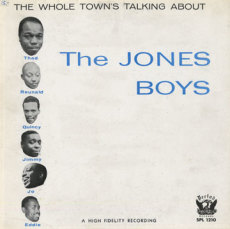
However, Jones was featured as a member of the Quincy Jones group, “The Jones Boys” from 1956-58, a session conceived by Leonard Feather featuring a number of musicians named “Jones,” though none of them were related.
The Sixties saw him playing and touring with George Shearing and with orchestra accompanying Nat King Cole. By the 70s he was playing less and on February 26, 1989 he passed away.
Dose A Day – Blues Away
More Posts: trumpet