

Daily Dose Of Jazz…
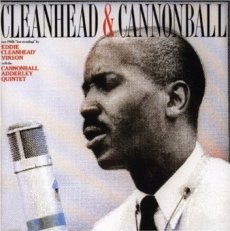
Eddie “Cleanhead” Vinson was born on December 18, 1917 in Houston, Texas and took up the alto saxophone in his youth. By the late 30s he joined Milton Larkin’s Orchestra and at various times sat next to Arnett Cobb, Illinois Jacquet, Cedric Haywood and Wild Bill Davis.
Exiting Larkin’s employment in 1941, Vinson picked up a few vocal tricks while touring with bluesman Big Bill Broonzy, moved to New York City joining and recording with Cootie Williams, and then struck out on his own in 1945, Eddie formed his own large band that performed, recorded and toured over the next ten years.
He signed with Mercury Records, and enjoying a double-sided hit in 1947 with his R&B chart-topper “Old Maid Boogie”, and the song that would prove to be his signature number, “Kidney Stew Blues”.
Vinson leaned towards jazz during the early 50s when his band included John Coltrane. In the early 1960s he moved to Los Angeles working with Johnny Otis and by the late 60s he was touring in a strict jazz capacity with Jay McShann and his career took an upswing. A 1970 appearance at the Monterey Jazz Festival with Otis spurred a bit of a comeback for Vinson and throughout the decade worked high-profile blues and jazz sessions for Count Basie, Johnny Otis, Roomful of Blues, Arnett Cobb and Buddy Tate.
During this period he also composed steadily, including “Tune Up” and “Four”, both of which have been incorrectly attributed to Miles Davis. Vinson recorded extensively during his fifty-odd year career and performed regularly in Europe and the United States.
Jump blues, R&B, jazz and bebop alto saxophonist Eddie “Cleanhead” Vinson, whose nickname came from a hair straightening incident in which the lye destroyed his hair, passed away on July 2, 1988 from a heart attack whilst undergoing chemotherapy in Los Angles, California.

Put A Dose In Your Pocket
Daily Dose Of Jazz…
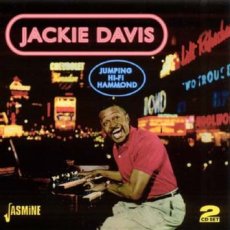
Jackie Davis was born on December 13, 1920 in Jacksonville, Florida. He first learned to play by spending hours poking at his grandmother’s piano. By the age of eight, he was playing with a local dance band. By the age of eleven, he’d earned enough from playing to buy his own piano, and music enabled him to pay his way through Florida A&M College, graduating in 1943.
After serving time in the Army, he worked as a pianist, usually as an accompanist for singers such as Dinah Washington, Sarah Vaughan, and Billy Daniels. Although he was attracted to the organ, he was intimidated at the prospect of playing jazz on it, particularly when his idol at the time was the lightning-fast Art Tatum. However, the Hammond Organ Company began selling electric organs in the late 40s, and in 1951 he bought his first organ. He appeared at Club Harlem in Philadelphia, and a two-week gig turned into nearly five months. Jackie became the first musician to popularize jazz on the Hammond organ, years before Jimmy Smith’s name became synonymous with organ jazz.
Davis signed with RCA to record a couple of 45s but no album so he went to Trend Records in Los Angeles and released a 10” album. He joined Louis Jordan’s outfit and learned stage presentation and in 1956 signed with Capitol Records, became their leading performer on the organ at a time when relatively few mainstream labels were willing to put a black musician on the cover of an album and released a total of nine albums. He went on to sign with Warner but that proved to be the end of his recording career.
Over the next thirty years of his career he performed in clubs from Vegas to Atlantic City, jazz festivals and restaurants, produced Ella Fitzgerald records, and was hired by Norman Granz for her Lady Time session, and was a regular fixture at a Hilton Head, South Carolina club. He worked with the likes of Paul Quinichette, Junior Mance, Eddie “Lockjaw” Davis, Clark Terry, Ray Brown, Keter Betts, Max Roach and many others.
In 1992 Hurricane Andrew wiped out his home in Florida causing a financial and physical strain on his health and he suffered a series of strokes. He attempted to perform but his health didn’t hold up and on November 15, 1999 pianist and organist Jackie Davis passed away in his hometown of Jacksonville.
Give A Gift Of Jazz – Share
Daily Dose Of Jazz…
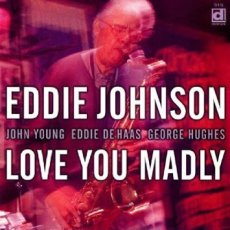
Eddie Johnson was born Edwin Lawrence Johnson on December 11, 1920 in Napoleonville, Louisiana. Gleaning his style from the pre-war tenor greats like Coleman Hawkins and Lester Young, he combined the big brawling sound with romantic lyricism to come into his own.
Settling in Chicago in 1941 the tenor saxophonist freelanced around town until joining Cootie Williams and His Orchestra in 1946, appearing on several Capitol and Majestic recordings. Leaving Williams to join the Louis Jordan outfit he would go on to play with Ella Fitzgerald and Duke Ellington, and regretfully turning down an offer to join the latter’s orchestra.
By the end of the 40’s Eddie retired from music, took a 9-5 job with the city to raise his family and didn’t pick up his horn until some 30 years later when he retired to music. He started playing at Andy’s in Chicago with a quintet and become a member of the Chicago Jazz Orchestra.
He soon became one of the city’s enduring tenor icons alongside Fred Anderson and Von Freeman. As a leader he released two albums, “Indian Summer” on the Nessa label and “Love You Madly” for Delmark. Tenor saxophonist Eddie Johnson passed away on April 7, 2010 at age 89.
Put A Dose In Your Pocket
More Posts: saxophone

Daily Dose Of Jazz…
Cleo Brown was born in Meridian, Mississippi on December 8, 1905. As a child she sang in church until 1919 when her family moved to Chicago and she began studying piano. In the 1920s she began taking gigs in clubs and broadcasting on radio.
From the 1930s to the 1950s she toured the United States regularly, recording for Decca Records among other labels and recorded many humorous, ironic titles such as “Breakin’ in a Pair of Shoes”, “Mama Don’t Want No Peas and Rice and Coconut Oil” and “The Stuff Is Here and It’s Mellow”.
Cleo’s stride piano playing was often compared to Fats Waller. In the 1940s she started moving away from singing bawdy jazz and blues songs because of her deepening religious beliefs, and in 1953 she retired and became a nurse.
Rediscovered in the 1980s after being tracked down by Marian McPartland, she returned to record again and performed on National Public Radio.
Cleo Brown, jazz and blues vocalist and pianist died on April 15, 1995 in Denver, Colorado at age 85.
Take A Dose On The Road
Daily Dose Of Jazz…
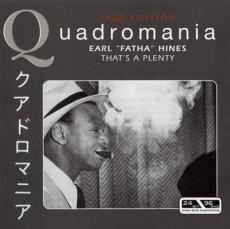
Cecil Irwin was born December 7, 1902 in Chicago, Illinois. Learning to play clarinet and tenor saxophone, his career began playing with Carroll Dickerson, Erskine Tate and Junie Cobb. He would then join Earl “Fatha” Hines in 1928 in the reed section and arranging for the big band.
During this period Cecil recorded on more than a dozen sessions with Hines in a variety of ensembles with which his playing and arranging is prominent. Irwin also freelanced as a sideman working and recording with New Orleans notables Johnny Dodds, Jabbo Smith, King Oliver, and also with Stephane Grappelli and Joe Venuti.
While on tour driving outside Des Moines, Iowa, tenor saxophonist and arranger Cecil Irwin perished in a car accident at the age of 32 on May 3, 1935, cutting short a promising career.
Dose A Day – Blues Away