Daily Dose Of Jazz…
Karl Curtis George was born on April 26, 1913 in St. Louis, Missouri. Early in his career he played with McKinney’s Cotton Pickers in 1933, and Cecil Lee. in the 1930s he spent time in the Jeter Pillars Orchestra and then in the orchestras of Teddy Wilson from 1939–40, followed by a year-long stint with Lionel Hampton in 1941.
George served in the Army from 1942 to 1943, then moved to California and played with Stan Kenton, Benny Carter, spent a spring with Count Basie and in Los Angeles with Happy Johnson, his final collaboration of note.
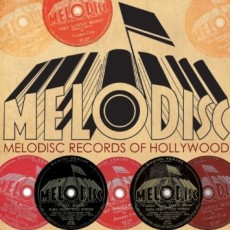
He also played in sessions led by Charles Mingus, Slim Gaillard, Oscar Pettiford, Dinah Washington and Lucky Thompson. During years1945-1946 Karl led his own group on record the track “Peek-A-Boo” by the Karl George Octet, originally released on Melodisc, has been reissued on a Topnotch compilation.
Jazz trumpeter Karl George retired back in his hometown once his health got the better of him, while recordings he had played on continued to be stocked on record store shelves. He lived out the rest of his life in almost total obscurity until passing away in May 1978.

Dose A Day – Blues Away
More Posts: trumpet
Daily Dose Of Jazz…
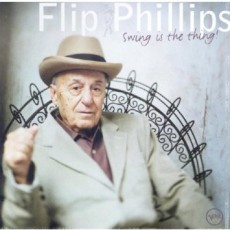
Flip Phillips was born Joseph Edward Filipelli on March 26, 1915 in Brooklyn, New York. In the mid-1940s, he was one of the anchors of the Woody Herman band, and also played with the Woodchoppers, a small spin-off group that Herman led. After this period he went out on his own and joined Jazz at the Philharmonic. His deep, strong and articulate playing with a very full sound contrasted him to his successors such as Stan Getz in the subsequent Herman bands.
Phillips recorded extensively for Clef Records, now Verve, in the 1940s and 1950s, including a 1949 album of small-group tracks under his leadership, with Buddy Morrow, Tommy Turk, Kai Winding, Sonny Criss, Ray Brown and Shelly Manne. He accompanied Billie Holiday on her 1952 Billie Holiday Sings album. He became a frequent player at the Odessa Jazz Party in Odessa, Texas from 1971 to 1991.
Tenor saxophonist and clarinet player Flip Phillips, best known for his work with Jazz At The Philharmonic from 1946 to 1957, passed away in Fort Lauderdale, Florida on August 17, 2001 at the age of 86.
Dose A Day – Blues Away
Daily Dose Of Jazz…
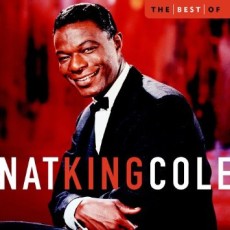
Nat King Cole was born Nathaniel Adams Coles on March 17, 1919 in Montgomery, Alabama, one of four brothers and a half sister. His brothers Ike and Freddy would follow in his footsteps and pursue careers in music. When he was four years old his family moved to Chicago, Illinois where his father became a Baptist minister and where the young lad learned to play the organ from his mother. His first performance was at age four and he began formal lessons at 12, eventually learning jazz, gospel and Western classical. He went to DuSable High School and studied in the music program under Walter Dyeth.
Sneaking out of the house and to hang around outside the clubs, he listening to artists such as Louis Armstrong, Jimmy Noone and Earl Hines, the latter who inspired him. Cole began his performing career in the mid-1930s while still a teenager, adopting the name Nat Cole. His older brother, Eddie, a bass player, joined Cole’s band playing clubs and made their first recording in 1936 under Eddie’s name. They also were regular performers at clubs. He got his nickname, “King”, presumably reinforced by the nursery rhyme “Old King Cole”.
Nat went on to be the pianist in the national tour of Shuffle Along revue about theatre legend Eubie Blake. When it closed in Long Beach, he decided to stay in California. He formed Cole and two other musicians formed the “King Cole Swingsters” that eventual became the King Cole Trio. Their first radio broadcast on NBC’s Blue Network in 1938 led to their Swing Soiree, the Old Gold, Chesterfield Supper Club, Kraft Music Hall and The Orson Welles Almanac.
Cole frequently sang in between instrumental numbers. Noticing that people started to request more vocal numbers, he obliged. There was a customer who requested a certain song one night, but it was a song that Cole did not know, so instead he sang “Sweet Lorraine”. The King Cole Trio signed with the fledgling Capitol Records, known as the “House That Nat Built” in 1943. Revenues from Cole’s record sales fueled much of the label’s success during this period including the construction of the circular building.
Nat would perform in the first Jazz At The Philharmonic, have his revolutionary lineup of piano, guitar, and bass was emulated by many musicians, among them Art Tatum, Oscar Peterson, Ahmad Jamal, Charles Brown and Ray Charles. He played with Lester Young, Red Callender and Lionel Hampton.
Cole’s first mainstream vocal hit was his 1943 recording of one of his compositions, “Straighten Up And Fly Right”, selling over 500,000 copies.
In 1946, the King Cole Trio Time program was on the air, recorded with a string orchestra and his pop stature came with his recording of “The Christmas Song” followed by a string of hits such as Nature Boy, Route 66, Mona Lisa, Too Young and Unforgettable. While this shift to pop music led some jazz critics and fans to accuse Cole of selling out, he never completely abandoned his jazz roots and in 1956 he recorded an all-jazz album After Midnight. He had one of his last major hits in 1963, two years before his death, with “Those Lazy-Hazy-Crazy Days of Summer”, which reached #6 on the Pop chart.
He would go on to have a variety show on NBC without national sponsorship despite appearances of Ella Fitzgerald, Harry Belafonte, Frankie Laine, Peggy Lee and Eartha Kitt. He would record Cole Espanol in Havana, Cuba, retool his final Nelson Riddle arranged album Wild Is Love into an Off-Broadway show titled “I’m With You”. Cole performed in many short films, sitcoms, and television shows such as St, Louis Blues, The Blue Gardenia, the Nat King Cole Story and on of his final appearances in Cat Ballou.
Cole was inducted into the Alabama Music Hall of Fame, the Alabama Jazz Hall Of Fame, the Down Beat Hall of Fame, the Hit Parade Hall of Fame, the Rock and Roll Hall of Fame, the Latin Songwriters Hall of Fame, a Grammy Lifetime Achievement Award, and has an official U.S. postage stamp in his honor.
Pianist, vocalist, composer and bandleader Nat King Cole, whose baritone voice performed in big band and jazz trio settings passed away on February 15, 1965 of lung cancer. He maintains worldwide popularity.
Jazz Is Global – Share
Daily Dose Of Jazz…
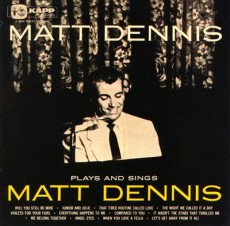
Matt Dennis was born on February 11, 1914 in Seattle, Washington. His early exposure to music came from the family business of vaudeville, his mother who was a violinist and his father a singer. In 1933 he joined Horace Heidt’s orchestra as a vocalist and pianist. Later he would form his own band, with Dick Haymes as vocalist.
Dennis became a vocal coach, arranger, and accompanist for Martha Tilton and then worked with a new vocal group, The Stafford Sisters. Jo Stafford, one of the sisters, joined the Tommy Dorsey band in 1940 and persuaded Dorsey to hire him as arranger and composer. He would go on to wrote prolifically, with 14 of his songs recorded by the Dorsey band in one year alone, including “Everything Happens To Me”, an early hit for Frank Sinatra.
With four years in the U.S. Air Force in World War II behind him, Matt returned to music writing and arranging. He got a boost from his old friend Dick Haymes, who hired him to be the music director for his radio program, and with lyricist Tom Adair wrote songs for Haymes’ program.
Dennis made six albums, most of which are out of print; however, his 1953 song Angel Eyes that he composed with lyricist Earl Brent has become a frequently recorded jazz standard. Added to that list of standards are Will You Still Be Mine, The Night We Called It A Day and Violets For Your Furs.
Composer, pianist, arranger, singer and bandleader Matt Dennis passed away on June 21, 2002 in Riverside, California at the age of 88.
Dose A Day – Blues Away
Daily Dose Of Jazz…
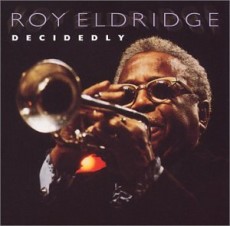
Roy Eldridge was born David Roy Eldridge on January 30, 1911 on the North Side of Pittsburgh, Pennsylvania. His mother was a gifted pianist with a talent for reproducing music by ear, a talent inherited from her. He began playing piano at age five, took up drums at six, played bugle in church and by eleven began seriously honing the instrument, especially the upper register. Though lacking a proficiency at sight-reading, he could replicate melodies by ear effectively.
Eldridge’s early years had him leading and playing in a number of Midwest bands and absorbed the influence of saxophonists Benny Carter and Coleman Hawkins in developing an equivalent trumpet style. Leaving home after expulsion from high school in ninth grade he joined a traveling show at sixteen until it folded in Youngstown, Ohio. He then joined a carnival, returned home and found work in another traveling show. By 20, he led an orchestra, auditioned for Horace Henderson, played in a number of territory bands, formed his own short-lived band once again, moved to Milwaukee and took part in a cutting contest with Cladys “Jabbo” Smith.
Eldridge moved to New York in 1930, playing in Harlem dance bands, and got the nickname “Little Jazz” from Ellington saxophonist Otto Hardwick. He laid down his first recorded solos with Teddy Hill in 1935, led his own band at the reputed Famous Door nightclub and recorded a number of small group sides with singer Billie Holiday. He would join Fletcher Henderson’s band, becoming his featured soloist because of his ability to swing a band. He would move to Chicago to form a band with his older brother, playing saxophone and arranging. In the 40s he joined the Gene Krupa Orchestra, staying until the band broke up after Krupa was jailed for marijuana possession.
Over the course of his career, Little Jazz would play with Anita O’Day, Jazz At The Philharmonic, Coleman Hawkins, Ella Fitzgerald, Earl Hines, Abbey Lincoln, Charles Mingus, Eric Dolphy, Kenny Dorham, Max Roach, Count Basie, Artie Shaw and the list goes on and on. His sophisticated use of harmony, including the use of triton substitutions, his virtuosic solos exhibiting a departure from the smooth and lyrical style of earlier jazz trumpet innovator Louis Armstrong, and his strong impact on Dizzy Gillespie mark him as one of the most influential musicians of the swing era and a precursor of bebop.
In 1971 trumpeter Roy Eldridge was inducted into the Down Beat Jazz Hall of Fame. After suffering a heart attack in 1980, he gave up playing. He died at the age of 78 on February 26, 1989 at the Franklin General Hospital in Valley Stream, New York, three weeks after the death of his wife, Viola.
Give The Gift Of Knowledge
More Posts: trumpet