

Daily Dose Of Jazz…
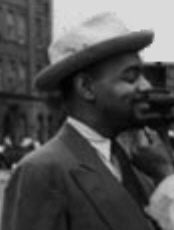
Paul Webster, born August 24, 1909 in Kansas City, Kansas attended Fisk University and worked as an embalmer before switching to music. He played in bands led by George E. Lee, Bennie Moten, Tommy Douglas and Eli Rice through the 1920s.
In 1931 he joined Jimmie Lunceford’s outfit, left and then returned to play from 1935 to 1944. It was here he took over Tommy Stevenson’s spot and the high-note trumpet player found his fame during this period of his career. It has been noted that he had a big influence on a young Stan Kenton, who later featured high note trumpeters in many of his bands.
Following this Webster played lead trumpet in bands led by Cab Calloway, Charlie Barnet, Sy Oliver, Ed Wilcox, and Count Basie through the war years to the end of the decade. After 1953 he played trumpet only part-time, contributed to ‘Paul Curry Presents the Friends of Fats’ LP in 1959 on the Golden Crest Label, but still occasionally played with Sy Oliver’s band into the 1960s. Jazz trumpeter of the big band era, Paul Webster passed away 0n May 6, 1966.

Inspire A Young Mind
More Posts: trumpet
Daily Dose Of Jazz…
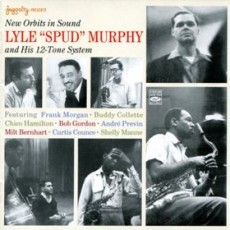
Lyle Stephanovic was born Miko Stefanovic to Serbian émigré parents in Berlin, Germany on August 19, 1908. Better known in the jazz world as Spud Murphy, he grew up in Salt Lake City, Utah where he took the name of a childhood friend. Murphy studied clarinet and saxophone when young and took trumpet lessons from Red Nichol’s father.
He worked with Jimmy Joy in 1927-28 and with Ross Gorman and oboist Slim Lamar in 1928. He worked the early 1930s as saxophonist-arranger for Austin Wylie, Jan Garber, Mal Hallett and Joe Haynes, and then became a staff arranger for Benny Goodman from 1935 to 1937. At the same time he also contributed charts to the Casa Loma Orchestra, Isham Jones, Les Brown and many others.
From 1937 to 1940 Murphy led a big band and recorded for Decca and Bluebird Records in 1938-39. In the 1940s he relocated to Los Angeles where he did work in the studios and with film music, in addition to authoring and teaching the 1200-page “System of Horizontal Composition” also known as the “Equal Interval System”. The Equal Interval System is a modern system of music composition, developed by Murphy over a lifetime of research.
Spud recorded two jazz albums in the 1950s, but his later career was focused on classical and film music. In 2003, orchestra leader Dean Mora, a close friend of Murphy’s, recorded some two dozen of his arrangements in a tribute CD, “Goblin Market”.
Multi-instrumentalist, bandleader and arranger Spud Murphy died in Los Angeles, two weeks short of his 97th birthday on August 5, 2005.
Give The Gift Of Knowledge
Daily Dose Of Jazz…
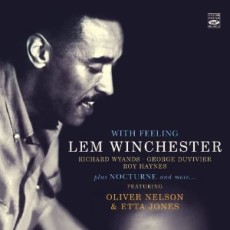
George Duvivier was born on Aug 17, 1920 in New York City. He took up the cello and also the violin while in high school before settling on the bass. He also learned composition and scoring before going out on the road with Lucky Millinder and then with the Cab Calloway bands of the early 40s after a stint in the army. An excellent composer, George scored many tunes for those two big bands.
George was a freelance bassist for most of his life, never belonging to any one particular group for any extended period of time, but has played with some of jazz’s greatest, such as Bud Powell, Eddie “Lockjaw” Davis, and Shirley Scott.
A prolific sideman, Duvivier recorded more than 100 albums with the likes of Kenny Burrell, Gene Ammons, Mildred Anderson, Art Farmer, Jimmy Forrest, San Getz, Etta Jones, Oliver Nelson, Lalo Schifrin and Johnny Lytle among numerous others. In 1956, Duvivier played in the movie orchestra in the film, “The Benny Goodman Story”.
During the 1970s he was a member of Soprano Summit and one of his last performances was on Late Night with David Letterman in 1983, accompanying singer/songwriter Tom Waits.
Double-bassist George Duvivier died of cancer in his Manhattan home on Jul 11, 1985.
Dose A Day – Blues Away
More Posts: bass
Daily Dose Of Jazz…
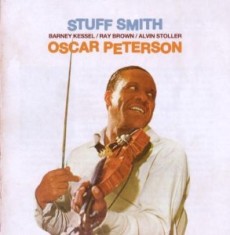
Hezekiah Leroy Gordon Smith was born August 14, 1909 in Portsmouth, Ohio and was better known in the jazz circles as violinist Stuff Smith. He studied violin with his father, cites Louis Armstrong as his primary influence and inspiration to play jazz, and like Armstrong, was a vocalist as well as instrumentalist.
In the 1920s, Smith played in Texas as a member of Alphonse Trent’s band. After moving to New York he had a regular gig with his sextet at the Onyx Club starting in 1935, performed with Coleman Hawkins as well as with younger musicians such as Charlie Parker, Dizzy Gillespie and later Sun Ra.
After signing with Vocalion in 1936, Stuff had a big hit with “I’se A Muggin'” and was billed as Stuff Smith and his Onyx Club Boys. He recorded for Decca in 1937 and Varsity in 1939-1940. He is well known for the song “If You’re A Viper” and is featured in several numbers on the Nat King Cole Trio album, After Midnight.
Part of Smith’s performance at what is considered the first outdoor jazz festival, the 1938 Carnival of Swing on Randall’s Island turned up unexpectedly on audio engineer William Savory’s discs, which were self-recorded off the radio at the time, then long-sequestered.
Smith was critical of the bebop movement, although his own style represented a transition between swing and bebop. He is credited as being the first violinist to use electric amplification techniques on a violin. He contributed to the 1938 tune “It’s Wonderful” often performed by Louis Armstrong and Ella Fitzgerald throughout their careers.
He moved to Copenhagen in 1965, performed actively in Europe, record with Oscar Peterson, Niels-Henning Orsted Pederson, Kenny Drew, Alex Riel, Stephane Grappelli and Jean Luc Ponty among others until his passing away in Munich on September 25, 1967.
Stuff Smith, one of the jazz industry’s preeminent violinists of the swing era is one of the 57 jazz musicians photographed in the 1958 portrait “A Great Day In Harlem”.
Put A Dose In Your Pocket
Daily Dose Of Jazz…
Harold “Doc” West was born on August 12, 1915 in Wolford, North Dakota. He learned to play piano and cello as a child before switching to drums. By the 1930s he was playing in Chicago with Tiny Parham, Erskine Tate and Roy Eldridge. Towards the end of the decade he filled in for Chick Webb when he was unable to lead his own orchestra.
The early 1940s Doc played with Hot Lips Page and on the emerging bebop scene at Minton’s Playhouse in New York City alongside Dizzy Gillespie, Charlie Parker, Tiny Grimes and Don Byas. He played with Oscar Pettiford in 1944 and stood in for Jo Jones occasionally in Count Basie’s orchestra.
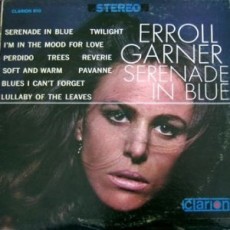
He appears on recordings led by Slam Stewart, Leo Watson, Wardell Gray, Billie Holiday, Big Joe Turner, Jay McShann and Erroll Garner, leaving a small but impressive catalogue as a sideman. Drummer Doc West passed away on May 4, 1951 in Cleveland, Ohio while on tour with Roy Eldridge.
Take A Dose On The Road