

Daily Dose OF Jazz…
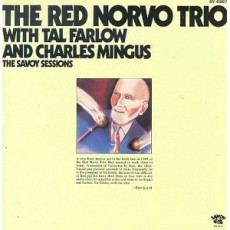
Red Norvo was born Kenneth Norville on March 31, 1908 in Beardstown, Illinois. It is said that he sold his pet pony to help pay for his first marimba. He began his career in 1925 in Chicago playing with a band called “The Collegians”, in 1925. He played with many other bands, including an all-marimba band on the vaudeville circuit along with the bands of Paul Whiteman, Benny Goodman, Charlie Barnet and Woody Herman.
By 1933 he had recorded two sessions for Brunswick under his own name including two of the earliest, most modern pieces of chamber jazz: Bix Beiderbecke’s “In A Mist” and his own “Dance of the Octopus”. For these he put aside the xylophone for the marimba yet outraged the label’s head that tore up his contract and threw him out, though the album remained in print throughout the 30s.
From 1934-35 Red recorded 8 modern swing sides for Columbia followed by 15 sides of Decca and their short-lived Champion label series in 1936. From there he formed a Swing Orchestra and recorded for ARC, Vocalion and Columbia featuring brilliant arrangements by Eddie Sauter and often vocals by Mildred Bailey.
In 1938, Red Norvo and His Orchestra reached number one with their recordings of “Please Be Kind” and “Says My Heart”. He went on to record with Benny Goodman, Charlie Parker, Dizzy Gillespie in 1945, hit the West Coast in ’47, helped Charles Mingus rise to prominence in his trio, recorded for Savoy, recorded with Sinatra in Australia and released by Blue Note, appeared on the Dinah Shore Chevy Show and appeared in the movie Screaming Mimi as himself.
Red Norvo, helped to establish the xylophone, marimba and vibraphone as a viable jazz instrument continued to record and tour throughout his career until a stroke in the mid-1980s forced him into retirement. He died at a convalescent home on April 6, 1999 in Santa Monica, California at the age of 91.
More Posts: composer,marimba,vibraphone,xylophone
Daily Dose Of Jazz…
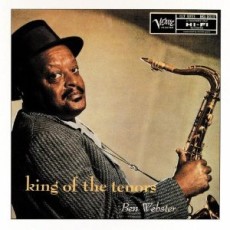
Benjamin Francis Webster was born on March 27, 1909 in Kansas City, Missouri and learned to play piano and violin at an early age, before learning to play the saxophone, although he did return to the piano from time to time, even recording on the instrument occasionally. But it was Budd Johnson who showed him some basics on the saxophone. Webster began to play that instrument in the Young Family Band that at the time included Lester Young.
Kansas City at this point was a melting pot from which emerged some of the biggest names in 1930s jazz and Webster spent time with the Andy Kirk orchestra, joined Bennie Moten’s legendary 1932 band that included Count Basie, Oran Page and Walter Page, Fletcher Henderson’s Orchestra, then Benny Carter, Willie Bryant, Cab Calloway and the Teddy Wilson orchestras.
Also known as “The Brute” or “Frog”, Ben was an influential jazz tenor saxophonist who had a tough, raspy, and brutal tone on stomps (with his own distinctive growls), yet on ballads he played with warmth and sentiment. Stylistically he was indebted to alto star Johnny Hodges, who, he said, taught him to play his instrument.
By the mid thirties he was playing with the Duke Ellington Orchestra as the featured tenor on recordings of Cotton Tail and All Too Soon. His contribution to the band, along with bassist Jimmy Blanton, was so important that Ellington’s orchestra during that period is known as the Blanton-Webster band.
After Ellington in 1943, Webster worked on 52nd Street in New York City; recorded frequently as both a leader and a sideman. He worked with jazz giants Jay McShann, Oscar Peterson, Sid Catlett, Herb Ellis, Coleman Hawkins, Ray Brown, Alvin Stoller and Art Tatum, to name a few.
Webster generally worked steadily but in 1964 he moved permanently to join other American jazz musicians in Copenhagen, Denmark, where he played when he pleased during his last decade. In 1971 Webster reunited with Duke Ellington Big Band and he recorded “live” in France with Earl Hines.
Tenorist Ben Webster died in Amsterdam, The Netherlands on September 20, 1973. He remained rooted in the blues and swing-era ballads but he could swing with the best.
More Posts: saxophone
Daily Dose Of Jazz…
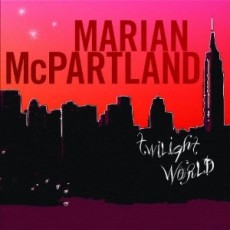
Marian McPartland was born Margaret Marian Turner on March 20, 1920 in Windsor, England. A musical prodigy from the time she could sit at a piano at age three, she pursued classical studies on piano and violin at the Guildhall School of Music and Drama in London. However, much to the dismay of her family, she developed a love for American jazz and musicians such as Duke Ellington, Fats Waller, Teddy Wilson, and Mary Lou Williams among many others.
By 1938, despite her family’s efforts to keep her at Guildhall, Marian left to join Billy Mayerl’s Claviers, a four-piano vaudeville act, performing under the stage name of Marian Page. The group toured throughout Europe during WWII entertaining Allied troops where she met and performed with Jimmy McPartland, and later married, moving to the United States.
1944 saw the McPartlands in New York with Marian forming her own trio and enjoying an 8-year engagement at the Hickory House bringing drummer Joe Morello into the fold. After many years of recording for labels such as Capitol, Savoy, Argo, Sesac, Time, and Dot, in 1969 she founded her own record label, Halcyon Records, before having a long association with the Concord Jazz label.
Marian launched a weekly radio program that featured recordings and interviews with guests in 1964 on WBAI-FM in New York City. This series paved the way for the NPR program Marian McPartland’s Piano Jazz that began on June 4, 1978 and is the longest-running cultural program on NPR as well as being one of the longest-running jazz programs ever produced on public radio.
A master at adapting to her guest’s musical styles and having a well-known affinity for beautiful and harmonically rich ballads, McPartland also has recorded many tunes of her own. Her compositions include “Ambiance”, “There’ll Be Other Times”, “With You In Mind”, “Twilight World”, and “In the Days of Our Love”.
Marian a participated in 60 years of jazz evolution, was awarded a Trustees’ Lifetime Achievement Award Grammy for her work as an educator, writer, and host of Piano Jazz, and was appointed Officer of the Order of the British Empire (OBE) in 2010. Pianist and composer Marian McPartland passed away on August 20, 2013 of natural causes at her home in Port Washington, New York. She was 95 years old.
More Posts: piano
Daily Dose Of Jazz…
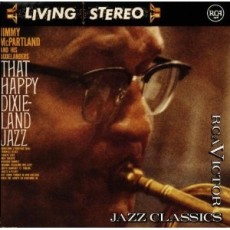
James Dugald McPartland was born on March 15, 1907 in Chicago, Illinois and due to family problems caused Jimmy and his siblings to be partly raised in orphanages. After being kicked out of one orphanage for fighting, he got in further trouble with the law. Fortunately, he had started violin at age 5, then took up the cornet at 15 and credits music with turning him around.
A member of the legendary Austin High Gang in the 920s, they would study and attempt duplication of recordings by The New Orleans Rhythm Kings and visit with Louis Armstrong and King Oliver’s Creole Jazz Band at Lincoln Gardens. After playing through high school, their first musical job was under the name The Blue Friars. In 1924, at age 17, McPartland was then called to New York to take Bix Beiderbecke’s place in the Wolverine Orchestra and who gave him a cornet he would play throughout his career.
From 1926 to the end of the decade, Jimmy worked with Art Kassel, the McKenzie-Condon Chicagoans, Ben Pollack and Benny Goodman, moonlighted in Broadway pit bands and played in a number of small combos. By the thirties he was back in Chicago working with his brother at the Three Deuces and working with other bands around the city. He spent time in South America, returned and led his own bands until drafted into WWII.
Upon his return McPartland worked with Willie “The Lion” Smith’s band that won a Grammy for the soundtrack to the 1954 film After Hours. He soon met and married Marian, encouraged her to form her own group and subsequently landed a long residency at the Hickory House. Jimmy went on to try his hand at acting resulting in a featured role in a Sal Mineo and Ralph Meeker episode “The Magic Horn” on The Alcoa Hour in 1956.
Over the course of his career James McPartland has played with Gene Krupa, Jack Teagarden, Eddie Condon, Pee Wee Russell, Bud Freeman, Glenn Miller, Benny Goodman, Lil Armstrong and George “Pops” Foster to name a few while also guest starring with many bands and at festivals around the world. Although he and Marian divorced in 1970, they remained friends, worked together and remarried shortly before his death of lung cancer on March 13, 1991 in Port Washington, New York, two days shy of his 84th birthday.
More Posts: cornet
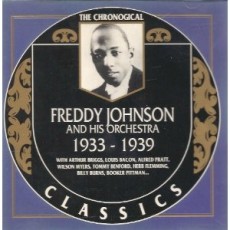
Daily Dose Of Jazz…
Freddy Johnson was born on March 12, 1904 in New York City. He eventually gained fame and popularity in the 1930s as a swing pianist. He began playing professionally as accompanist to Florence Mills and then formed his own band in 1924. In 1925 he worked with Elmer Snowden and in 1926 he worked with Billy Fowler, then briefly with Henri Saparo and Noble Sissle before joining Sam Wooding’s band on a European tour in 1928.
Wooding and Johnson parted ways a year later and Johnson returned to Paris to do solo work. While in Paris, Freddy along with trumpeter Arthur Briggs and put together a band. Between late 1933 and 1934 Johnson worked with Freddy Taylor’s band, then left for work in Belgium and The Netherlands. In the mid 30’s he made some recordings with the Quintette du Hot Club de France.
While living in Amsterdam he co-lead a band with Lex Van Spall, and they played regularly at the Negro Palace in a trio with Coleman Hawkins. He later worked at the Negro Palace, then with Max Woiski at La Cubana, in Amsterdam where he was arrested by the Nazis and was remanded to a prison camp in Bavaria from 1942-44.
After returning to the States he worked with George James and Gavin Bushell in New York City but by the late 40s and early 50s he worked mostly as a piano and voice coach and also did some solo residencies at Well’s New York. Soon after a touring stint in Europe he became very ill with cancer, infirmed at a Copenhagen hospital in 1960, returned to New York and stayed in St. Barnabas Hospital until his death on March 24, 1961.
More Posts: piano