

Daily Dose Of Jazz…
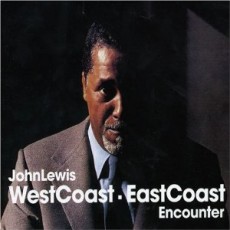
John Aaron Lewis was born in LaGrange, Illinois on May 3, 1920 but was raised in Albuquerque, New Mexico. He learned classical music and piano from his mother starting at the age of seven, then continued his musical training at the University of New Mexico and also studied anthropology. He served in the Army stationed in France during World War II and during his three-year tour of duty he met and performed with Kenny Clarke. Together they formed a band and in the bop style, John composed and arranged.
After the war he went to New York where he found work in the 52nd Street clubs with Allen Eager, Hot Lips Page and others. This led to him joining dizzy Gillespie’s bop-style big band and further developing his skill as a composer and arranger while matriculating through the Manhattan School of Music. He soon returned to Europe on tour, remained a continued to write and study piano. By ’48 he was back in the States playing with Charlie Parker, Illinois Jacquet, Lester Young, Miles Davis and Ella Fitzgerald.
Lewis, vibraphonist Milt Jackson, drummer Kenny Clarke, and bassist Ray Brown had been the small group within the Gillespie big band that played their own short sets when the brass and reeds needed a break. This led to the foursome forming a full-time working group in 1950, known at first as the Milt Jackson Quartet. After replacing Brown with Percy Heath the name was changed to the Modern Jazz Quartet and assuming the role of musical director from 1954 to 1974, John oriented it toward a quiet, chamber style of music that found a balance between his gentle, almost mannered compositions and Jackson’s more elemental writing and playing.
Over a long and illustrious career, John directed the School of Jazz at the Music Inn, was musical director for the Monterey Jazz Festival from 1958 to 1982, taught at City College of New York and Harvard University, rejoined the re-formed MJQ, led his own sextet, founded the American Jazz Orchestra, participated in Re-Birth of the Cool, was involved in various Third Stream Projects all while continuing to teach, compose and perform.
John Lewis, conservative bop pianist, composer, arranger and musical director for the Modern Jazz Quartet passed away in New York City on March 29, 2001.

Give A Gift Of Jazz – Share
More Posts: piano
Daily Dose OF Jazz…
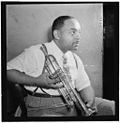
Ward Pinkett was born on April 29, 1906, the son of an amateur cornet player. He started playing the trumpet when he was ten years old. He played in the school band at Hampton Institute and later attended the New Haven Conservatory of Music.
After working with the White Brothers Orchestra in Washington, D. C. he moved to New York City and played for brief periods with the bands of Charlie Johnson, Willie Gant, Billy Fowler, Henri Saparo, Joe Steele and Charlie Skeete.
During his stint with Jelly Roll Morton in 1928–30, he participated in seven of Morton’s recording sessions and his solos on “Strokin’ Away” and “Low Gravy” that are considered by music historians to be the best of his career. He also worked with Chick Webb, Bingie Madison, Rex Stewart and Teddy Hill but was never able to achieve fame.
By 1935 he teamed with Albert Nicholas and Bernard Addison at Adrian Rollini’s Tap Room and also had a short stint with Louis Metcalf’s Big Band. He recorded with King Oliver, Bubber Miley, Clarence Williams, the Little Ramblers and James P. Johnson.
Ward Pinkett died of alcoholism-aggravated pneumonia on March 15, 1937 just six weeks short of his thirty-first birthday.
Take A Dose On The Road
Take A Dose On The Road
More Posts: bandleader,trumpet
Daily Dose Of Jazz…
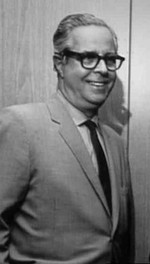
Alfred Lion was born in Berlin, Germany on April 21, 1908. His fascination and lifelong pursuit of jazz began at age 16 when he witnessed a jazz concert with Sam Wooding’s Orchestra. In 1929 he migrated to the U.S., went back to Germany, and returned to New York in ’38 where he attended a Carnegie Hall concert that inspired him to start his record label, Blue Note in 1939.
The label debuted with Albert Ammons and Meade Lux Lewis but their first hit was Sidney Bechet’s “Summertime”. By this time childhood friend Francis Wolff joined and sustained the label while Lion served in the Army. He recorded many of the biggest names in jazz throughout the 1940s, 50s, and 60s including but not limited to Grant Green, Dexter Gordon, John Coltrane, Tina Brooks, John Patton, Miles Davis, Eric Dolphy, Lou Donaldson, Andrew Hill, Cecil Taylor, Ike Quebec, and the list goes on and on.
Lion had recruited Ike Quebec as the label’s A&R man and at his insistence Lion began to explore more modern developments in jazz bringing in Thelonious Monk as the first modern jazz musician. What became known as the “hard bop” style would predominate in Blue Note’s output during the 1950s and 1960’s. Musicians like Art Blakey and Horace Silver, among others epitomized this style. Duke Pearson took over A&R duties after Quebec’s death in 1963 ensuring the label’s roster remained fresh as a whole. Three significant elements made Blue Note releases stand out: the work of recording engineer Rudy Van Gelder, the photographs of Francis Wolff and the cover designs principally by Reid Miles.
Suffering from heart problems for some years, Lion sold the Blue Note label and catalogue to Liberty Records and retired to Mexico in 1967. Towards the end of his life, the record producer respected by musicians for his straight dealing and for ‘hanging out’ in the jazz scene, gained the recognition he had often been denied. Alfred Lion passed away on February 2, 1987 in San Diego, California.
Dose A Day-Blues Away
More Posts: producer,record executive
Daily Dose Of Jazz…
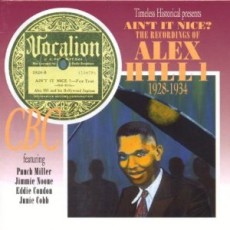
Alex Hill was born on April 19, 1906 in Little Rock, Arkansas to a minister father and pianist mother who taught her child prodigy to play. Defying his father’s wishes the young pianist delved into secular music and while studying at Shorter College met Alphonse Trent and began arranging for him. After graduating in 1922 he worked with several territory bands including Fats Waller and Terence Holder.
From 1924 to 1926 Alex led his own ensemble, then played with Speed Webb, and in 1927 he spent time with Mutt Carey’s Jeffersonians and Paul Howard’s Quality Serenaders. Later that same year Hill relocated to Chicago and held a job as an arranger for the Melrose Music Publishing Company, while simultaneously arranging for the Carroll Dickerson Orchestra. He began recording as a leader and a sideman in 1928 and continued through 1934.
By 1930, prior to a move to New York City, Alex had played with Jimmy Wade, Jimmie Noone and Sammy Stewart. During his time in New York he arranged for Paul Whiteman, Benny Carter, Claude Hopkins, Andy Kirk, Eddie Condon and Duke Ellington among others. Additionally, he became staff arranger for the Mills Music Company. Reuniting with Fats Waller the two did a show together in New York called “Hello 1931”, and accompanied Adelaide Hall.
Hill again put together his own group in 1935, but after playing the Savoy Ballroom he disbanded the ensemble due to his battle with tuberculosis. Moving back to Little Rock, pianist and arranger Alex Hill passed away in February 1937 at the age of 30.
Give A Gift Of Jazz – Share
Daily Dose Of Jazz…
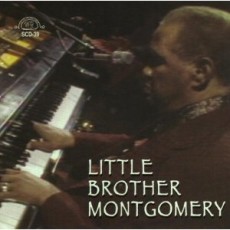
Eurreal Wilford “Little Brother” Montgomery was born on April 18, 1906 in the sawmill town of Kentwood, Louisiana across Lake Pontchartrain from New Orleans where he spent much of his childhood. As a child he looked like his father, Harper Montgomery, and was called Little Brother Harper. The name evolved into Little Brother Montgomery, a nickname that stuck. He started playing piano at the age of 4, and by age 11 he was playing at various barrelhouses in Louisiana.
Montgomery, largely self-taught, was an important blues pianist with an original style; however, he was also quite versatile working in jazz bands including larger ensembles that used written arrangements. Although he did not read music, he learned band routines by ear and once through an arrangement he had it memorized. He was a singer with an immediately recognizable, rather affecting wobble: an oral historian as full of musical anecdotes as his musical influence and frequent visitor, Jelly Roll Morton.
Early on he played the Black lumber and turpentine camps in Louisiana and Mississippi, then with the bands of Clarence Desdunes and Buddy Petit. He first went to Chicago from 1928 to 1931, making his first recordings and from 1931 through 1938 he led a band in Jackson, Mississippi. By 1942 Montgomery moved back to Chicago, toured other cities and Europe with a repertoire alternating between blues and traditional jazz. During the ‘60s his fame grew and he continued to make many recordings, including on his own record label, FM Records.
Never straying too far from the blues Montgomery appeared at many blues and folk festivals during the following decade and was considered a living legend, a link to the early days of blues and New Orleans. Little Brother Montgomery passed away on September 6, 1985 in Champaign, Illinois.
Jazz Is Global – Share