

Daily Dose Of Jazz…
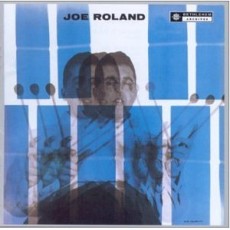
Joe Roland was born May 17, 1920 in New York City and began as a clarinetist, attending the Institute of Musical Art (The Juilliard School) from 1937 to 1939. He started playing the xylophone in 1940 and then the vibraphone in the middle of the decade, playing in the New York jazz clubs. Influenced by the nascent bebop movement, Roland put together his own ensembles late in the decade.
By the 1950s he was playing with Oscar Pettiford, George Shearing, Howard McGhee, Mat Mathews, Aaron Sachs, and with Artie Shaw and his Gramercy Five alongside Hank Jones, Tal Farlow, and Tommy Potter. Mat Mathews and Aaron Sachs. Roland recorded occasionally as a leader releasing albums for Rainbow, Savoy, Seeco and Bethlehem records.
In the early sixties Joe moved to Miami Florida and became an influential part of a thriving South Florida jazz scene. While working the Coconut Grove he was credited for having trained many young musicians from the University of Miami. Vibraphonist Joe Roland would work steadfastly throughout his life until his death of natural causes at the age of 89 in Jupiter, Florida on October 12, 2009.

More Posts: vibraphone
Daily Dose Of Jazz…
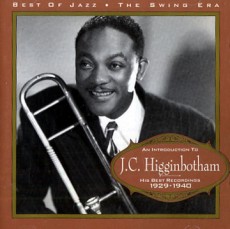
J. C. (Jack) Higginbotham was born on May 11, 1906 in Social Circle, Georgia and learned to play trombone in his youth. He made his start in jazz playing with territory bands in the Midwest and was heard at his best while a member of the Luis Russell Orchestra from 1928 to ’31. He would go on to play with Benny Carter’s, Red Allen’s and Fletcher Henderson’s big band during the swing era.
J. C. played with Louis Armstrong in the late Thirties to the end of the decade, played for a long period in the forties with his ideal partner Red Allen, and then disappeared from the scene for several years. By 1947 he was leading his own groups.
Higginbotham led several bands in the Fifties in Boston and Cleveland, appeared regularly at the Metropole in New York between 1956 and 1959, and led his own Dixieland band there in the Sixties. He went on his first European tour with Sammy Price, appearing in Scandinavia, and worked again briefly in 1964 with Louis Armstrong.
A robust and swinging trombonist he recorded extensively both as a sideman and as a leader. He is considered to be a vital player of the swing trombone and his strong, raucous sound and wild outbreaks are legendary. J. C. Higginbotham, who contributed to the acceptance of the trombone as a melodically capable jazz instrument, died on May 26, 1973 in New York.

More Posts: trombone
Daily Dose Of Jazz…
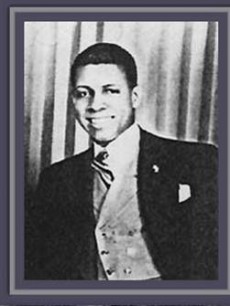
Hayes Pillars was born on April 30, 1906 in North Little Rock, Arkansas and began playing tenor saxophone as a teenager. Playing locally around Little Rock and Jackson, Tennessee initially, Hayes joined the territory band of Alphonse Trent in 1927. A year later he was back freelancing until he united with his boyhood friend James Jeter and organized the Jeter-Pillars Orchestra in Cleveland, Ohio.
Pillars secured a six-week engagement in 1934 at the Club Plantation in St. Louis, becoming so popular that they stayed for eleven years. The band was so influential that some of its players who held tenure were Walter Page, Sid Catlett, Jo Jones, Kenny Clarke, Jimmy Forrest, Charlie Christian, Jimmy Blanton and an 18 year old Harry “Sweets” Edison, who all went on to make names for themselves.
The orchestra would play New York and Chicago prior to Pillars leaving the orchestra. He then became a mainstay on the St. Louis scene for nearly three decades from the 1950s till his retirement in the Eighties. He was honored for his contributions to jazz by the Institute for Jazz Studies at Rutgers University and the Smithsonian Institute in 1981. Tenor saxophonist and bandleader Hayes Pillars passed away on August 11, 1992 in Richmond Heights, Missouri.
More Posts: saxophone