

Daily Dose Of Jazz…
Albert Bennington Lucas was born on November 16, 1916 in Brantford, Ontario, Canada and took piano lessons as a child from his concert pianist mother, Francis Bradley Lucas. Eventually switching to bass and tuba at age 12, after moving to New York City in 1933 he played with Kaiser Marshall, then joined the Royal Sunset Orchestra, where he played from 1933 to 1942.
During the 1940s, Lucas appeared on record with Hot Lips Page, Coleman Hawkins, Eddie Heywood, Duke Ellington, Mary Lou Williams, James P. Johnson, J.J. Johnson, Ben Webster, Erroll Garner, and Eddie South.
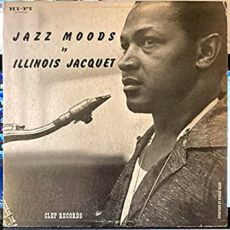
He toured and recorded with Illinois Jacquet from 1947 to 1953, recording in Detroit with Jacquet’s all-star band which included Sonny Stitt, Leo Parker, Sir Charles Thompson, Maurice Simon and Shadow Wilson before returning to play with Heywood again from 1954 to 1956.
He also recorded in the 1950s with Ruby Braff, Charlie Byrd, and Teddy Wilson. In his last two decades he worked primarily as a studio musician backing up groups at Apollo Theater performances, playing jazz only occasionally. Double bassist Al Lucas passed away on June 19, 1983 in New York City.
More Posts: bass,history,instrumental,jazz,music
Daily Dose Of Jazz…
Martha Tilton was born November 14, 1915 in Corpus Christi, Texas however, her family moved to Edna, Kansas when she was three months old. They relocated to Los Angeles, California when she was seven years old. While attending Fairfax High School she was singing on a small radio station when she was heard by an agent who signed her and began booking her with larger stations.
Dropping out of school in the eleventh grade she joined Hal Grayson’s band. After singing with the quartet Three Hits and a Miss, she joined the Myer Alexander Chorus on Benny Goodman’s radio show, Camel Caravan. Goodman hired Tilton as a vocalist with his band in 1937. She continued to appear as Goodman’s star vocalist until the end of 1939 and had a No. 1 hit with the Goodman recording of And the Angels Sing.
Her major success happened from 1942 to 1949 as one of the first artists to record for Capitol Records. Her first recording for the label was Moon Dreams with Orchestra and The Mellowaires. Among her biggest hits as a solo artist were I’ll Walk Alone, I Should Care, A Stranger in Town, How Are Things in Glocca Morra, That’s My Desire, and I Wonder, I Wonder, I Wonder.
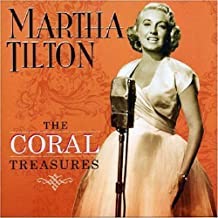
After she left Capitol, she recorded for other labels, including Coral and Tops. Martha sang on Fibber McGee and Molly and starred on Campana Serenade, a program of popular music on first NBC and then CBS in 1942–1944. She would go to sing and appear on further radio and television shows into the Fifties. She also appeared in several films from 1941 to 1975 including the Benny Goodman Story. Her singing voice was used for other actresses including Barbara Stanwyck, Martha O’Driscoll, and Anne Gwynne.
On December 8, 2006 vocalist Martha Tilton, who appeared in several Soundies musical films of the 1940s, passed away of natural causes at her Brentwood home.
More Posts: history,instrumental,jazz,music,vocal
Daily Dose Of Jazz…
Singleton Palmer was born on November 13, 1912 in St. Louis, Missouri and began playing cornet at age 11, and was actively playing gigs with the Mose Wiley Band in St. Louis by 14. 1928 saw him playing tuba, and joined Oliver Cobb’s Rhythm Kings in 1929. His first recordings were with Cobb in 1929, and he continued to perform with the band through 1934.
Following Cobb’s death in 1931, Eddie Johnson took over leadership for the band, renaming it the St. Louis Crackerjacks. He recorded with the band under Johnson’s leadership in 1932, and switched to string bass in 1933. The following year Palmer joined Dewey Jackson on the riverboats, performing with him until 1941.
Singleton took a job at Scullin Steel, where he joined the company’s 45-piece big band, which performed for the employees in the cafeteria during the daily lunch hour. Additionally he began performing with George Hudson’s first band in 1941, continuing until 1947. Toward the end of the decade he got higher-profile performing and recording opportunities, including with Clark Terry in 1947 and Jimmy Forrest in 1948. In 1947 he joined Count Basie’s 18-piece jazz band, touring for 3 years and recording 11 sides.
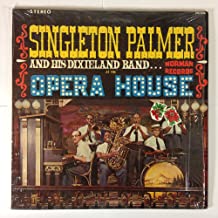
In 1950 Palmer left Basie’s group and started his own band, the Dixieland Six. He led this Dixieland jazz ensemble in jam sessions at the Universal Dance Hall on the DeBaliviere Strip, performed at Gaslight Square at the Opera House, and recorded six albums between 1960 and 1967. Late in his life he became a source for jazz historians, offering oral history testimonies of his early years in the music industry.
Multi-instrumentalist Singleton Palmer, who played bass, cornet and tuba, and recorded with blues musicians Big Joe Williams and Sonny Boy Williamson, passed away on March 8, 1993, St. Louis.
More Posts: bandleader,bass,cornet,history,instrumental,jazz,music,tuba
Daily Dose Of Jazz…
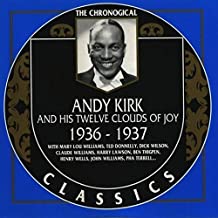
Dick Wilson, born November 11, 1911 in Mount Vernon, Illinois was raised in Seattle, Washington, but attended high school in Los Angeles, California. He started on piano and learned saxophone in Seattle from saxophonist Joe Darensbourg. He became a member of Darensbourg’s band in 1930.
In 1936, he joined Andy Kirk’s Clouds of Joy, where he spent the next five years. With Mary Lou Williams and Pha Terrell, Wilson was one of the most striking musical personalities in the band. He cultivated a style that has been compared to Lester Young’s because of similar characteristics in their solos.
Tenor saxophone Dick Wilson, best known for his work with the Andy Kirk big band, passed away from tuberculosis on November 24, 1941 in New York City.
More Posts: history,instrumental,jazz,music,saxophone
Daily Dose Of Jazz…
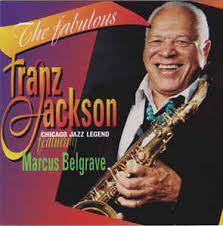
Born in Rock Island, Illinois on November 1, 1912 Franz Jackson got his first lessons on saxophone from Jerome Don Pasquall and later studied at the Chicago Musical College.
Early in his career, Jackson played with Albert Ammons’s band and for much of the 1930s he was based in Chicago, Illinois. He toured with Fletcher Henderson in 1938, then played with Roy Eldridge’s band in New York City. In 1940 he toured with Fats Waller and then went to work with Earl Hines.
Following small band work back in New York City, Franz joined Cootie Williams’s big band, played in Boston, Massachusetts with Frankie Newton, toured with Eldridge, and worked with Wilbur De Paris at Jimmy Ryan’s in the city.
Jackson formed his own band in Chicago in 1957, the Original Jass All Stars and with this group he made overseas tours, including playing in Vietnam. Moving to Dowagiac, Michigan in 1975, he formed another band, the Jazz Entertainers, in 1980.
Saxophonist and clarinetist Franz Jackson, who played in the Chicago jazz school, passed away on May 6, 2008 in Niles, Michigan. The Franz Jackson Collection at the Chicago Jazz Archive contains his papers and oral history material.
More Posts: bandleader,clarinet,history,instrumental,jazz,music,saxophone