

Daily Dose Of Jazz…
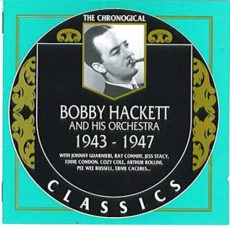
Arthur Francis Rollini was born February 13, 1912 in New York City into a musical family of Italian descent and grew up in Larchmont, New York with his multi-instrumentalist older brother Adrian. In 1929 he played in England for Fred Elizalde and worked for the California Ramblers and big band pioneer Paul Whiteman.
From 1934 to 1939 he was a member of the Benny Goodman Orchestra. The highlight of that period was a breakout performance for big band jazz at Carnegie Hall in 1938. He worked with Richard Himber and from 1941-1942 with Will Bradley. From 1943 to 1958 he worked as a studio musician for the American Broadcasting Company.
Rollini’s work can be found on recordings with the bands of Wingy Manone, Adrian Rollini, Benny Goodman, Joe Venuti, Bobby Hackett, Lionel Hampton, Harry James, Louis Armstrong and Brad Gowans. In 1939, he starred in an Allstar band of Goodman, Bunny Berigan and Jack Teagarden with Blue Lu.
In 1987, he published his autobiography Thirty Years With the Big Bands. Arthur Rollini, who played tenor saxophone and clarinet, and was nicknamed Schneeze, passed away on December 30, 1993 in Florida.
More Posts: clarinet,history,instrumental,jazz,music,saxophone

Daily Dose Of Jazz…
Erskine Butterfield, born February 9, 1913 in Syracuse, New York and began playing piano at an early age when his family moved to Newark, New Jersey, where he later studied piano. In the 1930s, he regularly appeared on radio, including WOR in New York City, and played with Noble Sissle’s orchestra. He made his first sound recording and reproduction in 1937 on the Variety record label.
In 1938, he signed with Decca Records for which he recorded over forty titles between 1940 and 1942, many of which were released. Butterfield was called the Singing Vagabond of the Keys by the Chicago Defender in 1939. He was innovative in utilizing black and white musicians together in his combo, which included session musicians such as clarinetist Jimmy Lytell, guitarist Carmen Mastren, and Haig Stevens on bass.
1939 saw Butterfield signing with Joe Davis of Beacon Records, with whom he would maintain a long term relationship. However, in 1943 he was drafted but continued to play in a group, recorded eight titles for Joe Davis under the name Erskine Butterfield and his Blue Boys in ‘44 and cutting V-Discs in 1945.
After World War II, Erskine formed a trio and toured extensively, but his music style was less successful commercially. He recorded for a number of small labels in the late 1940s, after which his recording activity dropped off. In 1956, however, he again recorded a number of titles for Joe Davis with a reformed group, Butterfield and his Blue Boys, including musicians such as Sam “The Man” Taylor on saxophone and Panama Francis on drums. He made appearances on The Nat King Cole Show, The Tony Martin Program and The Jo Stafford Show.
His light swing and traditional piano phrases resulted in some of his songs, such as Lovin’ Man and Because Of You, being used in film soundtracks. Pianist, singer, bandleader and composer Eskine Butterfield, credited with helping to invent the style of cocktail piano, passed away on July 11, 1961 in New York City.
More Posts: bandleader,history,instrumental,jazz,music,piano
Daily Dose Of Jazz…
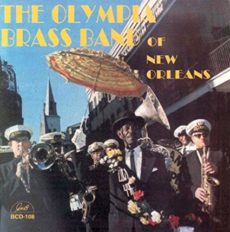
Duke Dejan was born Harold Andrew Dejan into a Creole family in New Orleans, Louisiana on February 4, 1909. He took clarinet lessons as a child before switching to the saxophone, and became a professional musician in his teens, joining the Olympia Serenaders and then the Holy Ghost Brass Band. He played regularly in Storyville, at Mahogany Hall, and on Mississippi riverboats.
During World War Two he played in Navy bands. Afterwards, Duke worked in the mail office of the Lykes Brothers Steamship Company for 23 years while maintaining a parallel musical career, leading his own band, Dejan’s Olympia Brass Band, from 1951. The band often appeared at Preservation Hall, recorded nine albums, and also toured internationally, making 30 concert tours of Europe and one of Africa. The band was featured in the James Bond movie Live and Let Die and in many television commercials.
Suffering a stroke in 1991 left him unable to play the saxophone but he continued as a bandleader and singer until shortly before his death on July 5, 2002 at the age of 93. Alto saxophonist and bandleader Harold Dejan best remembered as the leader of the Olympia Brass Band, including during the 1960s and 1970s when it was considered the top band in the city.
More Posts: bandleader,history,instrumental,jazz,music,saxophone
Daily Dose Of Jazz…
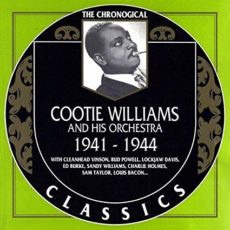
Charlie Holmes was born on January 27, 1910 near Boston, Massachusetts. He began playing alto saxophone at age 16 and emulated the style of his childhood friend, Johnny Hodges. He began playing professionally a week later and after moving to New York City he worked for a variety of groups, including Luis Russell in 1928.
Between 1929 and 1930 he recorded with Red Allen and is best known for composing Sugar Hill Function. He would work with Russell again a few times and in 1932 joined the Mills Blue Rhythm Band. He was a member of John Kirby’s Sextet, Cootie Williams’ Orchestra, and Louis Armstrong’s band for much of the next two decades. He left music in 1951 and did not return for twenty years, only to work in Clyde Bernhardt’s Harlem Blues & Jazz Band and later played for the Swedish band Kustbandet.
Never taking on the role of a leader in any recording or group, swing era saxophonist Charlie Holmes, who also played clarinet and oboe for the Boston Civic Symphony Orchestra, passed away on September 19, 1985 in Stoughton, Massachusetts.

More Posts: bandleader,clarinet,history,instrumental,jazz,music,oboe,saxophone

Daily Dose Of Jazz…
Floyd George Smith was born on January 25, 1917 in St. Louis, Missouri and learned to play the ukulele as a child before taking up guitar. As a teenager he studied music theory and spent his early career in territory bands, playing in groups such as Eddie Johnson’s Crackerjacks, the Jeter-Pillars Orchestra, the Sunset Royal Orchestra, the Brown Skin Models, and Andy Kirk’s 12 Clouds Of Joy. His composition Floyd’s Guitar Blues, recorded with Andy Kirk’s orchestra in 1939, has been claimed as the first hit record to feature a blues solo on electric guitar.
Enlisting during World War II, Floyd was stationed in Britain as a sergeant and he had the fortune to meet and play with Django Reinhardt in Paris. Following the war, he rejoined Andy Kirk’s band before forming his own small ensembles. He went on to play with Wild Bill Davis in the 1950s, recorded occasionally with drummer Chris Columbo’s bands during the late 1950s and early 1960s. He would later settle in Indianapolis, Indiana and formed his own jazz trio.
The 1970s, had Smith moving into writing songs and record production, working with Dakar/Brunswick Records in Chicago, for which he recorded a few singles. He produced two albums with R&B star, Loleatta Holloway for Aware Records of Atlanta, as well as two unreleased with John Edwards, who later became the lead singer of the Detroit Spinners. He produced two Top 10 R&B hits on Aware with Edwards and Holloway.
In the late 1970s, he produced tracks on several albums with Loleatta Holloway for Gold Mine/Salsoul Records, managed and later married her. Guitarist Floyd Smith, sometimes credited as Floyd Guitar Smith passed away in Indianapolis, Indiana on March 29, 1982 at the age of 65.
More Posts: composer,guitar,history,instrumental,jazz,music,producer