

Daily Dose Of Jazz…
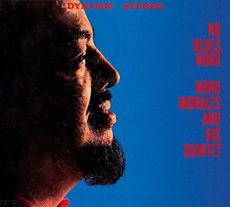
Norosbaldo Morales was born in Puerta de Tierra, Puerto Rico on January 4, 1912. The pianist learned several instruments as a child, playing in Venezuela from 1924 to 1930, then returned to Puerto Rico to play with Rafaél Muñoz.
Emigrating to New York City in 1935, Noro played there with Alberto Socarras and Augusto Cohen. By 1939, he and brothers Humberto and Esy put together the Brothers Morales Orchestra. He released the tune Serenata Ritmica on Decca Records in 1942, which catapulted him to fame in the mambo and rhumba music world; his band rivaled Machito’s in popularity in New York in the 1940s. It was during this time that his orchestra played for the Havana Madrid nightclub.
1960 saw Morales returned to Puerto Rico and play locally, working with Tito Rodríguez, José Luis Moneró, Chano Pozo, Willie Rosario and Tito Puente. Among the musicians who played in Morales’ orchestra were Ray Santos, Jorge López, Rafí Carrero, Juancito Torres, Pin Madera, Ralph Kemp, Pepito Morales, Carlos Medina, Lidio Fuentes, Simón Madera, Ana Carrero, Pellin Rodriguez, and Avilés.
The height of his fame and record production was his production of rumba records with his sextet, done after he gave up the big band idea. His use of the piano as both melody and rhythm was highly innovative at the time. Linda Mujer, Campanitas de Cristal, Perfume de Gardenias, Me Pica La Lengua and Silencio, all songs composed by others, were four of his big successes in this line.
Pianist and bandleader Noro Morales passed away on January 15, 1964 in San Juan, Puerto Rico at age 53.

More Posts: bandleader,history,instrumental,jazz,music,piano
Daily Dose Of Jazz…
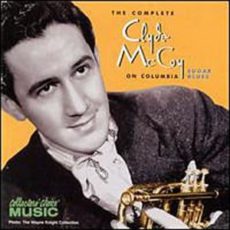
Clyde Lee McCoy was born on December 29, 1903 in Louisville, Kentucky into one of the families in the Hatfield-McCoy feud. He begun mastering the trumpet when he was without formal instruction, after the family moved to Portsmouth, Ohio in 1912. This would lead to performing regularly at church, school affairs and on the Cincinnati riverboats five years later, becoming one of the youngest musicians on the river at age 14.
In 1920 he auditioned with an untried band for a gig at the Whittle Hotel and Spa in Knoxville, Kentucky. Approved by the owner and the patrons the two week job lasted two months and the Clyde McCoy Orchestra was officially launched. In Chicago, Illinois he performed his song Sugar Blues at the Drake Hotel in 1930 and his solo rendition of the song would garner him national radio exposure for the band and a recording contract with Columbia Records, selling in excess of fourteen million copies internationally by the time of Clyde’s retirement in 1985.
The Clyde McCoy Orchestra would have a long and successful run at various hotels, sign a five-year recording contract with Decca Records, recorded frequently for Associated Transcriptions during the Depression and the sessions were used for delayed radio broadcasts. Following the ASCAP recording ban in 1941 that halted recording of all songs composed by its members, Clyde recorded for LangWorth Transcriptions in New York as well as Mercury, Capitol, and Vocalion Records.
Trumpeter Clyde McCoy, who developed the signature “wah-wah” sound in the late 1920s by fluttering a Harmon mute in the bell of his trumpet and has a star on the Hollywood Walk of Fame at 6426 Hollywood Boulevard, passed away from complications of Alzheimer disease on June 11, 1990 at the age of 86 in Memphis, Tennessee.

More Posts: trumpet
Daily Dose Of Jazz…
Dardanelle was born Marcia Marie Mullen on December 27, 1917 in Avalon, Massachusetts and chose her stage name early in her career. Starting her musical career in the 1930s, she led her own trio with guitarist Tal Farlow and bassist Paul Edenfieldin the mid-1940s. They appeared in the Copa Lounge at the Copacabana nightclub in New York City. Their repertoire included jazz standards, hot numbers, blues titles and some original compositions, novelty songs.
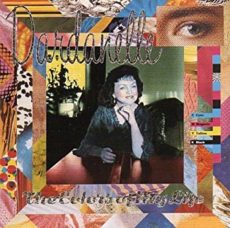
In addition to piano, Dardanelle sang and recorded for Victor in 1946. In 1951 she recorded for Columbia Records, but like many of her colleagues, she focused more on her family and disappeared from the music business until the Sixties. By then she began working for radio and television stations as a musician and actress. Outside Chicago, Illinois she had her own show featuring her sons Skip (a drummer) and Brian as a musician. From 1966 to 1984 she lived in Glen Rock, New York and had a comeback as a jazz singer in the late Seventies. It appeared on Stash ‘s two albums Songs for New Lovers and The Colors of My Life , in which Dardanelle toured with her trio, Bucky Pizzarelli, George Duvivier and Grady Tate.
Dardanelle performed and recorded through the Eighties on the Audiophile label with guest appearance by Slam Stewart. on her album New York, New York – Sounds of the Apple which was nominated for the Grammy. A move to Oxford, Mississippi, in 1986 she was a lecturer in Artist in Residence at the University of Mississippi.
Her last public appearance was in 1997 in Greenwood, Massachusetts Jazz and blues and singer, vibist and pianist Dardanelle passed away on August 8, 1997 in Memphis, Tennessee due to complications of a heart valve operation at the age of 79.

Daily Dose Of Jazz…
Quinn Brown Wilson was born on December 26, 1908 in Chicago, Illinois and played violin as a child. Studying composition and arrangement in his youth, he had his first professional experience in the mid-1920s, playing with Tiny Parham, Walter Barnes, Jelly Roll Morton, Erskine Tate, and Richard M. Jones.
The 1930s saw Quinn arranging and playing bass with Earl Hines from 1931 to 1939, in addition to playing bass on record with Jimmie Noone. Not limiting himself to just playing jazz, in the 1940s he began playing electric bass and started recording with R&B and blues musicians, including Lefty Bates and John Lee Hooker.
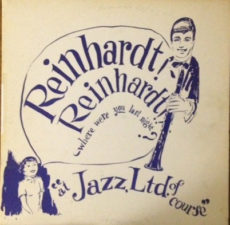
He continued to play jazz as well, working with Bill Reinhardt in the 1960s and Joe Kelly in the 1970s. Bassist and tubist Quinn Wilson passed away on June 14, 1978 in Evanston, Illinois.

More Posts: bass
Daily Dose Of Jazz…
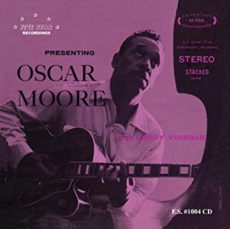
Oscar Frederic Moore was born in Austin, Texas on December 25, 1915 but grew up in Los Angeles, California. During the Thirties he often worked with his brother, Johnny, who was also a guitarist. Beginning in 1937, he spent ten years with Nat King Cole in the guitar-bass-drums trio format that influenced Oscar Peterson, Art Tatum, and Ahmad Jamal.
After he left Cole, he joined his brother in Johnny Moore’s Three Blazers through the 1950s. He recorded two solo albums in 1954, then left the field of music. During the last decades of his life, he laid bricks and ran a gas station.
Barney Kessel stated that Oscar practically created the role of the jazz guitarist in small combos. He was voted top guitarist of 1945, 1946, and 1947 in the Down Beat magazine readers’ poll.
Guitarist Oscar Moore, who performed and recorded with Lionel Hampton, Art Tatum, The Capitol International Jazzmen, Anita O’Day, Lester Young, Benny Carter, Ray Charles, Illinois Jacquet and Sonny Criss, passed away on October 8, 1981 in Las Vegas, Nevada.

More Posts: guitar