Daily Dose Of Jazz…
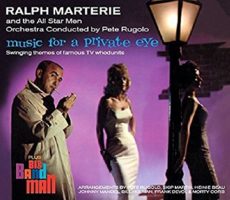
Ralph Marterie was born on December 24, 1914 in Acerra, near Naples, Italy and first played professionally at age 14 in Chicago, Illinois. In the 1940s, he played trumpet for various bands. His first job as a bandleader was courtesy of the US Navy during World War II, after which he was hired by the ABC Radio network. With his reputation built from these broadcasts, he secured a recording contract with Mercury Records.
In 1953 his big band recorded a version of Bill Haley’s Crazy, Man, Crazy, which reached #13 on the Billboard jockey chart and #11 on Cashbox in June, 1953. His recordings of Pretend and Caravan also made the Top 10 with the latter selling over a million copies and was awarded a gold disc. His biggest success on the U.S. charts was a cover of Skokiaan in 1954. In 1957, he had success with Tricky and Shish-Kebab.
Big band leader Ralph Marterie, who composed Dancing Trumpet, Dry Marterie, and Carla, passed away on October 10, 1978, in Dayton, Ohio.
More Posts: trumpet
Daily Dose Of Jazz…
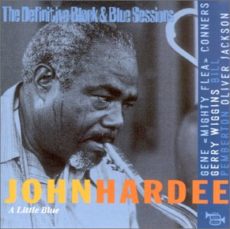
John Hardee was born in Corsicana, Texas on December 20, 1918 and began touring with Don Albert from 1937 to 1938 while still in college. He graduated in 1941 and started directing a local Texas school band, then served in the Army during World War II.
In 1946 he played with Tiny Grimes, then recorded as a bandleader for the Blue Note label between 1946 and 1948, issuing eight releases. Later in the Forties and early 1950s John performed with Clyde Bernhardt, Cousin Joe, Russell Procope, Earl Bostic, Billy Kyle, Helen Humes, Billy Taylor, and Lucky Millinder.
Essentially retiring from music in the Fifties Hardee then became a schoolteacher. In 1959, what may well be known as his last recording dates was with the Dallas R&B group The Nightcaps’ Vandan Records album “Wine,Wine,Wine” where he was credited as “John Hardtimes” but was not actually a member of the group.
Tenor saxophonist John Hardee passed away on May 18, 1984 in Dallas, Texas.

More Posts: saxophone
Daily Dose Of Jazz…
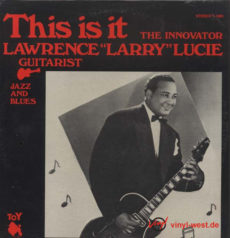
Lawrence Lucie was born in Emporia, Virginia on December 18, 1907 and when he was eight years old began learning mandolin, violin, and banjo. He moved to New York City in 1927, attended the Brooklyn Conservatory of Music to study banjo and studied guitar at Paramount Music Studios, making the later his primary instrument.
Lucie started his professional career as a temporary substitute for Fred Guy in the Duke Ellington Orchestra in 1931. He spent the next two years playing guitar for Benny Carter, followed by Fletcher Henderson, the Mills Blue Rhythm Band, Lucky Millinder, Coleman Hawkins in 1940, and Louis Armstrong until 1944, recording with all of them except Ellington. He would go on to record with Red Allen, Putney Dandridge, Billie Holiday, Spike Hughes, Jelly Roll Morton, Bobby Watson, Roy Eldridge, Sidney Bechet, Big Joe Turner, and Teddy Wilson.
After serving in the Army, he became a member of small groups in contrast to his big band years, and worked often as a studio musician. Throughout his career he was a rhythm guitarist, seldom taking solos until the 1970s, when he founded Toy Records to issue music performed by him and his wife, Nora Lee King. In the 1980s and 1990s he played in concerts with Panama Francis.
As an educator he taught for thirty years at the Borough of Manhattan Community College until 2004. He played solo guitar in clubs until he was 99-years-old. Guitarist Lawrence Lucie, who had a seventy-five year career in jazz and was the last musician to record with Jelly Roll Morton, passed away on August 14, 2009 at the age of 101.

More Posts: guitar
Daily Dose Of Jazz…
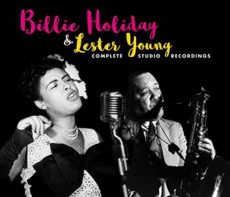
John Hammond Sr. was born into a wealthy family on December 15, 1910 in New York City. Educated at Yale, he had a great love for Black music and as early as 1933, at 22, he was active in the music business, discovering Billie Holiday and getting her into the recording studio, producing Bessie Smith’s final sessions, and becoming a friend of young Benny Goodman. One of swing music’s greatest propagandists, he was responsible for at least partly discovering a remarkable list of musicians through the years making their rise to fame much more swift.
Hammond was a masterful talent scout, producer, promoter, and an early fighter against racism, he produced freewheeling American jazz sessions for the European market, worked with Fletcher Henderson and Benny Carter, and encouraged Goodman to form his first big band. In 1935 he teamed Lady Day with pianist Teddy Wilson for a series of recordings, and the following year he discovered Count Basie’s orchestra while randomly scanning the radio dial. He then flew to Kansas City, encouraged Basie to come East and in 1938 and 1939 he organized the famous “Spirituals to Swing” all-star Carnegie Hall concerts.
After hearing about Charlie Christian in 1939, he flew out to Oklahoma City, Oklahoma to listen to the young guitarist and flew him to Los Angeles, California where he had set up an audition for an initially reluctant Goodman. In addition to his work as a promoter and a record producer, most notably for Columbia during 1937-1943, John was a jazz critic.
After World War II military service felt misplaced in the jazz scene of the mid-’40s, never gaining a taste for bebop. However, by the Fifties he produced a superior series of mainstream dates for Vanguard featuring swing era veterans. Hammond worked through the years for Keynote, Majestic, and Mercury, and during 1959-1975 he was again a major force at Columbia, where he helped the careers of Bob Dylan, Aretha Franklin, George Benson, Bruce Springsteen, and Adam Makowicz, among others.
1967 saw him organizing a new “Spirituals to Swing” concert, and in 1977 his autobiography John Hammond on Record was published. Producer, promoter, critic and talent scout John Hammond Sr. passed away on July 10, 1987 in New York City.

More Posts: critic,producer,promoter,talent scout
Daily Dose Of Jazz…
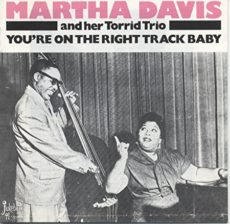
Martha Davis was born on December 14, 1917 in Wichita, Kansas, and was raised in Chicago, Illinois. By the mid-1930s, she had met and been influenced by Fats Waller, and performed regularly as a singer and pianist in Chicago clubs. In 1939, she met, and later married, bassist Calvin Ponder, who went on to play in Earl Hines’ band.
In 1948, Davis moved to California, and developed her recording career on Jewel Records in Hollywood with a trio including Ponder, guitarist Ralph Williams and drummer Lee Young. Their cover of Dick Haymes’ pop hit Little White Lies followed by a duet with Louis Jordan, Daddy-O in 1948, reached # 11 and #7, respectively, on the Billboard charts.
Davis and Ponder also began performing together on stage, developing a musical and comedy routine as “Martha Davis & Spouse” which played on their physical characteristics, she was large, he was smaller. The act became hugely popular, touring and having a residency at the Blue Angel in New York City. They appeared together in movies including Smart Politics with Gene Krupa, and in the mid-Fifties, variety films Rhythm & Blues Revue, Rock ‘n’ Roll Revue and Basin Street Revue. Several of their performances were filmed by Snader Telescriptions for video jukeboxes, and they also broadcast on network TV, particularly Garry Moore’s CBS show.
In 1957, after a break of several years, they resumed recording for the ABC Paramount label, with whom they cut two LPs. Singer and pianist Martha Davis passed away from cancer in New York on April 6, 1960 at age 42.