

Daily Dose Of Jazz…
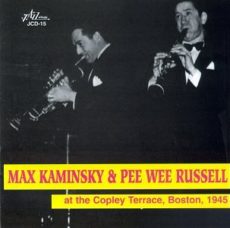
Max Kaminsky was born on September 7, 1908 in Brockton, Massachusetts and started his career in Boston, Massachusetts in 1924. By 1928 he was working in Chicago, Illinois with George Wettling and Frank Teschemacher at the Cinderella Ballroom and in New York for a brief time in 1929 with Red Nichols.
From about 1933-1938, he worked in commercially oriented dance bands, and recorded with Eddie Condon and Benny Carter’s Chocolate Dandies, with Mezz Mezzrow. He played with Tommy Dorsey, Artie Shaw, and performed and recorded with Bud Freeman. He worked again with Shaw from 1941 to 1943, who led a navy band with which Kaminsky toured the South Pacific.
From 1942 he took part in important concerts in New York City that were organized by Condon at Carnegie Hall and Town Hall, and from the following year he played Dixieland with various groups. He also worked in the 1940s with Sidney Bechet, George Brunis, Art Hodes, Joe Marsala, Willie “The Lion” Smith, and Jack Teagarden.
Moving into television, Max led Jackie Gleason’s personal band for several seasons, then toured Europe with Teagarden and Earl Hines’ All Stars in 1957, and performed at the Metropole and Ryan’s in New York at intervals from the late 1960s to 1983, the Newport Jazz Festival and the 1964 New York World’s Fair.
In 1963 he published My Life in Jazz with V. E. Hughes, in 1975 and 1976 he recorded as a leader that well illustrate his style, which is full-toned, economical and swinging in the manner of King Oliver, Freddy Keppard and Louis Armstrong. At one time he played with the Original Dixieland Jass Band.
Trumpeter Max Kaminsky, known for his Dixieland and whose legacy lives on at the Hogan Jazz Archives at Tulane University, passed away on September 6, 1994, one day before what would have been his 86th birthday.

More Posts: trumpet
Daily Dose Of Jazz…
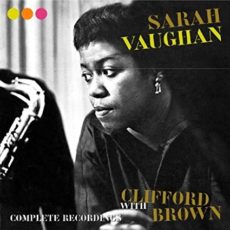
John Malachi was born on September 6, 1919 in Red Springs, North Carolina and grew up in Durham, North Carolina. At the age of ten he moved with his family to Washington, D.C., and was a self-taught musician.
Malachi was a member of the Billy Eckstine Bebop Orchestra in 1944 for a year and then again in 1947. He worked with Illinois Jacquet in 1948, Louis Jordan in 1951, and a series of singers including Pearl Bailey, Dinah Washington, Sarah Vaughan, Al Hibbler, and Joe Williams.
Opting out of the traveling life of the touring jazz musician in the 1960s, he lived approximately the last decade and a half of his life in Washington, D.C. freelancing, playing with touring bands and artists when they stopped in the city, and leading music workshops at clubs like Jimmy MacPhail’s Gold Room and Bill Harris’s Pig’s Foot. Malachi’s generosity towards younger musicians was legendary. His workshops with young musicians was referred to as The University of John Malachi.
He is credited with creating the nickname “Sassy” for Sarah Vaughan, with whom he worked with the Eckstine Orchestra and later directly with her. Pianist John Malachi, who was fond of categorizing jazz pianists into acrobats and poets, and considered himself among the latter, passed away on February 11, 1987 at the age of 67 in Washington, DC.

More Posts: piano
Daily Dose Of Jazz…
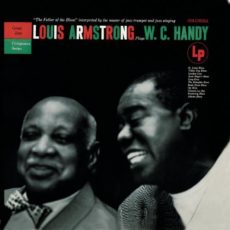
Velma Middleton was born September 1, 1917 in Holdenville, Oklahoma and later moved with her parents to St. Louis, Missouri. She started her career as a chorus girl and dancer, and throughout her career performed acrobatic splits on stage despite being overweight. After working as a solo performer, and singing with Connie McLean’s Orchestra on a tour of South America, she joined Louis Armstrong’s big band in 1942, and appeared with him in soundies.
When Armstrong’s orchestra disbanded in 1947, Velma joined his All-Stars, a smaller group. She was often used for comic relief, such as for duets with Armstrong on That’s My Desire and Baby, It’s Cold Outside. She did occasional features, recorded eight tracks as a solo singer for Dootone Records in 1948 and 1951. Although she was not widely praised for her voice as average but reasonably pleasing and good-humored, Armstrong regarded her as an important and integral part of his show.
While touring with Armstrong in Sierra Leone in 1961 she had a stroke or heart attack in January and passed away the following month on February 10, 1961 in a hospital in Freetown, Sierra Leone. Vocalist Velma Middleton was 43 years old.

More Posts: vocal
Daily Dose Of Jazz…
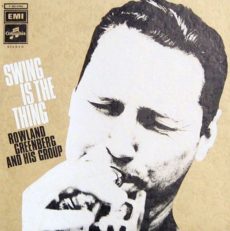
Rowland Charles Wentworth Greenberg was born on August 28, 1920 in Oslo, Norway who first began as one of the country’s leading cyclists. He was Oslo champion at 17 and the following year he won the team championships at the junior National Championships. Turning to music he fashioned his trumpet style was inspired by the English trumpeter Nat Gonella, and by 1939 he was guesting in leading orchestras such as the Hot Dogs and Funny Boys.
Making several trips to England between 1938 and 1939 with Vic Lewis and George Shearing, he was a central part of Oslo’s swing-jazz milieu. He led his own Rowland Greenberg Swing Band from 1939 to 1941 with Arvid Gram Paulsen on sax, Lulle Kristoffersen on piano and Pete Brown on drums. He also led his Rowland Greenberg Rytmeorkester from 1940 to 1944 with tenor saxophonist Gordon Franklin, Arvid Gram Paulsen on alto sax, Robert Normann on guitar, Kjell Bjørnstad, Frank Hansen, Lyder Vengbo on trombone, Fred Lange-Nielsen on bass. He release an album in 1942 that was banned by the German regime, and he was jailed for breaching the Rytmeklubbforbundet by viewing jazz films 1943.
After his release Rowland became active in Sweden with Cecil Aagaard, Thore Erling and Malte Johnson and in England with Jimmie Woode and Sam Samson. He toured Norway with his own band for two years beginning in 1948 playing bebop to the country. He was a part in the All-Star Trumpets session at the 1949 Paris Jazz Festival with Miles Davis, Bill Coleman, Jimmy McPartland and Aime Barelli, played with Charlie Parker, Louis Armstrong, and Down Beat gave him the first chart placing of his career. During the Fifties he played extensively in the orchestras led by Egil Monn-Iversen, Leiv Flisnes and Terje Kjær, led his own orchestras including Mikkel Flagstad on piano, Totti Bergh on saxophone, Knut Young on bass, Ivar Wefring on piano, Bjørn Krokfoss on drums until 1981, and played with Ben Webster and Teddy Wilson.
Trumpeter Rowland Greenberg recorded three albums as a leader and won two jazz awards before passing away on April 2, 1994.

More Posts: trumpet
Daily Dose Of Jazz…
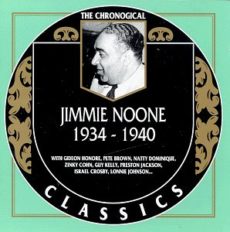
Zinky Cohn was born on August 18, 1908 in Oakland, California. He played in Chicago, Illinois in the late 1920s, including in Jimmie Noone’s Apex Club Orchestra from 1928–30. He recorded extensively with Noone between 1929 and 1934, especially for Vocalion Records. Many of the songs Noone recorded were written and/or arranged by Cohn, including Apex Blues that was previously attributed to Earl Hines.
He recorded as a leader in the early 1930s, with a band that featured Leon Washington on tenor saxophone. Zinky recorded with Frankie Franko & His Louisianans in 1930, and also accompanied blues singers such as Georgia White.
In late 1930s he led the Chicago musicians’ union and continued to play locally. Pianist Zinky Cohn passed away on April 25, 1952 in Chicago, Illinois.
More Posts: piano