

Daily Dose Of Jazz…
Fletcher Allen was born on July 25, 1905 in Cleveland, Ohio and began his career in the mid-’20s as a member of Lloyd Scott’s Band in New York City. In 1927, he was off to Europe for the first time in a group under the direction of Leon Abbey, a bandleader whose pioneering efforts with jazz eventually led to a 1936 tour of India which he also participated in. In between, he went to Budapest with the Benny Peyton group in 1929 and hung out in Europe the following decade. While in Europe he performed on several collaborations with guitarist Django Reinhardt, among others.
Reinhardt recorded some of his arrangements and compositions, including the intoxicating Viper’s Dream. Allen also took advantage of the European base to take part in several tours involving top American performers such as Louis Armstrong, Freddy Taylor and Leon Abbey in the ’30s. It was during this time that he began leading his own band.
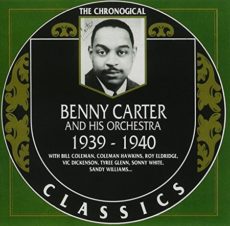
By 1938, he began performing with Benny Carter, something of a doppelgänger in that both men played alto saxophone and clarinet and had excellent reputations as arrangers and shows up several times in the extensive Carter discography. He went on to Later that year, Allen went to Egypt as a member of the Harlem Rhythmakers group during an era when American jazz musicians held court at swank Cairo hotels, a situation that would be quite inconceivable in modern times.
As World War II escalated Fletcher returned home to the States and at first found little work but eventually left the docks when he found that his new skills on baritone sax meant work filling in the sections of various New York big bands. His last job of any notoriety began in the early 70s with the big band of Fred “Taxi” Mitchell, meaning he was one New Yorker who always managed to find a taxi.
Saxophonist, clarinetist and composer Fletcher Allen, whose composition Viper’s Dream has become a jazz staple, passed away on August 5, 1995.
Sponsored By


#preserving genius
Daily Dose Of Jazz…
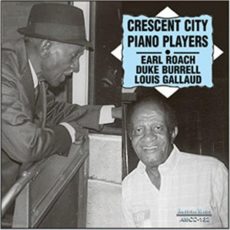
Duke Burrell was born on born July 9, 1920 in New Orleans, Louisiana and worked throughout his career in the Crescent City. He performed and recorded with Louis Jordan, Johnny Otis and on the final recordings of clarinetist Barney Bigard and the Pelican Trio along with Barry Martyn. He would reunite with Bigard for an Ellington segment recording with bassist Bobby Stone, drummer Louis Bellson and trumpeter Ray Nance.
By 1973 Duke became a bandleader and the following year formed the Louisiana Shakers that included Sammy Rimington, Sam Lee, McNeil Breaux and Teddy Edwards in the quintet lineup. He went on to lead four recording sessions between 1973 and 1976.
Pianist, composer, arranger and bandleader Duke Burrell passed away on August 5, 1993 in Los Angeles, California.
Sponsored By

www.whatissuitetabu.com
#preserving genius
More Posts: piano
Daily Dose Of Jazz…
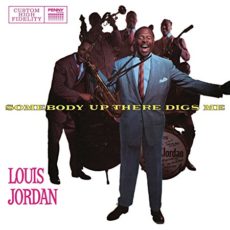
Louis Thomas Jordan was born on July 8, 1908 in Brinkley, Arkansas where his father was a music teacher and bandleader for the Brinkley Brass Band and the Rabbit Foot Minstrels. Losing his mother young, he studied music under his father, starting out on the clarinet, then piano and ultimately landed on the saxophone as his primary instrument. In his youth he played in his father’s bands instead of doing farm work when school closed. During his early career period he played the piano professionally, but alto saxophone became his main instrument. However, he would become even better known as a songwriter, entertainer and vocalist.
He briefly attended and majored in music at Arkansas Baptist College in Little Rock, but after a period with the Rabbit Foot Minstrels and with other local bands like Bob Alexander’s Harmony Kings, he went to Philadelphia and then New York. By 1932, Jordan was performing with the Clarence Williams band, and when he was in Philadelphia he played clarinet in the Charlie Gaines band.
1936 saw him joining the Savoy Ballroom orchestra, led by the drummer Chick Webb. A vital stepping-stone in his career, Louis introduced songs as he began singing lead, and often singing duets with up and comer Ella Fitzgerald. They would later reprise their partnership on several records, by which time both were major stars. In 1938, Webb fired Jordan for trying to persuade Fitzgerald and others to join his new band.
He became famous as one of the leading practitioners, innovators and popularizers of jump blues, a swinging, up-tempo, dance-oriented hybrid of jazz, blues and boogie-woogie. Jordan’s band also pioneered the use of the electronic organ.
Jordan was a talented singer with great comedic flair, and he fronted his own band for more than twenty years. He duetted with some of the biggest solo singing stars of his time, including Bing Crosby, Ella Fitzgerald and Louis Armstrong. An actor and a major black film personality, he appeared in dozens of “soundies” or promotional film clips, made numerous cameos in mainstream features and short films, and starred in two musical feature films made especially for him.
With his dynamic Tympany Five bands, Jordan mapped out the main parameters of the classic R&B, urban blues and early rock-and-roll genres with a series of highly influential 78-rpm discs released by Decca Records. These recordings presaged many of the styles of black popular music of the late 1940s, 1950s and 1960s and exerted a strong influence on many leading performers in these genres.
Known as The King of the Jukebox for his crossover popularity with both black and white audiences of the swing era, Louis was a prolific songwriter who wrote or co-wrote many songs that stayed in the top of the Billboard charts and that were influential classics of 20th-century popular music.
Pioneering alto saxophonist, pianist, clarinetist, singer, actor, songwriter and bandleader Louis Jordan, one of the most successful black recording artists of the 20th century, passed away on February 4, 1975 at age 66 in Los Angeles, California.
Sponsored By

#preserving genius
Daily Dose Of Jazz…
Ray Biondi was born Remo Biondi on July 5, 1905 in Cicero, Illinois. As a child he started with violin and his early training was classical under the supervision of several teachers from the American Conservatory of Chicago. Mandolin followed at age 12 and it became his gateway into the world of string bands, and added guitar and then trumpet into his musical arsenal.
In 1926 he began playing professionally with the Blanche Jaros Orchestra, based out of Cicero, and the next year he started an eight-year period of heavy freelancing in Chicago, enjoying new contacts such as trumpeter Wingy Manone, reedman Bud Freeman, and Earl Burtnett put Biondi in his lineup as a violin and trumpet double. This band took him on a series of tours Kansas City, Cincinnati and New York. this led to a gig with clarinetist and saxophonist Joe Marsala and playing guitar whenever Eddie Condon double booked himself.
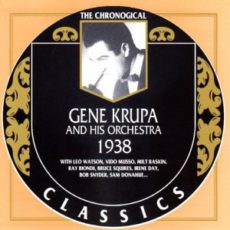
In 1938, Gene Krupa hired Ray solely as a guitarist except on an orchestra project where he double as a violinist. A year later he left the band and formed a series of small groups as a leader and one band had a long residency at Chicago’s 606 Club. He then opened a short-lived club himself, and Krupa took him back on the road in the early ’50s. He then began to get session guitar and mandolin work in some genres outside of straight jazz. With Pat Boone and the Crew Cuts as doo wop became a new musical style.
By 1961, he had begun a serious shift to teaching all of his instruments except the trumpet, but continued gigging with groups both large and small, including the orchestra of Dick Schory in the former case and stride pianist Art Hodes in the latter. Violinist Ray Biondi passed away on January 28, 1981 in Chicago, Illinois.
Sponsored By
#preserving genius
Daily Dose Of Jazz
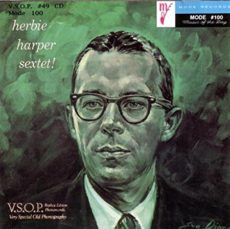
Herbert Harper was born July 2, 1920 in Salina, Kansas and studied trombone in his youth. He first started playing swing music with Benny Goodman and Charlie Spivak in the 1940s and 1950s. A move to Los Angeles, California saw him working on the West Coast jazz scene and performing with the likes of Stan Kenton, Bill Perkins and Maynard Ferguson, among others.
In 1949, he became a member of the band backing Billie Holiday on her famous Just Jazz radio broadcast for AFRS in Los Angeles. During this period he performed alongside band members trumpeter Neal Hefti, clarinetist and tenor saxophonist Herbie Steward pianist Jimmy Rowles bassist Robert “Iggy” Shevak and drummer Roy “Blinky” Garner.
In 1954, he recorded several sessions as a member of Steve White’s Hollywood-based quartet. As a leader he released his inaugural self titled recording in 1954 and followed up with another trio of albums that same year. With two more during the same decade, Herbie would record again as a leader until the Eighties. He would however record profusely as a sideman with Pete Rugolo and Ferguson.
Trombonist Herbie Harper, who concentrated his playing in the West Coast jazz school, passed away on January 21, 2012.
Sponsored By
www.whatissuitetabu.com
#preserving genius
More Posts: trombone