

Daily Dose Of Jazz…
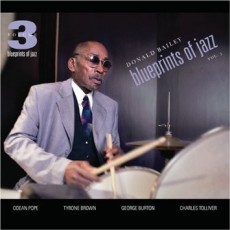
Donald Orlando Bailey was born on March 26, 1933 in Philadelphia, Pennsylvania into a musical family. His father Morriswas a drummer, his brother Morris Jr a saxophonist and his nephew Victor is a bassist.
Bailey got his big break in the jazz world and is probably best known as the drummer in the Jimmy Smith Trio from 1956 to 1964. He also performed and recorded with The Three Sounds on the Blue Note Records label.
Known in the jazz world as Duck Bailey, he performed with John Coltrane in their early Philly years. He worked as a sideman for Sarah Vaughan, Carmen McRae, Hampton Hawes, Sonny Rollins, Freddie Hubbard, Jimmy Rowles, Blue Mitchell, Red Mitchell, Roy Ayers, George Braith, Harold Land, Jack Wilson, Kenny Burrell, Grant Green, Buster Williams and Bobby Hutcherson among others.
In the mid 70s, he moved to Japan where he lived for six years and in 1978, released an album called So in Love for Trio Records. The session featured Hideo Ichikawa, Hideyuki Kikuchi, Yoshio Ikeda, Takaaki Nishikawa and Toshihiko Ogawa. This date featured Bailey playing harmonica, received rave reviews and is a sought after jazz collectible. His last project Blueprints of Jazz Vol.3 featuring Donald Bailey had him in the company of Charles Tolliver on trumpet, pianist George Burton, and tenor saxophonist Odean Pope issued in 2009.
Settling in Montclair, California, he performed around San Francisco Bay area until his late 70s. Drummer Donald Bailey, known as The King of Organ Trio Drummers, passed away in Montclair, California on October 15, 2013 at the age of 80.

Take A Dose On The Road

More Posts: drums
Daily Dose Of Jazz…
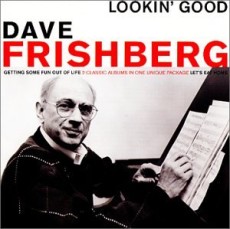
David Frishberg was born March 23, 1933 in Saint Paul, Minnesota. Resisting learning classical piano as a boy, he developed an interest in blues and boogie-woogie by listening to recordings of Pete Johnson and Jay McShann. As a teenager he played in the house band at the Flame in St. Paul where Art Tatum, Billie Holiday and Johnny Hodges appeared. After graduating from the University of Minnesota as a journalism major in 1955, he spent two years in the Air Force.
In 1957, Dave moved to New York City where he played solo piano at the Duplex in Greenwich Village. He first became known for his work with Carmen McRae, Ben Webster, Gene Krupa, Bud Freeman, Eddie Condon, Al Cohn and Zoot Sims.
He later found celebrity writing and performing his own, frequently humorous, songs, including his most famous My Attorney Bernie, and favorites I’m Hip, lyrics only, in collaboration with Bob Dorough, Blizzard of Lies, Do You Miss New York, Peel Me a Grape, Quality Time, Slappin’ the Cakes on Me, and Van Lingle Mungo, the lyrics of which entirely consist of the names of old-time baseball players.
Citing songwriter Frank Loesser as an influence, Frishberg has also worked strictly as a lyricist on a number of occasions collaborating with Johnny Mandel, Alan Broadbent, Al Cohn, Blossom Dearie, David Shire, Julius Wechter, Dan Barrett, Bob Brookmeyer, Gerry Mulligan and Johnny Hodges.
Dave’s tunes have been performed and/or recorded by Blossom Dearie, Rosemary Clooney, Shirley Horn, Anita O’Day, Michael Feinstein, Irene Kral, Diana Krall, Stacey Kent, John Pizzarelli and Mel Torme, among other.
He is also noted for composing the music and lyrics for I’m Just A Bill, the song about the forlorn legislative writ in the ABC Schoolhouse Rock series, as well as Walkin’ on Wall Street, a song that describes how the stock market works, and $7.50 Once a Week, a song about saving and balancing a budget.
Pianist, vocalist, composer and lyricist Dave Frishberg has recorded three albums as a leader, one solo project and has sat in the sideman chair with Jim Goodwin and Rebecca Kilgore on the Arbor Records label.
Uplift Someone’s World
Daily Dose Of Jazz…
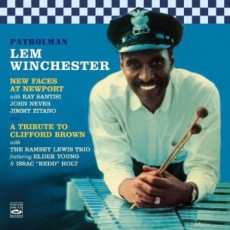
Lem Winchester was born in Philadelphia, Pennsylvania on March 19, 1928. He played piano, baritone and tenor saxophone before settling on the vibraphone. Formerly a police officer, he pursued music as a hobby in Wilmington, Delaware. He turned to music full-time after an appearance at the 1958 Newport Jazz Festival. He was soon working with some of the top names in jazz, making his debut recording with pianist Ramsey Lewis.
Winchester recorded a handful of albums as a leader, mostly for Prestige Records and made sideman appearances with Oliver Nelson, Jack McDuff, Shirley Scott, Benny Golson, Tommy Flanagan and Johnny “Hammond” Smith.
The career of hard bop vibraphonist Lem Winchester was cut short when he passed away from an unsuccessful demonstration of a trick with a revolver on January 13, 1961 in Indianapolis, Indiana. He was 32 years old.
Dose A Day-Blues Away
More Posts: vibraphone
Daily Dose Of Jazz…
Willie Maiden was born William Ralph “Willie” Maiden in Detroit, Michigan on March 12, 1928. He began on piano at age five and started playing saxophone at 11. He spent most of his career playing in big bands, and while he copiously recorded as a sideman, he never led his own session.
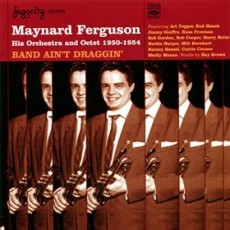
Willie worked with Perez Prado in 1950 and arranged for Maynard Ferguson from 1952 into the 1960s. He played with Charlie Barnet in 1966, and played baritone sax in addition to arranging for Stan Kenton between 1969 and 1973.
As an educator, hard bop tenor saxophonist and arranger Willie Maiden who also played alto and baritone, taught at the University of Maine in Augusta until his passing on May 29,1976.
Inspire A Young Mind
More Posts: saxophone
Daily Dose Of Jazz…
Don Abney was born John Donald Abney on March 10, 1923 in Baltimore, Maryland. He studied piano and French horn at the Manhattan School of Music, playing the latter in an Army band during military service.
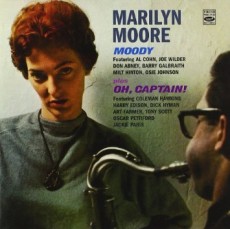
After being honorably discharged from the Army he played in ensembles with Wilbur de Paris, Bill Harris, Kai Winding, Chuck Wayne, Sy Oliver, and Louis Bellson. He had a sustained career as a session musician recording with Louis Armstrong, Benny Carter, Oscar Pettiford, Ella Fitzgerald, Carmen McRae, Sarah Vaughan, Eartha Kitt and Pearl Bailey. His studio work included playing on a large number of recordings for more minor musicians such as Marilyn Moore, as well as on R&B, pop, rock, and doo-wop releases.
After moving to Los Angeles, California and settling in Hollywood, he worked as musical director for Universal Studios/MCA. He appeared as a pianist in the film Pete Kelly’s Blues behind Ella Fitzgerald. Additional credits include recording and arrangements for the film Lady Sings the Blues.
After touring with Anita O’Day in the 1980s he moved to Japan in the early Nineties and toured there with considerable success, and playing weekly at Tokyo’s Sanno Hotel. Upon his return to the United States in 2000, pianist Don Abney, who never recorded as a leader, passed away of complications due to kidney dialysis on January 20, 2000 in Los Angeles, California.
Inspire A Young Mind
More Posts: piano