

Hollywood On 52nd Street
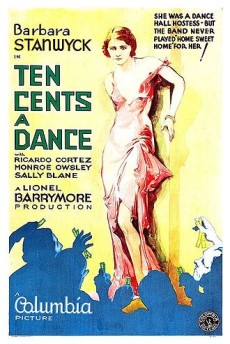
10 Cents A Dance is a song originally written by Richard Rodgers and Lorenz Hart for the Broadway play Simple Simon, which became the inspiration for the 1931 romance-drama film of the same name. The film starred Barbara Stanwyck as a married taxi dancer who falls in love with one of her customers.
The Story: A beautiful streetwise taxi dancer named Barbara O’Neill works at a New York City dance hall called Palais de Dance. One of the dance hall’s wealthy patrons, Bradley Carlton comes to the hall and gives Barbara $100. Concerned about her unemployed friend and neighbor Eddie Miller, Barbara asks Bradley to give him a job, and he agrees. They fall in love, get married, Eddie philanders, they get divorced, they remarry, and then he wanders off to South America. Realizing their love is not strong enough she tries to get another divorce but gets denied by the judge. But after a fight and his gambling she packs her bags, goes to the dance hall and leaves with Bradley for France.
Sponsored By

www.whatissuitetabu.com
Daily Dose Of Jazz…
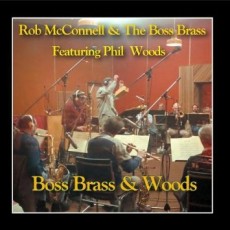
Rob McConnell was born Robert Murray Gordon McConnell on February 14, 1935 in London, Ontario, Canada. He took up the valve trombone in high school and began his performing career in the early 1950s, performing and studying with Don Thompson, Bobby Gimby, Maynard Ferguson and music theory with Gordon Delamont. In 1968 he formed The Boss Brass, a big band that became his primary performing and recording unit through the Seventies and Eighties.
In 1988, McConnell took a teaching position at the Dick Grove School of Music in California, but gave up his position and returned to Canada a year later. In 1997, he was inducted into the Canadian Music Hall of Fame and in 1998 was made an Officer of the Order of Canada.
Rob remained active throughout the 2000s, touring internationally as both a performer and educator. The Rob McConnell Tentet, a scaled-down version of the Boss Brass featuring many Boss Brass alumni, has been quite successful; it has recorded three major albums, The Rob McConnell Tentet, Thank You, Ted and Music of the Twenties.
Rob McConnell & The Boss Brass became one of Canada’s most popular jazz ensembles, performing live and recording for Concord Jazz label and a variety of others. The valve trombonist, composer, arranger, bandleader, educator and recording artist died on May 1, 2010 in Toronto, Ontario, aged 75, from cancer. He left a catalogue of 33 albums recording with Maynard Ferguson and Mel Torme among others.

Put A Dose In Your Pocket
More Posts: trombone
Hollywood On 52nd Street
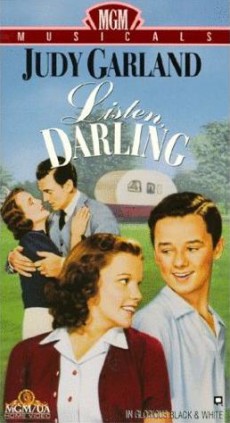
Zing Went The Strings Of My Heart is a 1934 popular song with words and music by James F. Hanley. Though Hal Le Roy and Eunice Healey introduced the song in the Broadway revue Thumbs Up! probably the most notable recordings were made by Judy Garland, who sang it in the 1938 film “Listen, Darling”.
The Story: Pinkie Wingate and her friend Herbert “Buzz” Mitchell go to great lengths to prevent her widowed mother Dottie from marrying the wrong person.
Sponsored By
www.whatissuitetabu.com
Daily Dose Of Jazz…
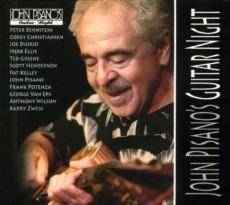
John Pisano was born February 6, 1931 in Staten Island, New York. He began his musical career on the East Coast playing the piano. At age 14 he took up the guitar. In the 1950’s, he entered the service, played guitar with the Air Force Band, then after discharge he followed Howard Roberts and Jim Hall into the guitar chair in the Chico Hamilton quintet. His first significant recordings were made with Hamilton with the quintet in ’57 and South Pacific in 1958.
Pisano’s work with Hamilton and Katz established him as a significant guitarist and arranger and an integral component of the Los Angeles jazz scene. He published some of his own compositions while with the Herb Alpert band. He composed So, What’s New that appeared as the B-side of Herb Alpert’s hit single Flamingo in 1966.
Though he has been a leader in his own right, for most of his career John has resided in his comfort zone as a sideman working with Paul Horn, Fred Katz, Burt Bacharach, Tony Bennett, Herb Alpert, Natalie Cole, Michael Franks, Diana Krall, Peggy Lee, Julie London, Joe Pass, Frank Sinatra, Barbra Streisand, Billy Bean and many more in performance or recordings. He has recorded for Decca,
Starting in the ’90s, John performed with his wife singer Jeanne Pisano in a group called The Flying Pisanos. Today John Pisano continues to influence the jazz guitar community and further the value of jazz guitar with his fabled Guitar Nights and his duet recordings Among Friends, Conversation Pieces, Affinity with Ray Walker, and Homage with Adrian Ingram.
Give The Gift Of Knowledge
More Posts: guitar
Daily Dose Of Jazz…
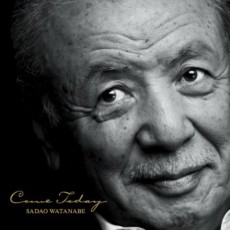
Sadao Watanabe was born on February 1, 1933 in Utsunomiya, Japan and first began learning music at the age of 18. He started performing professionally in 1953. By 1958 he had established himself as a world-class saxophonist having performed with leading musicians and quartets. In 1962 he left Japan to study at Berklee College of Music in Boston.
Known for his bossa nova recordings, Sadao’s work encompasses a large range of styles with collaborations from musicians all over the world. Of his 72 albums to date, he has had 13 albums reach the top 50 Billboard charts and two within the Top 10. He has also had numerous albums reach number one on the jazz charts.
Watanabe has been awarded the Order of the Rising Sun – the imperial medal of honor, the Fumio Nanri Award, and an honorary Doctorate Degree from Berklee College of Music.
In addition to his musical career, alto and soprano saxophonist and flutist Sadao Watanabe is also a published photographer with six books to his credit in Japan. He is also a U.S. citizen sharing his time between his homeland and Los Angeles, California as he continues to perform, record and tour.
Jazz Is Global – Share