

Daily Dose Of Jazz…
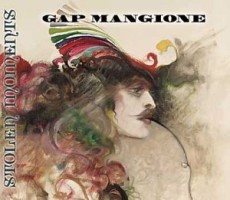
Gaspare “Gap” Mangione was born July 31, 1938 in Rochester, New York and learned to play the piano as a child. Along with his Grammy-winning flugelhornist brother Chuck, they started performing together as the Jazz Brothers in 1958 and eventually recorded three albums for Riverside Records.
In 1968, Gap Mangione released his first solo album, “Diana in the Autumn Wind”, featured new compositions and arrangements, and was conducted by Chuck Mangione. The 1970s brought more solo albums along with tours with his own group and many as featured pianist in his brother’s orchestral performances.
By the Eighties, Gap began spending less time on the road and more time playing in and around Rochester. In 1990, he formed the Gap Mangione New Big Band, which remains the premier dance and concert big band in the Rochester area. The New Big Band has released four recordings since 1998.
Many major rappers and producers, including Jaylib, Talib Kweli, Guerilla Black, Ghostface Killah, Slum Village and People Under The Stars have sampled Gap’s “Diana in the Autumn Wind” for their recent works.
Gap Mangione has received the Artist of the Year Award from the Arts & Cultural Council of Greater Rochester, continues to make regular appearances at Rochester locations, among them the Woodcliff Hotel and Spa, Pier 45 at the Port, as well as the Rochester International Jazz Festival. The composer, arranger, bandleader and pianist continues to play with his brother.

Put A Dose In Your Pocket
More Posts: piano
Daily Dose Of Jazz…
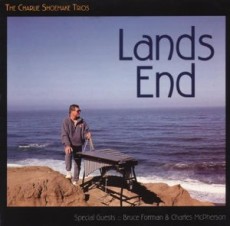
Charlie Shoemake was born on July 27, 1937, in Houston, Texas to music loving parents who began him on piano at age six. Excelling in both baseball and music by high school graduation he was also playing vibes and had attracted the attention of the St. Louis Cardinals. He went on to Southern Methodist University to study music and play baseball. But it was during his first year he realized to be good he had to choose one and that choice was music.
In 1956 he moved to Los Angeles and embarked on an extensive study of the concepts of his idols, Charlie Parker and Bud Powell along with other greats Fats Navarro, Kenny Dorham, Clifford Brown, Hank Mobley, Sonny Stitt, Phil Woods, Hank Jones, Tommy Flanagan, Sonny Clark. During this period informal harmony studies with pianist Jimmy Rowles were very invaluable. But with the onset of rock and roll, the jazz scene began to dry up and he was forced to do studio work, commercials and accompanying vocalists to make ends meet.
Returning to the vibraphone in the Sixties and with the aid of Victor Feldman, Charlie was back in the jazz circles playing for composers Quincy Jones and Lalo Schifrin. It was 1966 that a stop by Shelly’s Manne Hole that he was offered and took a five week tour with the George Shearing Quintet that turned into a 7 year relationship. This tenure saw him playing with the likes of Andy Simpkins, Stix Hooper, Harvey Mason, Joe Pass, Pat Martino and others.
By 1973 Shoemake opened a successful jazz improvisation school in Los Angeles and by 1990 he had taught and guided over 1500 people, most notably saxophonists Ted Nash and Tim Armacost, trombonist Andy Martin and even smooth jazz artists Dave Koz and Richard Elliot.
Closing his studio in 1990, he moved north to Cambria with the idea of having a quiet home base and touring around the world. But with no jazz in town, he approached a restaurateur to bring in jazz and today The Hamlet performs some thirty concerts a year and he appears with every major jazz musician stopping through from the East coast and Europe. Vibraphonist Charlie Shoemake is currently the Director of the Central Coast Jazz Institute.
Inspire A Young Mind
More Posts: vibraphone
Daily Dose Of Jazz…
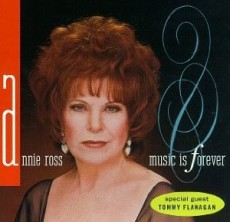
Annie Ross was born Annabelle McCauley Allan Short to vaudeville parents on July 25, 1930 in Mitcham, London, England and was raised in Los Angeles, California by her aunt, singer Ella Logan. When she was seven years old she sang the “Bonnie Banks of o’ Loch Lomond” in Our Gang Follies of 1938 and played Judy Garland’s sister in Presenting Lily Mars. By the age of 14 she wrote the song “Let’s Fly” which won a songwriting contest and was recorded by Johnny Mercer and the Pied Pipers. By the end of her tenth grade she left school, went to Europe, changed her surname to Ross and quickly started her singing career.
Best known as a member of the trio Lambert, Hendricks & Ross, Annie is one of the early practitioners of a singing style known as vocalese, that involves the setting of original lyrics to an instrumental jazz solo. Her 1952 treatment of saxophonist Wardell Gray’s “Twisted” is a classic example of vocalese.
During the Fifties she recorded her first album, Singin’ and Swingin’with the MJQ, followed by Annie By Candlelight, Sing A Song With Mulligan and A Gasser! with Zoot Sims. She recorded seven albums with Lambert, Hendricks & Ross between 1957 and 1962. Their first, Sing A Song Of Basie resulted in a success and the trio became an international hit. Ross left the group in 1962 and in 1964 opened her own nightclub, Annie’s Room, in London.
Ross is also an accomplished actress appearing in a number of films such as Superman III, Throw Momma From The Train, Wicker Man, and on stage Three Penny Opera and Side By Side By Sondheim.
Annie has been the recipient of the ASCAP Jazz Wall Of Fame, the NEA Jazz Masters Award and the MAC Award for Lifetime Achievement and performs regularly at The Metropolitan Room in New York City.
Give A Gift Of Jazz – Share
More Posts: vocal
Daily Dose Of Jazz…
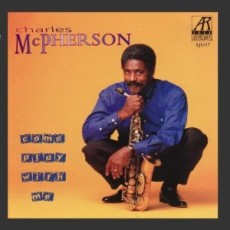
Charles McPherson was born on July 24, 1939 in Joplin, Missouri but grew up in Detroit, Michigan. As a teenager he played with Barry Harris, played the Detroit scene through the Fifties and in 1959 moved to New York City. Along with his Detroit partner Lonnie Hillyer joined Charles Mingus in 1960, a relationship that lasted until 1972.
The alto saxophonist, had a short-lived quintet with Hillyer in ’66, and then broke out on his own after leaving Mingus to become a full-time leader. A move to San Diego in 1978 became home while recording for such labels as Prestige, Mainstream, Xanadu, Discovery and Arabesque during his prolific career.
McPherson, a Charlie Parker disciple, who brought his own lyricism to the bebop idiom, was commissioned to help record ensemble renditions of pieces from Charlie Parker used on the 1988 “Bird” film soundtrack. To date he has 25 albums as a leader to his credit and another sixteen as a sideman working with the likes of Toshiko Akiyoshi, Kenny Drew, Charles Tolliver, Clint Eastwood, Art Farmer and Sam Jones. The saxophonist has remained a stable figure in modern mainstream jazz.
Jazz Is Global – Share
More Posts: saxophone
Daily Dose Of Jazz…
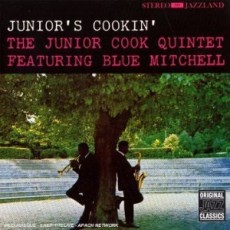
Herman “Junior” Cook was born on July 22, 1934 in Pensacola, Florida. After playing with Dizzy Gillespie in 1958, Cook gained some fame for his longtime membership in the Horace Silver Quintet until 1964. He went on to play with band mate Blue Mitchell until ’69.
Through his association with Mitchell he would play alongside Freddie Hubbard, Elvin Jones, George Coleman, Louis Hayes, Bill Hardman, McCoy Tyner, Bertha Hope and Horace Silver to name a few. In addition to many appearances as a sideman in which he contributed his talents on more than three-dozen sessions, Cook recorded as a leader for Jazzland, Affinity, Catalyst, Muse, and Steeplechase.
As an educator, he taught at Berklee School of Music during the 1970s and by the early 1990s he was playing with Clifford Jordan and also leading his own group. Junior Cook, the tenor saxophonist who played in the hard bop style, died in his New York City apartment on February 3, 1992.
Give The Gift Of Knowledge
More Posts: saxophone