

Daily Dose Of Jazz…
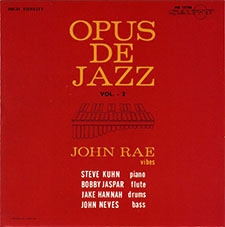
John Anthony Pompeo, better known as Johnny Rae or John Rae was born on August 11, 1934 in Saugus, Massachusetts and grew up in music, as his mother played piano in night clubs in the Boston area. His area of musical study in jazz led him to become a drummer and vibraphonist. Graduating from East Boston High School in 1952, he went on to study piano at the New England Conservatory and timpani at Berklee College of Music.
Johnny joined Herb Lee’s R&B band right out of high school, gigged with Slim Gaillard and Milt Buckner, played drums and vibes with Al Vega and Jay Migliori. Upon the recommendation of MJQ’s John Lewis, he teamed up with to play with George Shearing, alongside Toots Thielemans, Al McKibbon on bass and three Latin percussionists that included conguero Armando Peraza. It was during this period that Peraza taught him to play timbales.
He played with Johnny Smith, Ralph Sharon, Cozy Cole and Herbie Mann throughout the Fifties. The next couple of decades were equally commanding of his talents by Cal Tjader, Stan Getz, Gabor Szabo, Charlie Byrd, Earl Hines, Art Van Damme, Anita O’Day and Barney Kessel among many others. Though mainly concentrating in the context modern jazz, he never wandered far from Latin music and the Latin jazz percussion he played.
Though he was on more than three-dozen recording sessions, Johnny only recorded one as a leader, “Opus De Jazz, Volume 2” in 1960 for Savoy. A second release under his name was in actuality him fronting Herbie Mann’s band for contractual reasons.
Since the 1980s Rae has worked in music education, has authored several instruction books and was a disc jockey in San Francisco for many years. He assembled a tribute band to Tjader called Radcliff (Tjader’s middle name) and led the band until his death. Johnny Rae, drummer and vibraphonist passed away in 1993 in San Francisco, California.

Dose A Day – Blues Away
More Posts: drums,percussion,timbales,vibraphone
Daily Dose Of Jazz…
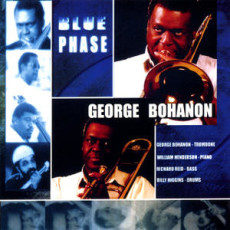
George Roland Bohanon, Jr. was born on August 7, 1937 in Detroit, Michigan. The jazz trombonist and session musician studied in his youth and by his late teens he was a part of Detroit’s Workshop Jazz ensemble, with Johnny Griffin, Paula Greer, David Hamilton, Lefty Edwards and Herbie Williams.
Following his appearance on several Motown recordings, together with leading musicians such as Hank Cosby of the Funk Brothers, George moved to California.
In 1962, he replaced Garnett Brown in the Chico Hamilton Quintet. 1963 and 1964 witnessed two recorded albums for Motown’s unsuccessful jazz Workshop label, “Boss: Bossa Nova” and “Bold Bohanon”, with the latter be unreleased according to several sources.
By 1971, he was a member of the Ernie Wilkins Orchestra playing alongside trombonist Benny Powell that backed Sarah Vaughan on her album “A time In My Life”. Between 1984 and 1993, Bohanon played in orchestras backing Frank Sinatra. He has performed and/or recorded as a sideman with Charles Kynard, Hampton Hawes, Stanley Clarke, Ry Cooder, Etta James and Diana Krall. Trombonist George Bohanon continues to perform and record.
Put A Dose In Your Pocket
More Posts: trombone
Daily Dose Of Jazz…
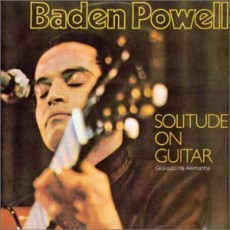
Baden Powell de Aquino was born on August 6, 1937 in Varre-Sai in the state of Rio de Janeiro, Brazil. Simply known as Baden Powell, his father, a scouting enthusiast, named him after Robert Baden Powell founder of the boy scouts. Growing up in a Rio suburb from age three, proved profoundly influential, as his house was a stop for popular musicians. He started guitar lessons with Jayme Florence, a famous choro guitarist in the 1940s, and soon proved to be a young virtuoso, winning many talent competitions before he was a teenager. Fascinated by swing and jazz, his main influences were firmly rooted in the Brazilian guitar canon.
By fifteen, he was playing professionally, accompanying singers and bands in various styles. In 1955, Powell was playing with the Steve Bernard Orquestra at the Boite Plaza, formed the new Hotel Plaza Trio with Ed Lincoln and with their young musician friends took part in after-hours jam sessions, gaining notice in the growing Brazilian jazz scene.
Achieving much wider fame in 1959 by convincing Billy Blanco to put lyrics to one of his compositions resulted in a song called “Samba Triste” and quickly became very successful for Baden. In 1962, he met the poet-diplomat Vinicius de Moraes and began a collaboration that yielded some true classics of 1960s Brazilian music. Together they transcended the prevailing bossa nova by fusing Afro-Brazilian with samba. During those years he released several recordings on Brazilian French and German labels and his 1966 “Tristeza on Guitar”, is considered by many to be a high point in his career.
Powell would go on to be the house guitarist for Elenco Records, the guitarist on Elis Regina’s TV show “O Fino da Bossa”, partner with poet Paulo Cesar Pinheiro and produced another series of Afro-Brazilian inspired music, tour Europe and record profusely until his health began failing him due to alcohol and cigarette abuse and his star dimmed. Returning home to Brazil he continued to record and perform and a renewed public recognition of his work came around that time. However, after many years of abuse, and he fell terminally ill and on September 26, 2000 guitarist and vocalist Baden Powell passed away in Rio de Janeiro of pneumonia triggered by diabetes.
His recordings span five decades beginning with his first appearances as accompanist on a handful of big band and samba recordings from the 1950s. He recorded his first solo album in 1959, but it was released in 1961. H e leaves us with a discography of some 55 recordings as a leader and numerous more as a sideman. He was one of Brazil’s most prominent and celebrated guitarists.
Give The Gift Of Knowledge
Daily Dose Of Jazz…
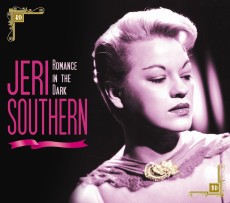
Jeri Southern was born Genevieve Hering on August 5, 1926 in Royal, Nebraska and began playing piano at age three. At age six she started formal study in classical piano and studying classical piano and voice at Sacred Heart in Omaha, Nebraska. It was during this period that her interest in jazz developed.
Southern began her career at the Blackstone Hotel in Omaha, then joined a United States Navy recruiting tour during WWII. In the late 1940s, she worked the Chicago club scene, once playing piano for Anita O’Day and where she became known for torch songs.
Signing with Decca Records in 1951, Jeri became known both for jazz and pop, rising to the height of her career during the decade. In 1955 her recording of “An Occasional Man”, reached #89 in the Billboard pop chart and in 1957 she had a Top 30 hit with “Fire Down Below”, that also hit #22 on the UK Singles Chart.
After her switch to Capitol Records, Southern found more success performing interpretations of Cole Porter with Billy May arrangements of some of the more humorous examples. She also sang in a few films
By the 1960s Jeri gave up the performing side of the music industry opting to teach instead, leaving a catalogue of more than two-dozen recordings. She would later move to Hollywood, California and work on film composing with Hugo Friedhofer. She wrote Interpreting Popular Music At The Keyboard during her final years.
Pianist and vocalist Jeri Southern passed away in Los Angeles, California of pneumonia on August 4,1991, at the age of 64.
Take A Dose On The Road
Daily Dose Of Jazz…
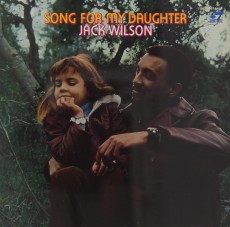
Jack Wilson was born in Chicago, Illinois on August 3, 1936 but grew up in Fort Wayne, Indiana from the age of seven. From 1949-54, he studied piano with Carl Atkinson at the Fort Wayne College of Music where he was introduced to the music of George Shearing.
Wilson later picked up the tenor saxophone and played in the Central High School band. He began performing locally leading small combos. By his fifteenth birthday, he had become the youngest member ever to join the Fort Wayne Musicians Union, Local 58. At 17, James Moody hired him to play a two-week stint as a substitute pianist.
After graduating from Central High, Jack spent a year-and-a-half at Indiana University, where he met Freddie Hubbard and Slide Hampton. Then touring with a rock ‘n roll band, he wound up in Columbus, Ohio and connecting with then unknown Nancy Wilson and Rahsaan Roland Kirk.
After a year in Columbus, he moved to Atlantic City and led the house band at the Cotton Club, adding organ to his musical arsenal. At the Club he met Dinah Washington and worked with her from 1957-58.
A return to Chicago, Wilson was playing with Gene Ammons, Sonny Stitt, Eddie Harris and Al Hibbler and holding down the gig at the Persian Lounge. Drafted into the Army, he went to Fort Stewart, GA. and became the first Black music director for the Third Army Area, playing tenor saxophone in the army band.
In 1961, jack received an honorable medical discharge due to diabetes, returned to Dinah Washington’s band for a year and encouraged by Buddy Collette moved to Los Angeles, California. It was here he worked with Gerald Wilson, Lou Donaldson, Herbie Mann, Johnny Griffin, Sammy Davis Jr., Sarah Vaughan, Lou Rawls, Eartha Kitt, Julie London, as well as Sonny & Cher. He composed and recorded the title track for Earl Anderza’s debut album Outa Sight!
Wilson recorded his debut as a leader for Atlantic Records with The Jack Wilson Quartet featuring Roy Ayers followed by a sophomore project, then three for the label’s subsidiary Vault Records and three albums for Blue Note including the classic Easterly Winds in 1967. From there he focused on work with vocalist Esther Phillips, went back to the studio for Discovery Records, and returned to be a sideman with Lorez Alexandria, Tutti Camarata and Eddie Harris.
His final recording session simply titled In New York, took place on June 4, 1993 and featured legendary drummer Jimmy Cobb. Composer and pianist Jack Wilson died on October 5, 2007 due to complications from his life with diabetes.
Inspire A Young Mind