

Daily Dose Of Jazz…
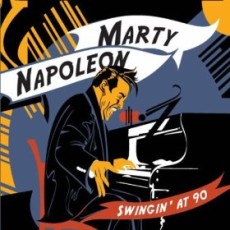
Marty Napoleon was born on June 2, 1921 in Brooklyn, New York and studied piano as a child. His early years in 1946 he worked with Gene Krupa and went on to work with his uncle, trumpeter Phil Napoleon in his Original Memphis Five.
He is perhaps best known for replacing Earl Hines in Louis Armstrong’s All Stars in 1952. During the decade of the 50s he also worked with his brother Teddy Napoleon, also a pianist. From 1966-1971 Marty was once again reunited and performing with Louis Armstrong.
Napoleon recorded as a sideman with Kai Winding, Charlie Ventura, Rex Stewart, Carl Barry, Herbie Fields, Teddy Reig, Cozy Cole and Allen Eager.
Marty Napoleon released one album as a leader for Bethlehem Records titled Marty Napoleon Swings and Sings, recorded with his trio “The Big Three”, “Jazz From Then Till Now” and “We 3” for other labels, and in 2012 recorded and released “Swingin’ at 90. At age 93 he currently resides in New York.

Jazz Is Global – Share
More Posts: piano
Daily Dose Of Jazz…
Hal McKusick was born on June 1, 1924 in Medford, Massachusetts. Hal moved with his family at age 3 to nearby Newton and at age 8, Hal’s mother bought him a clarinet as a Christmas present, insisting first on a vow of daily practice sessions and weekly lessons. With clarinet in hand, Hal practiced relentlessly and took lessons from schoolteacher Frank Tanner, who used him in the school band on clarinet and alto saxophone at age 9. Sight-reading came quickly to Hal, and by age 15, he was playing Boston’s burlesque house, the Old Howard Theater.
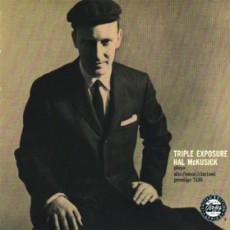
By the 40s and WWII McKusick was playing with Les Brown and moved through the decade playing with Boyd Raeburn and then Claude Thornhill. In the early 1950s he worked with Terry Gibbs and Don Elliott and in 1957 released his first album as a leader for Prestige titled Triple Exposure. As a sideman he sat in on recording sessions with groups led by George Russell and Jimmy Giuffre; worked with Bill Evans, Art Farmer, Paul Chambers, Connie Kaye, Lee Konitz and John Coltrane.
During the 60s he joined the CBS orchestra playing alongside the likes of Hank and Thad Jones, playing Carnegie Hall and Lincoln Center behind Judy Garland, Sarah Vaughan, Peggy Lee, Nat King Cole and Barbara Streisand. In the 70s he moved east to New York and throughout the 70s and 80s he produced weekend performances at Jazz At Moon in Easthampton that led to forming his nonet featuring Clark Terry, Art Farmer, Percy Heath, Jim Hall, Mike LeDonne, Hank Jones, Jim McNeely Jerry Dodgion and others.
Hal McKusick, alto saxophonist, clarinetist, flautist, composer and educator taught at the Ross School in East Hampton, New York and also restored and sold antiques, restored and built Shaker furniture both for Bloomingdales and private commissions. On April 11, 2012 he passed away of natural causes at the age of 87.
Jazz Is Global – Share
Daily Dose Of Jazz…
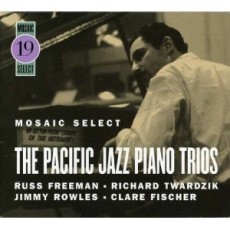
Russell Donald Freeman was born on May 28, 1926 in Chicago, Illinois. He was initially classically trained, but later turned toward jazz of a largely bop style. His reputation as a jazz pianist grew in the 1940s when he worked with Art Pepper, Shorty Rogers and Chet Baker. Among his best work is his extensive collaboration with Shelly Manne, especially in the 1950s and 1960s.
Freeman wrote “The Wind” with original lyrics by Jerry Gladstone and was performed as an instrumental piece during the 1950s and 1960s by the likes of Chet Baker, Leo Wright and Stan Getz as well as sung by vocalist June Christy. Russ’s piano is featured on the 1954 recording of “The Wind,” which has since become a jazz standard, for the album Chet Baker With Strings and Deep I A Dream: The Ultimate Chet Baker Collection, the latter he is featured on seven cuts. In 1991, Mariah Carey wrote her own lyrics to Freeman’s “The Wind” for her album Emotions.
Russ Freeman, bebop and cool jazz pianist, remained busy in music throughout his life, transitioning from jazz pianist to film scoring and composition before his death on June 27, 2002 in Las Vegas, Nevada.
Dose A Day-Blues Away
More Posts: piano
Daily Dose Of Jazz…
Ramsey Emmanuel Lewis, Jr. was born on May 27, 1935 in Chicago, Illinois and began taking piano lessons at the age of four. By 15 he joined his first jazz band, The Cleffs. The seven-piece group provided Lewis his first involvement with jazz and he would later join Cleffs drummer Isaac “Redd” Holt and bassist Eldee Young to form the Ramsey Lewis Trio.
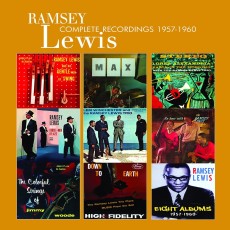
The trio started as primarily a jazz unit and released their first album, Ramsey Lewis And The Gentlemen of Swing, in 1956. Following their 1965 single hit “The In Crowd” that reached #5 on the pop charts and the album #2 they concentrated more on pop material. Young and Holt left in 1966 to form Young-Holt Unlimited and were replaced by Cleveland Eaton and Maurice White.
By 1966, Lewis was one of the nation’s most successful jazz pianists, topping the charts in addition to “The In Crowd” with Hang On Sloopy” and “Wade In The Water”. All three singles each sold over one million copies and were awarded gold discs. Many of his recordings attracted a large non-jazz audience and in the 1970s, he often played electric piano, although by later in the decade he was sticking to acoustic and using an additional keyboardist in his groups.
In addition to recording and performing, Lewis hosted a syndicated morning show on Chicago “smooth jazz” radio station WNUA. His weekly syndicated Legends of Jazz, featured recordings from artists such as David Sanborn, George Duke, Herbie Hancock, Charlie Parker, Dizzy Gillespie, Kurt Elling, Al Jarreau and Miles Davis.
Ramsey has appeared on the Red Hot Organization’s compilation album, Stolen Moments: Red Hot + Cool, his Ramsey Lewis Morning Show became part of Broadcast Architecture’s Smooth Jazz Network, his Legends of Jazz became a television series, he is the artistic director of Jazz at Ravinia, serves on the Board of Trustees for the Merit School of Music and The Chicago High School for the Arts. His Ramsey Lewis Foundation helps connect at-risk children to the world of music. He continues to perform, record and tour.
Inspire A Young Mind
More Posts: piano
Daily Dose Of Jazz…
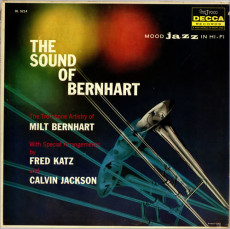
Milt Bernhart was born on May 25, 1926 in Valparaiso, Indiana and began his musical career with the tuba. By high school he switched to trombone and by 16 he was working in Boyd Raeburn’s band and later gigged with Teddy Powell.
After a tour in the Army he worked, off and on, with Stan Kenton for the next ten years. He is perhaps most associated with Kenton, but in 1955 he had his first album as a leader. In 1986 he was elected President of the Big Band Academy of America.
Widely known as a mild-mannered and humorous musician his brief period with Benny Goodman was one area that brought out his ire. Except for the Army’s basic training, Milt indicates working with Goodman was “the bottom” of his first 23 years of life, referring to him as a bore and could not abide Goodman’s public humiliation of tenor saxophonist Wardell Gray or his segregated treatment at a Las Vegas club.
West coast jazz trombonist Milt Bernhart, who supplied the exciting solo heard in the middle of Sinatra’s popular 1956 recording of “I’ve Got You Under My Skin” conducted by Nelson Riddle, passed away on January 22, 2004 in Glendale, California.26-2004
Jazz Is Global – Share
More Posts: trombone