

Daily Dose Of Jazz…
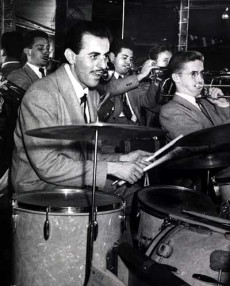
Arthur Mardigan was born February 12, 1923 in Detroit, Michigan. As early as 1942 age 19 he was playing drums with Tommy Reynolds prior to a two-year stint in the Army. After his discharge he worked extensively on the New York City jazz scene, playing and recording with George Auld, Charlie Parker, Dizzy Gillespie, Dexter Gordon, Kai Winding, Wardell Gray and Fats Navarro.
In the 1950s he went on tour with Woody Herman and Pete Rugulo, he recorded as a leader of a sextet that included Al Cohn in 1954 for The Jazz School, recorded with Stan Getz also in 1954 and then moved back to Detroit. There he played with Jack Brokensha in 1963, returning to work with Getz near the end of his life. Drummer Art Mardigan passed away on June 6, 1977 in his hometown of Detroit.
More Posts: drums
Daily Dose Of Jazz…
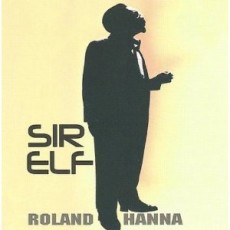
Roland Hanna was born on February 10, 1932 in Detroit, Michigan and began private classical piano lessons at an early age but had a strong interest in jazz. After graduation from Cass Technical High School and a two-year stint in the US Army, he continued his musical studies at the Eastman and Juilliard Schools of Music.
He worked with several big names, such as Benny Goodman and Charles Mingus in the 1950s, from 1967 to 1974 was a regular member of the Thad Jones-Mel Lewis Orchestra and was also a member of the New York Jazz Quartet during this decade. He also performed solo, contributed to orchestras, bands, and small groups; provided sensitive, sympathetic accompaniment to such artists Sarah Vaughn (also her musical director), Carmen McRae and Al Hibbler.
Hanna went into semi-retirement for most of the 1980s, though he played piano and wrote the song “Seasons” for Sarah’s 1982 album Crazy and Mixed Up, however, he returned to music later in the decade. Over the course of his career he recorded some 50 albums, formed a record label, became a tenured professor of music at Aaron Copeland School of Music, Queens College and City College of New York, and was knighted by Liberian President William Tubman for his humanitarian services to that country.
Sir Roland Hanna passed away on November 13, 2003 in Hackensack, New Jersey.
More Posts: piano
Daily Dose Of Jazz…
Frederick Eugene John “Gene” Lees was born in Canada on February 8, 1928 the eldest of four children. He began his writing career as a newspaper reporter in 1948 prior to moving to the U.S. and becoming a music critic at the Louisville Times in Kentucky. By the end of the Fifties he was editor of Down Beat magazine.
As a freelance writer, Lees wrote for Stereo Review, High Fidelity and the New York Times in the U.S. along with several Canadian publications like the Toronto Star and Maclean’s. As a biographer, Lees has written about Oscar Peterson, Lerner & Loewe, Henry Mancini, Woody Herman and about racism in jazz music in “Cats of Any Color: Jazz Black and White”.
Gene wrote nearly one hundred liner notes for artists as diverse as Stan Getz, John Coltrane and Quincy Jones. As a novelist he published “And Sleep Until Noon” in 1967 and his second book, “Song Lake Summer” was published in 2008. He won his first of five ASCAP-Deems Taylor Awards in 1978 for a series of articles published in High Fidelity about US music. Lees’ famous monthly “Jazzletter” was established in 1981, and contains musical criticism by Lees and others.
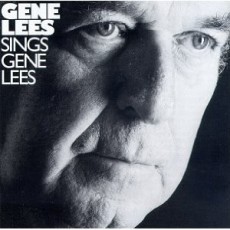
In the early 60s he studied composition by correspondence with the Berklee College of Music, piano with Tony Aless, guitar with Oscar Castro-Neves and became a lyricist translating and writing English lyrics for the Portuguese bossa nova tunes. He wrote the lyrics for Antonio Carlos Jobim’s Corcovado re-titled “Quiet Nights of Quiet Stars”, also “Someone To Light Up My Life”, “Song of the Jet”, “The Happy Madness” and “Dreamer”. He has said that Frank Sinatra’s recording of Quiet Nights was the definitive rendition. He also contributed lyrics to Milton Nascimento’s Bridges, Charles Aznavor Broadway concert, “One World, One Peace” – the poems of Pope John Paul II recorded by Sarah Vaughan and recorded Bridges – Gene Lees Sings Gene Lees.
Gene Lees, music critic, biographer, lyricist and journalist struggled with heart disease in his later years and died on April 22, 2010 in Ojai, California.
More Posts: biographer,critic,journalist,lyricist
Daily Dose Of Jazz…
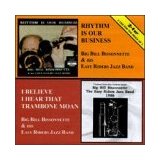
Big Bill Bissonnette was born February 5, 1937 in Bridgeport, Connecticut who became a jazz trombonist and producer. A strong advocate of New Orleans jazz played by Black musicians in the Sixties he led his group The Easy Riders Jazz Band.
During that period Bill also established his own Jazz Crusade label and organized northern tours for such veterans as Kid Thomas Valentine, George Lewis and Jim Robinson. After a period off the jazz scene, Bill successfully published of his 1992 memoirs, “The Jazz Crusade” that told many stories about New Orleans’ musicians.
Bissonnette reactivated his label and began to play trombone again. He has produced and recorded over 100 jazz sessions for his Jazz Crusade label, appearing as trombonist or drummer on over 50 recording sessions of New Orleans jazz.
He has spent much of the 1990s documenting the British jazz scene with his “Best of the Brits” CD series. He published a newsletter several times a year. Trombonist, drummer, producer, bandleader and writer retired from music and now resides in Concord, North Carolina in 2006.
More Posts: bandleader,drums,writer
Daily Dose Of Jazz…
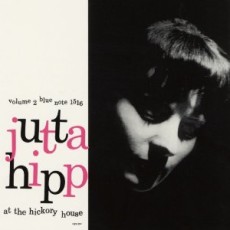
Jutta Hipp was born on February 4, 1925 in Leipzig, Germany. She first studied painting in Germany, but later played jazz during the war and she indicated jazz was important to her during that period. After the war she moved to West Germany due to the Soviet Union working with Hans Zoller and leading a quintet.
In 1954 Jutta played with Attila Zoller where critic Leonard Feather was so impressed with her work that soon after she moved to New York City. She drew some criticism initially from critics who felt she was too similar to her sponsor Horace Silver. In 1956 she played the Newport Jazz Festival and cut a studio album with Zoot Sims that is considered possibly her best.
Hipp went on to work in New York based trios determined to be accepted as an equal amongst her male counterparts, but felt intense nervousness and the anxiety led to her abandoning jazz in 1958. From then on she made her living primarily as a seamstress and returned to her first interest of painting and her portraits of various jazz musicians became popular with musicians.
Although she maintained some contact with musicians like Lee Konitz, she cut herself off from the music industry to the point that by 2000 Blue Note did not know where to send her royalty checks. Jazz pianist Jutta Hipp, who primarily played in the bebop and cool jazz genres during her short musical career, gained new interest after her passing in Queens on April 7, 2003 as a woman instrumentalist in the New York Jazz scene.
More Posts: piano