

Daily Dose Of Jazz…
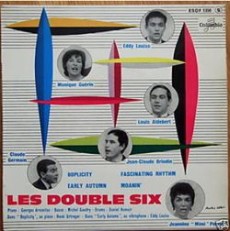
Jeannine “Mimi” Perrin was born February 2, 1926 in France and began private music instruction including piano as a child and pursued English studies at the Sorbonne. Recovering from tuberculosis, in 1949 she hit the French jazz scene in the cabarets of Saint-Germain-des-Pres and came to prominence with her trio. Towards the end of the 50s she worked as a studio background vocalist but was also a member of Blossom Dearie’s vocal group Blue Stars of France.
In 1959, she formed the vocal sextet Les Double Six, alluding to the fact that the group used overdubbing in the studio to sing twelve-part songs. The group became successful in the Sixties patterning itself to the vocalise of King Pleasure and Lambert, Hendricks & Ross. Mimi toured her group throughout Europe and North America recording with Quincy Jones, Dizzy Gillespie and Ray Charles.
Perrin was the leader and principal soloist in the group and established herself as a soloist and one of the great jazz singers with John Coltrane’s “Naima”. A later group, founded in 1966 by Perrin, did not achieve her previous success, and she abandoned music after another bout of tuberculosis.
From 1972 onwards, she worked as a translator of science fiction and fantasy and in the 1980s and 1990, she translated such novels Dean Koontz and John LeCarre as well as Alice Walker’s The Color Purple, along with the biographies of Nina Simone, Dizzy Gillespie, Quincy Jones and Steven Spielberg. Vocalist and pianist Mimi Perrin passed away on November 16, 2010 in Paris, France.

Daily Dose Of Jazz…
Joseph Leslie Sample was born February 1, 1939 in Houston, Texas and began playing piano at age five, taking lessons from organ and piano great, Curtis Mayo. While in high school during the 1950s, Sample teamed up with two friends, saxophonist Wilton Felder and drummer Stix Hooper and formed the group “Swingsters”. While studying piano at Texas Southern University he added trombonist Wayne Henderson and several other players to the Swingsters, which evolved into the Modern Jazz Sextet and then the Jazz Crusaders in emulation of Art Blakey’s Jazz Messengers. Prior to graduation in 1960 the Jazz Crusader moved to Los Angeles.
The group quickly found opportunities on the West Coast, making its first recording, Freedom Sounds in 1961 and releasing up to four albums a year over much of the 1960s. The Jazz Crusaders played at first in the dominant hard bop style of the day, standing out by virtue of their unusual front-line combination of saxophone and trombone. Another distinctive quality was the funky, rhythmically appealing acoustic piano playing of Sample, who helped steer the group’s sound into a fusion between jazz and soul[2] in the late 1960s.
In 1969 Sample made his first recording under his own name titled Fancy Dance that was followed by a string of albums such as Rainbow Seeker and Street Life. He continued to record and perform as a solo artist while maintaining steerage of The Crusaders into jazz fusion, changing the name in 1971 which it remained until the group disbanded in 1987.
Sample has had a very successful career working and recording with the likes of Miles Davis, George Benson, Joni Mitchell, Jimmy Witherspoon, B.B. King, Eric Clapton, Steely Dan, The Supremes, Minnie Riperton, Marvin Gaye, Ray Brown, Shelly Manne, Randy Crawford, Anita Baker, Lalah Hathaway, Howard Hewitt, George Duke and Lizz Wright, well into the new millennium.
His song “One Day I’ll Fly Away” was sung by Nicole Kidman in the film Moulin Rouge; and “Rainbow Seeker” is included on the Weather Channel Presents: Smooth Jazz II. Pianist, keyboardist and composer Joe Sample, who has played through various genres of jazz, continued to perform, record and tour with the Coryell Auger Sample Trio with his son Nicklas, who plays bass, until his passing on September 12, 2014 at age 75 in Houston, Texas.
Daily Dose Of Jazz…
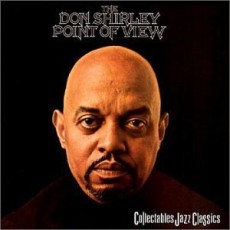
Don Walbridge Shirley was born January 29, 1927 in Kingston, Jamaica and under the tutelage of his mother began playing piano at 2½ and made his first public performance at the age of 3. By nine he was invited to study theory with Mittolovski at the Leningrad Conservatory of Music, later studying with organist Conrad Bernier, followed by study of advanced composition with both Bernier and Dr. Thaddeus Jones at Catholic University in Washington D. C.
Don’s music is hard to categorize treating every arrangement as a new composition, playing standards in a non-standard way, and playing everything from show tunes, to ballads, to his personal arrangements of Negro spirituals, to jazz, and always with the overtone of a classically-trained musician who has utmost respect for the music.
He has performed at the Exposition International du Bi-Centenaire De Port-au-Prince, with Arthur Fiedler and the Boston Pops, with the Detroit, Chicago, Cleveland and National Symphony Orchestras, in concert with his own trio for about 95 dates annually. During the 1950s and 60s he cut some 16 albums for Cadence Records, played around New York City, performed at Basin Street East, appeared on the Arthur Godfrey Show and his career was launch nationwide.
As an educator, Don holds a Doctorate of Music, Doctorate of Psychology (and Doctorate in Liturgical Arts, speaks eight languages fluently, and is considered an expert painter as well. The jazz pianist and composer continued to perform and record until his death of heart disease on April 6, 2013 in Manhattan, New York at the age of 86.
Daily Dose Of Jazz…
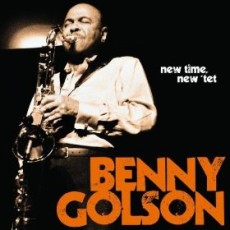
Benny Golson was born January 25, 1929 in Philadelphia, Pennsylvania. While in high school he played with several other promising young musicians, including John Coltrane, Red Garland, Jimmy Heath, Percy Heath, Philly Joe Jones and red Rodney. After matriculating Howard University, Benny joined Bull Moose Jackson’s R&B band where he met and learned about writing from pianist Tadd Dameron.
From 1953 to 1959 Golson played with Dameron’s band and then with the bands of Lionel Hampton, Johnny Hodges, Earl Bostic, Dizzy Gillespie and Art Blakey & The Jazz Messengers. While working with the Lionel Hampton band at the Apollo in 1956, Benny learned that his friend trumpeter Clifford Brown had died in a car accident. In honor, Golson composed “I Remember Clifford”.
From 1959 to 1962 Golson co-led the Jazztet with Art Farmer. Golson then left jazz to concentrate on studio and orchestral work for 12 years and during this period he composed music for such television shows as Ironside, Room 222, M*A*S*H and Mission: Impossible.
By the mid-1970s Golson returned to jazz playing and recording, he re-organized the Jazztet in 1983, was honored as a NEA Jazz Maser in ’95, made a cameo appearance in the Tom Hanks vehicle “The Terminal” that was related to his participation in the classic photo “A Great Day In Harlem”, received the Mellon Living Legend Legacy Award, the Outstanding Lifetime Achievement Award from the University of Pittsburgh International Academy of Jazz, in which he was also inducted into their Hall of Fame.
Since 1996 Howard University created and has awarded the prestigious Benny Golson Jazz Master Award to several distinguished jazz artists. As of 2007, Benny Golson, tenor saxophonist, composer and arranger in the bebop and hard bop genres continues to tour regularly. He is known for his jazz standards “Stablemates”, “Whisper Not”, “Killer Joe”, “Along Came Betty and “Are You Real”, that have been performed and recorded by countless jazz musicians.
More Posts: saxophone
Daily Dose Of Jazz…
Curtis Counce was born in Kansas City, Missouri on January 23, 1926. Studying violin and tuba early on before settling on the string bass, he went on the road when he was 16, playing with the Nat Towles Band in Omaha.
After some freelancing, Counce moved to Los Angeles in 1945, working with Johnny Otis and making his recording debut the following year with Lester Young. During the ‘50’s he was a key member of the West Coast jazz scene, recording as a sideman with Shelly Manne, Lyle Murphy, Teddy Charles, Clifford Brown, and many others.
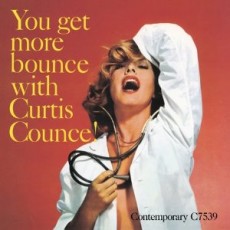
In 1956, Counce organized a quintet comprised of trumpeter Jack Sheldon, tenor saxophonist Harold Land, pianist Carl Perkins, and drummer Frank Butler. During a 15-month period, they recorded enough material to document their endeavor, all of which were originally released by Contemporary and fall stylistically between West Coast cool jazz and hard bop.
Changing personnel, the Curtis Counce Quintet recorded a final album for the Dooto label before breaking up in 1958. The bassist continued working in the Los Angeles area until his death on July 31,1963 from a heart attack.
More Posts: bass