

Daily Dose Of Jazz…
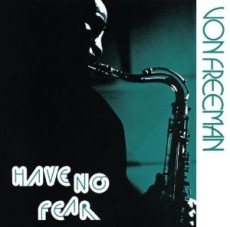
Von Freeman was born Earl Lavon Freeman Sr. on October 3, 1922 in Chicago, Illinois and learned to play the saxophone as a child. Attending DuSable High he studied under band director Walter Dyett. By the time he was 16 he was playing professionally with Horace Henderson’s Orchestra.
After serving in the Navy and playing in the band during WWII, Von returned to Chicago, where he has lived ever since, playing with his brothers George on guitar and Bruz (Eldridge) on drums at the Pershing Hotel Ballroom. Over the years various leading jazzmen such as Charlie Parker, Roy Eldridge and Dizzy Gillespie played with the Freemans as the backing band. In the early 1950s, Von played in Sun Ra’s band.
Freeman’s first venture into the recording studio took place in 1954, backing a vocal group called The Maples for Al Benson’s Blue Lake label. He appeared on Andrew Hill’s second single on the Ping label in 1956, followed by recording for Vee-Jay with Jimmy Witherspoon and Al Smith in the late fifties, and a recorded appearance at a Charlie Parker tribute concert in 1970.
It was not until 1972 that Von recorded under his own name, the album “Doin’ It Right Now” with the support of Roland Kirk. His next effort was a marathon session in 1975 released over 2 albums by Nessa. Since then he has lived, played regularly and recorded in Chicago, his recordings including 3 albums with his son, the tenorist Chico Freeman and “You Talkin’ To Me” with 22-year old saxophonist Frank Catalano, following their successful appearance at the Chicago Jazz Festival in 1999.
Freeman is considered a founder of the “Chicago School” of jazz tenorists along with Gene Ammons, Johnny Griffin and Clifford. His music has been described as “wonderfully swinging and dramatic featuring a large rich sound”. The hard bop tenor saxophonist holds down a regular Tuesday night set and jam session at the New Apartment Lounge on Chicago’s south side, and can also be heard at Andy’s Jazz Club on select weekends. Hard bop tenor saxophonist Von Freeman passed away on August 11, 2012 at age 88 in Chicago, Illinois.
More Posts: saxophone
Daily Dose Of Jazz…
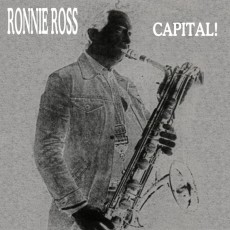
Ronnie Ross was born Albert Ronald Ross on October 2, 1933 in Calcutta, India. A move to London at 13 was where he began his interest in playing saxophone and started out on the tenor. In the ‘50s he played with Tony Kinsey, Ted Heath and Don Rendell and it was during his tenure with Rendell that he switched to the baritone.
Ross played the Newport Jazz Festival in 1958 and formed his own group that year called the Jazz Makers with drummer Allan Ganley. In 1959 he toured the United States and later Europe with the Modern Jazz Quartet. From 1961 to 1965 he played with Bill LeSage, Woody Herman, John Dankworth, Friedrich Guida and Clark Terry.
Ronnie was a saxophone tutor for a young David Bowie, and years later was the soloist on the Lou Reed song “Walk On The Wild Side”, which was co-produced by Bowie. He also had guest appearances as a soloist on several Matt Bianco albums.
Baritone saxophonist Ronnie Ross passed away on December 12, 1991 in London, England. He was 58.
More Posts: saxophone
Daily Dose Of Jazz…
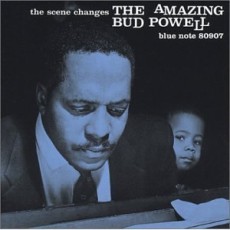
Bud Powell was born Earl Rudolph Powell in New York City on September 27, 1924. Following a family musical legacy, his grandfather a flamenco guitarist, father a stride pianist, older brother William a trumpeter and younger pianist brother Richie, Bud learned classical piano from an early age and by age 8 became interested in jazz. Playing his own transcriptions of Art Tatum and Fats Waller, by 15 he was playing in William’s band. Thelonious Monk was an important early teacher, mentor and close friend who dedicated the composition “In Walked Bud” to him.
The early Forties saw Powell playing in a number of bands, including that of Cootie Williams, who had to become Powell’s guardian because of his youth. His first recording date was with Williams’ band in 1944 and this session produced the first ever recording of Monk’s “Round Midnight”. Monk also introduced him to the circle of bebop musicians starting to form at Minton’s Playhouse and playing on early recording sessions with Frank Socolow, Dexter Gordon, J. J. Johnson, Sonny Stitt, Fats Navarro and Kenny Clarke.
Powell soon became renowned for his ability to play accurately at fast tempos, his inspired bebop soloing, and his comprehension of the ideas that Charlie Parker had found from the chords of “Cherokee” and other song-forms. Powell’s first session as a leader was a trio setting in 1947 with Curly Russell and Max Roach and later recording on a Charlie Parker date with Miles, Max and Tommy Potter. Bud Powell is the most important pianist in jazz and one of the most underrated but his best work is on Blue Note and for Mercury, Norgran, Clef and later Verve Records under Norman Granz. His prolific career had him playing with a who’s who list of musicians like Buddy Rich, Ray Brown, Art Blakey, George Duvivier, Osie Johnson and so on. By the late fifties and into the 60s his playing was far removed from his earlier standard and his talent was in eclipse.
With his health deteriorating he was hospitalized after months of increasingly erratic behavior and self-neglect. Jazz pianist Bud Powell, described as one of “the two most significant pianists of the style of modern jazz that came to be known as bop”, died of tuberculosis, malnutrition, and alcoholism on July 31 1966 in New York City.
More Posts: piano
Daily Dose Of Jazz…
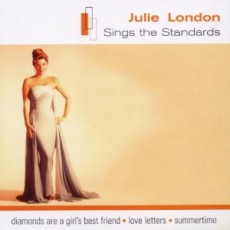
Julie London was born Gayle Peck in Santa Rosa, California on September 26, 1926 to a vaudeville song-and-dance team. At 14, her family moved to Los Angeles and shortly after she bean appearing in movies she graduated from the Hollywood Professional School in 1945.
The pin-up girl of WWII met and married the streetwise technique of actor Jack Webb in 1947, an unlikely union arising out of their love for jazz but only lasted until 1954. Becoming somewhat reclusive following the divorce she met jazz composer and musician Bobby Troup and although her career really took off in 1955, Julie had been singing in her teens long before she began acting.
London’s career began in 1955 with a live performance at the 881 Club in Los Angeles. Billboard named her the “Most Popular Female Vocalist” for 1955, 1956, and 1957 and she was the subject of a 1957 Life cover article in which she was quoted as saying, “It’s only a thimbleful of a voice, and I have to use it close to the microphone. But it is a kind of over-smoked voice, and it automatically sounds intimate.”
Julie London’s debut recordings were for the Bethlehem Record label but while shopping for the record deal, she recorded 4 tracks backed by Troup, “Don’t Worry About Me”, “Motherless Child”, “A Foggy Day” and “You’re Blasé”, that would later be included on the compilation albums “Bethlehem’s Girlfriends” in 1955. London’s most famous single, “Cry Me A River”, written by her high-school classmate Arthur Hamilton would become a million-seller after its release in December 1955. Throughout her singing career she recorded thirty-two albums with her last recording of “MY Funny Valentine” was produced for the soundtrack of the 1981 Burt Reynolds film Sharkey’s Machine.
She went on to have a prolific acting career on the stage, television and film that lasted 35 years concluding with the role of Dixie McCall on the tv series Emergency, executive produced by Jack Webb, and costarred her then husband Bobby Troup, a marriage that lasted until her death from poor health due to her long-term cigarette habit on October 18, 2000 in Encino, California at the age of 74.
More Posts: vocal
Daily Dose Of Jazz…
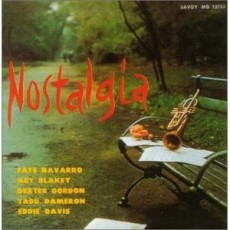
Theodore “Fats” Navarro was born on September 24, 1923 in Key West, Florida to Cuban-Black-Chinese parentage. He began playing piano at age six, but did not become serious about music until he began playing trumpet at age of thirteen. By the time he graduated from Douglass High School he wanted to be away from Key West and joined a dance band headed for the mid-west.
Tiring of the road life after touring with many bands and gaining valuable experience, including influencing a young J. J. Johnson when they were together in Snookum Russell’s territory band. Navarro settled in New York City in 1946, where his career took off. He met and played with, among others, Charlie Parker, but was in a position to demand a high salary, so Fats didn’t join one of Parker’s regular groups. Unfortunately he developed a heroin addiction, which, coupled with tuberculosis and a weight problem led to a slow decline in his health.
Through his short-lived career, trumpeter Fats Navarro played with among others Andy Kirk, Billy Eckstine, Benny Goodman and Lionel Hampton big bands, and also participated in small group recording sessions with Kenny Clarke, Tadd Dameron, Eddie “Lockjaw” Davis, Coleman Hawkins, Illinois Jacquet, Howard McGhee, Bud Powell and Charles Mingus, with whom he had a deep friendship.
Hospitalized on July 1st after his final performance with Charlie Parker at Birdland, the pioneering bebop jazz improvisation trumpeter Fats Navarro passed away at the age of 26 on July 7, 1950.
More Posts: trumpet