

Daily Dose Of Jazz…
Theodore Walter “Sonny” Rollins was born on September 7, 1930 in New York City to parents from the U.S. Virgin Islands. The young Theodore started out at eleven years old on the piano, receiving his first alto saxophone at thirteen and by sixteen switched to the tenor. By high school he was playing in a band with other future jazz greats like Jackie McLean and Kenny Drew.
1949 saw Rollins recording with Babs Gonzales, J. J. Johnson and Bud Powell and through 1954 performed with Miles Davis, the Modern Jazz Quartet, Charlie Parker and Thelonious Monk. During this early period in the fifties he was arrested for armed robbery, arrested for violating his parole using heroin and sentenced the Federal Medical Center in Lexington, KY where he kicked his habit, although he was afraid sobriety would impair his musicianship. Little did he know at the time he would soar to greater height.
His early influences Louis Jordan, Coleman Hawkins and Lester Young which did so much to inspire the fleet improvisation of be-bop in the 1950s. Rollins drew the two threads together as a fluid post-bop improviser with a sound as strong and resonant as any since Hawkins himself.
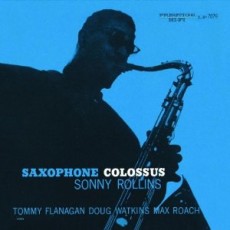
Sonny’s widely acclaimed sixth album “Saxophone Colossus” was recorded on June 22, 1956 at Rudy Van Gelder’s studio in New Jersey, with Tommy Flanagan, Doug Watkins and Max Roach. This seminal work led to “Tenor Madness” with Garland, Chambers, Jones and Coltrane, and Sonny Rollins volume One & Two.
By 1959, Rollins was frustrated with what he perceived as his own musical limitations and took the first – and most famous – of his musical sabbaticals. To spare a neighboring expectant mother the sound of his practice routine, Rollins ventured to the Williamsburg Bridge to practice. Upon his return to the jazz scene in 1962 he named his “comeback” album “The Bridge” at the start of a contract with RCA Records, recorded with a quartet featuring guitarist Jim Hall, drummer Ben Riley and bassist Bob Cranshaw. This became one of Rollins’ best-selling records.
Over a very lengthy career spanning more than six decades, the Grammy winning tenor saxophonist, Sonny Rollins, has recorded some 50 albums as a leader and two dozen albums as a sideman. He continues to record, perform and tour until his death on May 25, 2026.
More Posts: saxophone
Daily Dose Of Jazz…
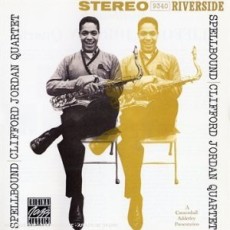
Clifford Laconia Jordan was born on September 2, 1931 in Chicago, Illinois and began his musical studies on the piano at an early age. While still in his hometown he took up the saxophone and had the opportunity to play with Max Roach, Sonny Stitt and a few rhythm and blues groups into the 50s. By 1957 at the age of 26, he made his move to New York City where he recorded three albums for Blue Note.
Over the course of his career Clifford recorded with Horace Silver, J. J. Johnson, Kenny Dorham, Lee Morgan, Max Roach and Paul Chambers. In 1964 he joined the Charles Mingus Sextet along with Eric Dolphy for the European tour. For a while he lived in Belgium, performed in Paris and toured Africa with Randy Weston.
Jordan’s later years saw him leading his own groups, performing with Cedar Walton’s Eastern Rebellion and even led his own big band. He recorded eighteen sessions as a leader and another 28 as a sideman. Saxophonist Clifford Jordan passed away on March 27, 1993 in Manhattan.
More Posts: saxophone
Daily Dose Of Jazz…
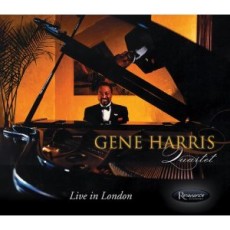
Gene Harris was born on September 1, 1933 in Benton Harbor, Michigan where he was first drawn to music at the age of four. He was attracted to the music of local bandleader Charles Metcalf’s group and was inspired to try to pick out songs on the piano. He also enjoyed the music he heard in church and the boogie-woogie records of his parents.
Gene quickly developed as a pianist, having many opportunities to play music while serving in the Army from 1951 – 54. Following his discharge, he originally formed The Four Sounds, but by 1956 abandoned their original plan to include a tenor-saxophonist and renamed themselves The Three Sounds. Joining Harris in the original line up of the band was bassist Andy Simpkins and drummer Bill Dowdy.
For the next 15 years, the trio made many notable recordings for Blue Note and other labels as well as supporting such musicians as Lester Young, Lou Donaldson, Nat Adderley, Johnny Griffin, Anita O’Day, Stanley Turrentine and Sonny Stitt, among others. In 1973, The Three Sounds disbanded, leaving Harris to pursue a solo career until he semi-retired in 1977, playing sometimes only in Boise, Idaho.
In the early eighties Ray Brown convinced Gene to tour with his trio and then led his own groups once again, recording mostly on Concord. Gene Harris was one of the most accessible jazz pianists and his soulful sound was immediately likable as he returned to the spotlight. He was widely associated with the Philip Morris Super Band for many years. The Grammy winning artist, whose music was infused with blues and gospel, left a legacy of sixty albums as a leader, 34 as a sideman and nine compilations before his passing away on January 16, 2000 of kidney failure at the age of 66.

More Posts: piano

Daily Dose Of Jazz…
Wilton Lewis Felder was born August 31, 1940 in Houston, Texas and is both saxophonist and bass player. He is best known as an original member of The Jazz Crusaders, founded while still in high school, along with Joe Sample, Wayne Henderson and Stix Hooper.
The Jazz Crusaders evolved from a straight-ahead jazz combo into a pioneering jazz-rock fusion group, with a soul music influence. They dropped jazz from the name and became simply known as The Crusaders. Felder worked with the original group for over thirty years, and continues to work in its current versions, which often features other founding members.
Felder also worked as a west coast studio musician, mostly playing electric bass, for various soul and R&B musicians. He was one of the in-house bass players for Motown Records when the label opened operations in Los Angeles in the early 70s working with The Jackson 5, Marvin Gaye, America, Billy Joel, Joni Mitchell and Michael Franks.
Wilton worked with Dizzy Gillespie, John Klemmer, Richard Groove Holmes, Grant Green and Milt Jackson among others during his studio years. His solo release titled “Secrets” featured vocalist Bobby Womack singing the hit “(No Matter How High I Get) I’ll Still Be Looking Up To You”. Wilton Felder continues to perform and record.
Daily Dose Of Jazz…
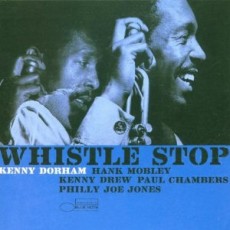
Kenny Dorham was born McKinley Howard Dorham on August 30, 1924 in Fairfield, Texas. One of the most active trumpeters of the bebop era, he played in the big bands of Billy Eckstine, Dizzy Gillespie, Lionel Hampton, Mercer Ellington and Charlie Parker’s quintet. A charter member of the original Jazz Messengers, throughout his career he recorded as a sideman with Thelonious Monk, Sonny Rollins, Jackie McLean, Cedar Walton, Andrew Hill, Milt Jackson and Max Roach among others.
In 1956 Kenny led his own groups, including the Jazz Prophets that featured the young pianist Bobby Timmons, bassist Sam Jones and tenorist J. R. Monterose. With guest guitarist Kenny Burrell, they recorded “Round About Midnight” at the Café Bohemia.
Dorham’s original quintet consisted of pianist Tommy Flanagan, Paul Chambers, and Art Taylor, and in 1963 he added 26-year-old tenor saxophonist Joe Henderson to his group. This friendship between Dorham and Henderson led to a number of other albums, such as Henderson’s “Page One”, “Our Thing”, “In ‘n’ Out” and “Una Mas” featuring a youthful Tony Williams.
Frequently lauded by critics and other musicians for his talent, he never received the kind of attention from the jazz establishment that many of his peers did. From 1953 to 1964 he recorded eighteen albums as a leader and held sideman duties on another forty-seven recordings. During his final years Kenny Dorham suffered from kidney disease, from which he succumbed on December 5, 1972, at age 48.
More Posts: trumpet