

Daily Dose Of Jazz…
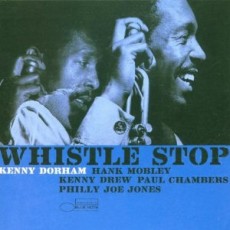
Kenny Dorham was born McKinley Howard Dorham on August 30, 1924 in Fairfield, Texas. One of the most active trumpeters of the bebop era, he played in the big bands of Billy Eckstine, Dizzy Gillespie, Lionel Hampton, Mercer Ellington and Charlie Parker’s quintet. A charter member of the original Jazz Messengers, throughout his career he recorded as a sideman with Thelonious Monk, Sonny Rollins, Jackie McLean, Cedar Walton, Andrew Hill, Milt Jackson and Max Roach among others.
In 1956 Kenny led his own groups, including the Jazz Prophets that featured the young pianist Bobby Timmons, bassist Sam Jones and tenorist J. R. Monterose. With guest guitarist Kenny Burrell, they recorded “Round About Midnight” at the Café Bohemia.
Dorham’s original quintet consisted of pianist Tommy Flanagan, Paul Chambers, and Art Taylor, and in 1963 he added 26-year-old tenor saxophonist Joe Henderson to his group. This friendship between Dorham and Henderson led to a number of other albums, such as Henderson’s “Page One”, “Our Thing”, “In ‘n’ Out” and “Una Mas” featuring a youthful Tony Williams.
Frequently lauded by critics and other musicians for his talent, he never received the kind of attention from the jazz establishment that many of his peers did. From 1953 to 1964 he recorded eighteen albums as a leader and held sideman duties on another forty-seven recordings. During his final years Kenny Dorham suffered from kidney disease, from which he succumbed on December 5, 1972, at age 48.
More Posts: trumpet
Daily Dose Of Jazz…
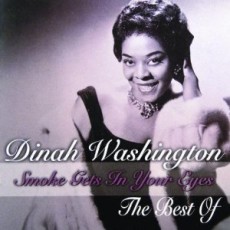
Dinah Washington was born Ruth Lee Jones on August 29, 1924 in Tuscaloosa, Alabama. A blues, R&B and jazz singer, Dinah gained an early reputation for singing torch songs. In 1962 she hired a trio of musicians and vocalists that called themselves the Allegros, consisting of Jimmy Thomas on drums, Earl Edwards on sax, and Jimmy Sigler on organ and their vocals created “effective choruses”.
Garnering the title “Queen of the Blues”, over the course of her career Dinah recorded for Keynote, Mercury, EmArcy and Roulette Records, winning a Grammy for “What A Difference A Day Makes”. She was inducted into the Alabama Jazz Hall of Fame, with her recordings inducted into the Grammy, Big Band, Jazz and the Rock and Roll Halls of Fame. She had a U.S. Postal commemorative stamp; had a street in Tuscaloosa and a park in Chicago named in her honor.
Known for her amorous personality, Washington was married eight times and divorced seven times, while having several lovers in between marriages. However, it was very early on the morning of December 14, 1963, that Dinah Washington passed away from a lethal combination of secobarbital and amobarbital. Her eighth and final husband NFL player Dick “Night Train” Lane discovered her body. She was 39.
More Posts: vocal
Daily Dose Of Jazz…
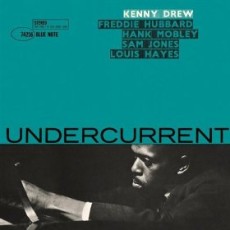
Kenneth Sidney Drew was born on August 28, 1928 in New York City. He first recorded with Howard McGhee in 1949, and over the next two years recorded with Buddy DeFranco, Coleman Hawkins, Milt Jackson, Charlie Parker, and Dinah Washington. He then led many recording sessions throughout the 1950s, and appeared on John Coltrane’s “Blue Train”.
Along with several other American jazz musicians who went to Europe, in 1961 Kenny moved to Copenhagen, Denmark. While he sacrificed much of the interest of the American jazz audience, he gained a wide following across Europe. He became a well-known figure on the Copenhagen jazz scene, recording many sessions with the Danish bassist Niels-Henning Orsted Pederson.
Drew along with Dexter Gordon appeared on screen in Ole Ege’s theatrically released hardcore pornographic film Pornografi – en musical in 1971), for which they composed and performed the score. He recorded for Blue Note, Xanadu, Steeplechase, Riverside, Verve, Soul and Storyville record labels leaving a catalogue of forty albums as a leader and another 34 as a sideman performing with the likes of Toots Thielmans, Sonny Rollins, Ben Webster, Chet Baker, Grant Green, Dizzy Gillespie and Dexter Gordon among others.
His touch has been described as “precise” and his playing a combination of bebop-influenced melodic improvisation and block chords, including “refreshingly subtle harmonizations”. Pianist Kenny Drew He passed away on August 4, 1993 in Copenhagen, leaving his son Kenny Jr. to carry on the family’s jazz piano legacy.
More Posts: piano
Daily Dose Of Jazz…
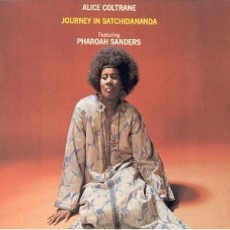
Alice Coltrane, née McLeod, was born on August 27, 1937 in Detroit, Michigan. She studied classical music and also jazz with Bud Powell and began playing professionally in Detroit, with her own jazz trio and as a duo with vibist Terry Pollard. It was while playing with the Terry Gibbs Quartet in 1962 that she met John Coltrane. Replacing McCoy Tyner as pianist with Trane’s group in 1965, the two married the following year and continued playing together until his death in 1967. She is the mother of daughter Michelle, drummer John Jr., and saxophonists Oran and Ravi.
After her husband’s death she continued to play with her own groups, later including her children, moving into more and more meditative music. Alice was one of the few harpists in the history of jazz and her essential recordings were made in the late Sixties and early 1970s for Impulse Records.
Coltrane became a devotee of the Indian guru Sathya Sai Baba in 1972, moved to California and established the Vendantic Center in 1975. By the late Seventies she had changed her name to Turiyasangitananda, became the swamini or spiritual director of Shanti Anantam Ashram established in 1983 near Malibu, California. Only on rare occasions would she perform publicly under the name Alice Coltrane.
The 1990s saw renewed interest in her work, which led to the release of the compilation Astral Meditations, and in 2004 she released her comeback album Translinear Light. Following a twenty-five-year break from major public performances, she returned to the stage for three U.S. appearances in the fall of 2006, culminating on November 4 with a concert in San Francisco with her son Ravi, drummer Roy Haynes and bassist Charlie Haden.
Alice Coltrane, pianist, organist, harpist and composer, passed away of respiratory failure on January 12, 2007 in Los Angeles, California.
Daily Dose Of Jazz…
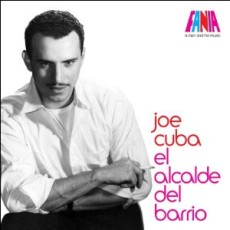
Joe Cuba was born Gilberto Miguel Calderon to Puerto Rican parents on April 22, 1931 in Spanish Harlem in New York City. Playing in his father’s organized stickball club “the Devils”, Cuba broke his leg and his attention shifted to the conga. Practicing every free moment between school, after graduating from high school he joined a band.
In 1950, when he was 19 years old, he played for J. Panama and also for a group called La Alfarona X. The group soon disbanding, Cuba enrolled in college to study law. While at college he attended a concert in which Tito Puente performed. He went up to Tito and introduced himself as a student and fan and soon they developed what was to become a lifetime friendship. This event motivated Cuba to organize his own band and in 1954, his agent recommended that he change the band’s name from the Jose Calderon Sextet to the Joe Cuba Sextet, making their debut at the Stardust Ballroom.
In 1962, Cuba recorded “To Be With You” with the vocals of Cheo Feliciano and Jimmy Sabater, Sr. The band became popular in the New York Latin community. The lyrics to Cuba’s music used a mixture of Spanish and English, becoming an important part of the Nuyorican Movement.
In 1965, the Sextet got their first crossover hit with the Latin and soul fusion of “El Pito” (I Never Go Back To Georgia) a chant taken from Dizzy Gillespie’s intro to the seminal Afro-Cuban tune, “Manteca”. Sabater later revealed, “None of them had ever been to Georgia.
Along with fellow Nuyorican artists such as Ray Barretto and Richie Ray, Cuba was at the forefront of the developing Latin soul sound in New York, merging American R&B styles with Afro-Cuban instrumentation. Cuba was one of the key architects behind the emerging Latin Boogaloo sound, which became a popular and influential Latin style in the latter half of the 1960s.
By 1966, his band which included timbales, congas, bongos, bass, vibraphones and piano among its musical instruments scored a U.S. “hit” on the National Hit Parade List with the song “Bang Bang”, kicking off the popularity of the boogaloo. He also had a Billboard #1 hit that same year with “Sock It To Me Baby” .
Inducted into the International Latin Music Hall of Fame in 1999, Joe was named Grand Marshall of the Puerto Rican Day Parade celebrated in Yonkers, New York in 2004; and was also the director of the Museum of La Salsa, located in Spanish Harlem, Manhattan, New York.
Joe Cuba, conga player and Father of Latin Boogaloo was hospitalized for a persistent bacterial infection and passed away on February 15, 2009 in New York City, after being removed from life support.
More Posts: conga