


Daily Dose Of Jazz…
Dakota Staton was born on June 3, 1930 in the Homewood section of Pittsburgh, Pennsylvania is also known by her Muslim name Aliyah Rabia. She studied music at the Filion School of Music. She regularly performed as a vocalist with the Joe Wespray Orchestra in the Hill district, a jazz hotspot.
Spending the next several years on the nightclub circuit she played Detroit, Indianapolis, Cleveland and St. Louis. While in New York she came to the attention of Capitol Records producer Dave Cavanaugh. Signing her, they released a series of albums that led to her winning Down Beat’s Most Promising New Comer award in 1955.
Dakota’s biggest hit was The Late, Late Show that went to #4 on the charts in 1957 garnered her international acclaim. The album was followed with In The Night with George Shearing, Dynamic and Dakota At Storyville.
In 1958, she wed Antiguan trumpeter Talib Ahmad Dawud, a Muslim and noted critic of Elijah Muhammad and by the mid-sixties relocated to England. Vocalist Dakota Staton continued to record semi-regularly, her recordings taking an increasingly strong gospel and blues influence until her death on April 10, 2007.
More Posts: vocal
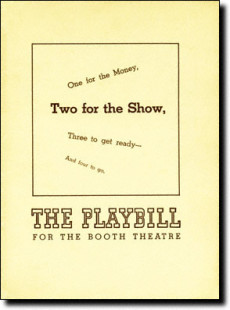
From Broadway To 52nd Street
Two For The Show opened on Broadway at the Booth Theatre on February 8, 1940 and after 124 performances the curtain came down for its final descent on May 25, 1940. Directed by John Murray Anderson with the sketches directed by Joshua Logan and musical staging by Robert Alton, the original cast included later Hollywood notables as Eve Arden, Alfred Drake, Betty Hutton and Keenan Wynn.
The Story: This was a revue with several sketches being performed such as “The Age Of Innocence” and “Cookery” written by Richard Hadyn. There were two other revues in this series, all conceived and directed by John Murray Anderson: One for the Money (February 4, 1939-May 27, 1939), and Three to Make Ready (March 7, 1946-December 14, 1946). The most notable song introduced in the show was “How High The Moon” which subsequently has been recorded by many jazz artists, becoming a well-known standard
Jazz History: Bebop or bop is a style of jazz characterized by fast tempo, instrumental virtuosity and improvisation based on the combination of harmonious structure and melody. It was developed in the early to mid-1940s and first surfaced in musicians’ argot sometime in the first two years of American involvement in WWII.
The origins of the term “bebop” has been debated by numerous authorities and researchers usually stated to derive from nonsense syllables or vocables used in scat singing, and is supposed to have been first attested in 1928. However, some researchers speculate that it was a term used by Charlie Christian because it sounded like something he hummed along with his playing.Yet, Dizzy Gillespie’s version of the story relates that the audiences coined the name after hearing him scat the then-nameless tunes to his players and the press ultimately picked it up, using it as an official term: “People, when they’d wanna ask for those numbers and didn’t know the name, would ask for bebop.”
Sponsored By

www.whatissuitetabu.com

Daily Dose Of Jazz…
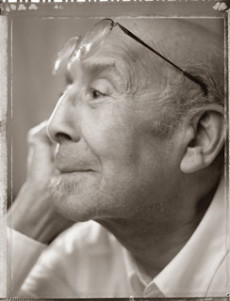
Lennie Niehaus was born June 1, 1929 in St. Louis, Missouri. A musical family heralded a concert pianist sister and a father who was an excellent violinist who started his son on the violin at seven, then switched to the bassoon. At 13 he began learning the alto saxophone and clarinet.
Always interested in composing and writing music Lennie studied music in college and in 1946 began playing professionally with Herb Geller, Herbie Steward and Teddy Edwards in 1946. Six months later he joined Stan Kenton, then drafted in 1952 but two years late rejoined Kenton after his discharge.
Leaving Kenton in 1959, Niehaus began composing, moved back to Los Angeles and arranged for the King Sisters, Mel Torme, Dean Martin, and Carol Burnett. Three years later saw him orchestrating for film composer Jerry Fields, a relationship that yielded more than sixty TV shows and films.
He orchestrates his own pieces and never forgets his jazz roots in film, writing jazz and using jazz musicians like Marshall Royal, Bill Perkins, Pete Jolly, Mike Land, and Clint Eastwood. He was the musical director for the Charlie Parker bio-feature, Bird.
After many years of not playing his alto saxophone at all, Niehaus returned to performing, reportedly in top form. He continues to arrange, compose and play alto on the West Coast jazz scene.
Daily Dose Of Jazz…
Allen “Al” Tinney was born on May 28, 1921 in Ansonia, Connecticut. As a child he was taught piano, worked in local dance bands and as a stage actor/dancer in several Broadway plays and was an original cast member in the production of George Gershwin’s Porgy and Bess. His piano playing was so good that he became rehearsal pianist and assistant to Gershwin.
From 1939 to 1943 he held sway in the house band at Monroe’s Uptown House playing with young musicians who gravitated to him like Charlie Parker, Max Roach, Little Bennie Harris, George Treadwell and Victor Coulsen. An influential bebop pianist his playing was light, flowing and occasionally percussive, while his improvisations were harmonically advanced for the period and his style can be heard in the playing of Bud Powell, George Wallington, Al Haig, and Duke Jordan.
Abhorring the connection between jazz and drugs, by 1946 Tinney began to play less jazz and more in other styles. He was a member of The Jive Bombers who were one hit wonders with “Bad Boy” in 1957. He moved to Buffalo in 1968, played local jazz clubs, worked in the state prison music program, and lectured at SUNY Buffalo. He recorded one album as a leader with Peggy Farrell titled Peg & Al in 2000.
Pianist Allen Tinney passed away on December 11, 2002 in Buffalo, New York at age 81.
More Posts: piano
Daily Dose Of Jazz…
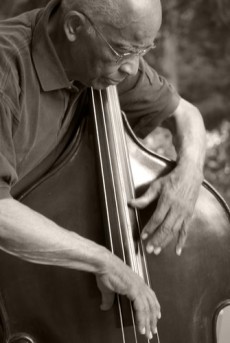
Bassist Julian Euell was born on May 23, 1929 in New York City. He first began playing bass in 1944, served in the Army from 1945-47 and after his discharge began playing with Sonny Rollins, Jackie McLean and Art Taylor that same year. He quit music in ’49 for steady work in the post office eventually studying under Charles Mingus in ’52 and attending Julliard fro 1953 to 1956. He also took classes at NYU, earned a bachelor’s degree from Columbia University and subsequently taught there.
His musical associations during the fifties were with Elmo Hope, Benny Harris, Charlie Rouse, Joe Roland, Freddie Redd, Gigi Gryce and Phineas Newborn. Leaving music again late in the decade he found employment in New Jersey as a social worker. Though less active at this time he continued to perform with Mal Waldron, Randy Weston, Abbey Lincoln, Charles Mingus and Kenny Dorham.
In the 1960s Euell worked in Harlem directing an arts program and then returned to school, receiving a Ph.D. from George Washington University in 1973. He was Assistant Secretary for Public Service at the Smithsonian from 1970-1982, and was partly responsible for the institution’s increasing interest in jazz history. From 1983 to 1988 he directed the Oakland Museum History-Arts-Science and from 1991-95 was director of the Louis Armstrong House. He returned to semi-regular performing in the 1980s and 1990s.
More Posts: bass