

Daily Dose Of Jazz…
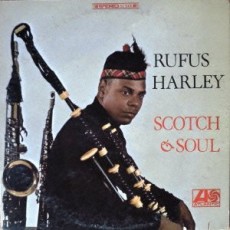
Rufus Harley, Jr. was born near Raleigh, North Carolina on May 20, 1936 of mixed Cherokee and African ancestry but at an early age his mother relocated with him to North Philadelphia, Pennsylvania. At age 12 he began playing the C melody saxophone and the trumpet and ten years later he was studying saxophone, flute, oboe and clarinet. His interest in the bagpipes came when he saw the Black Watch perform during President Kennedy’s funeral in 1963. Traveling to New York he bought a set in a pawnshop for $120 and quickly adapted it to the idiom of jazz, blues and funk.
Harley made his Scottish great Highland bagpipe debut in 1964 and over the next five years released four albums for Atlantic records and recorded as a sideman during that period and into the seventies with Herbie Mann, Sonny Stitt, and Sonny Rollins. He would later record with Laurie Anderson on “Big Science” in 1982, The Roots album “Do You Want More?!!!??!” in 1995 as a result of an appearance on the Arsenio Hall show.
Rufus often wore Scottish garb including kilt and a Viking style horned helmet. After watching him on television, a Scottish family gave him his MacLeod tartan, which he wore for the rest of his life. His bagpipe technique was unorthodox in that he placed the drones over his right shoulder instead of his left and favored a B-flat minor key.
Residing in the Germantown neighborhood of Philadelphia, when not working as a maintenance worker for the housing authority, Rufus gave presentations in area public schools, toured around the world, appeared on television shows like “What’s My Line” and “To Tell The Truth”, and had small roles in films “You’re A Big Boy Now” and “Eddie and the Cruisers”. In addition to bagpipes when recording, he would play tenor saxophone, electric soprano saxophone and flute.
Rufus Harley passed away at Philadelphia’s Albert Einstein Medical Center on July 31, 2006 of prostate cancer. In memoriam a documentary titled “Pipes of Peace” gives an intimate profile and a posthumous retrospective “Courage – The Atlantic Recordings containing all four albums was released in a limited edition.
Daily Dose Of Jazz…
Born May 19, 1935 in Tulsa, Oklahoma bassist Cecil McBee studied clarinet at school before switching to the bass at 17 and began playing in local clubs. After matriculating through Ohio Central State University with a degree in music, he spent two years in the army conducting the band at Fort Knox.
Cecil McBee was working with Dinah Washington by 1959, three years later moved to Detroit and worked with Paul Winters folk-rock band, then moved to New York in the mid-60s where his jazz career took an earnest turn. He began working with Miles Davis, Andrew Hill, Sam Rivers, Jackie McLean, Wayne Shorter, Charles Lloyd, Yusef Lateef, Keith Jarrett, Freddie Hubbard, Wood Shaw and Alice Coltrane all by the time 1972 arrived.
In 1975 he started his own group and made a number of recordings, became a member of the group Almanac but is best known for his as a sideman over the past several decades. One of the most influential bassist in jazz, Cecil McBee teaches at the New England Conservatory in Boston, Massachusetts and remains one of post-bops versatile bassist who delivers a rich, full-bodied tone.

More Posts: bass
Daily Dose Of Jazz…
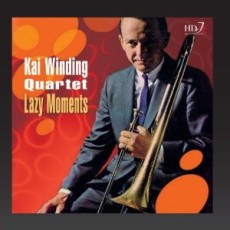
Kai Chresten Winding was born in Aarhus, Denmark on May 18, 1922 and when he was 12 his family immigrated to the United States. Graduating from Stuyvesant High School in 1940 and immediately commence on a professional path in Shorty Allen’s band. He followed with stints in the bands of Sonny Durham and Alvino Rey prior to service in the Coast Guard during WWII.
After the war, Winding worked with Benny Goodman, Stan Kenton, and participated in the Birth of the Cool sessions. In 1954 he joined forces with J.J. Johnson and the collaboration produced some of the greatest trombone duet recordings, first on Savoy then Columbia. During this period he arranged and composed many of the songs they recorded and experimented with different instrumentation in brass ensembles and used a trombonium during an octet session.
During the 1960s, Kai had a long stint at Verve Records working with Creed Taylor that produced his hit recording “More” the theme from the movie Mondo Caine. In the 1970s and early 1980s, Kai recorded for a number of independent record labels, conducted clinics, wrote instructional jazz trombone books, played jazz concerts and even reunited with Johnson for a live concert in Japan. Kai Winding, jazz trombonist, composer and arranger died of a brain tumor in New York City on May 6, 1983.
More Posts: trombone
Daily Dose Of Jazz…
Betty Carter was born Lillie Mae Jones on May 16, 1929 in Flint, Michigan but grew up in Detroit. The first music she heard was church music as her father led a choir. She studied piano at the Detroit Conservatory and winning a talent contest became a regular on the local club circuit. By 16 she was singing with Charlie Parker and would later perform with Dizzy Gillespie and Miles Davis.
Honing her scatting while touring with Lionel Hampton in the late 40s, it was Hampton’s wife Gladys who nicknamed her “Betty Bebop”, a name she reportedly detested. In the fifties she recorded with King Pleasure and Ray Bryant, and released her first solo LP, Out There With Betty Carter in 1958.
Although her career was eclipsed somewhat through the 60s and 70s, she made a series of duets with Ray Charles that rendered “Baby, It’s Cold Outside” which brought her a modicum of new recognition. She established Bet-Car in 1970, her own record label, after an A&R man attempted to run off with her master recordings. Her private label produced some of her most famous recordings including the double album “The Audience With Betty Carter”.
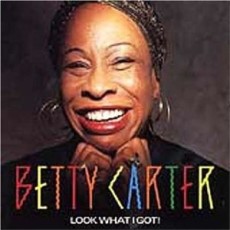
In the last decade of her life she won a Grammy for “Look What I Got”, appeared on the Cosby show, performed at the White House, was awarded the National Medal of Arts by President Clinton and headlined Verve’s 50th Anniversary at Carnegie Hall.
Betty Carter remained active in jazz until her death from pancreatic cancer on September 26, 1998 at the age of 69. The singer renowned for her improvisational technique and idiosyncratic vocal style was devoted to the jazz idiom. Her fellow vocalist Carmen McRae once claimed: “There’s really only one jazz singer – only one Betty Carter”.
More Posts: vocal
Daily Dose Of Jazz…
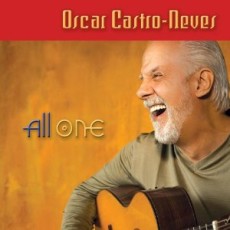
Oscar Castro-Neves was born one of triplets on May 15, 1940 in Rio de Janiero. Discovering his interest in music at an early age, by six he was playing the little viola and the cavaquinho and forming a band with his brothers. He found his musical interest in the synthesis of European classical influenced altered chords with the bittersweet samba-cancao.
He would learn from Johnny Alf who was deeply influenced by jazz, as would all musicians who chose the path to bossa nova. However it wasn’t until the 60s that it would catch on and in 1962 he was part of the historic Carnegie Hall Bossa Nova Festival.
Soon after he befriended Paul Winter and recorded his debut Oscar! on Paul’s label Living Music. That recording led to other sessions as a leader and performances with the likes of Vinicius de Moraes, Dorival Caymmi, and Quarteto em Cy. In 1966 he recorded with Tom Jobim on his Apresenta album before joining Sergio Mendes and Brazil 66 and recording Fool On The Hill. Having recorded three albums, he had already gained immediate fame blending commercially Brazilian, jazz and American pop.
As an arranger he has worked for Quincy Jones, Flora Purim, Laurindo Almeida, Joao Gilberto, played with Yo Yo Ma, Michael Jackson, Barbra Streisand, Toots Thielemans, Stevie Wonder, John Klemmer and Stan Getz and been involved in projects with Dave Grusin, Herbie Hancock and Michael Brecker.
Guitarist Oscar Castro-Neves continues to record, compose, arrange, score movies and television, perform and tour worldwide.