

Daily Dose Of Jazz…
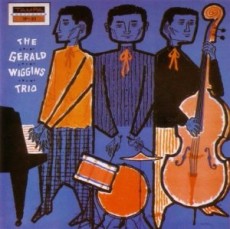
Gerald Wiggins was born on May 12, 1922 in New York City. He started classical piano lessons when he was four but by his teenage years became interested in jazz. He doubled on bass while attending High School & Art and for a period in the 40s accompanied Stepin’ Fetchit. Following this he worked and toured with the big bands of Les Hite, Louis Armstrong and Benny Carter. Stationed in Seattle while in the military he played in the local jazz clubs.
By the mid 40s Wiggins relocated to Los Angeles and played music for television and film. He has worked with Lena Horne, Kay Starr, Nat King Cole, Lou Rawls, Jimmy Witherspoon Helen Humes, Joe Williams, Ernie Andrews and Eartha Kitt to name a few. He also worked at the Hollywood studios as a vocal coach and worked with Marilyn Monroe and others.
Always a highly flexible pianist, Wiggins was comfortable in swing and bop settings with a consistently witty style filled with catchy riffs became his distinctive signature. His best-known recording as an organist was Wiggin’ Out but it was Wiggins’ trio work with Andy Simpkins and Paul Humphreys that is legendary. Pianist Gerald Wiggins passed away at the age of 86 on July 13, 2008.
More Posts: piano
From Broadway To 52nd Street
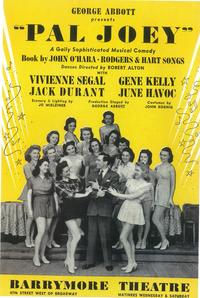
Pal Joey premiered at the Ethel Barrymore Theatre on December 25, 1940 and ran for 374 performances. Richard Rodgers and Lorenz Hart scored the music with the show starring Vivienne Segal, Gene Kelly, June Havoc, Jack Durant, Leila Ernst and Van Johnson. From the musical came the songs that rose to the roster of jazz classics I Could Write A Book, and Bewitched, Bothered and Bewildered.
The Story: Set in San Francisco, an irresistible heel named Joey Evans (Kelly) gets a job at the Mike’s Club, and becomes attracted to Linda English (Leila Ernst). Joey drops her for a rich, bewitched dowager Vera Simpson (Segal). Vera falls for Joey and builds him his own club, Chez Joey, but soon tires of him. With an encounter by blackmailers, (Durant & Havoc) Joey is off in search of other conquests. Unlike the movie version with Sinatra, Hayworth and Novak, the boy doesn’t get the girl in the end. This play marked the only Broadway musical that Kelly played a major role.
Broadway History: In the 18th century, Broadway ended at the town commons north of Wall Street Wall, where traffic continued up the East Side of the island via Eastern Post Road and the West Side via Bloomingdale Road. The western Bloomingdale Road would be widened and paved during the 19th century, and called “The Boulevard” north of Columbus Circle. On February 14, 1899. The name “Broadway” was extended to the entire Broadway/Bloomingdale/Boulevard Road.
Sponsored By

www.whatissuitetabu.com
More Posts: broadway
Daily Dose Of Jazz…
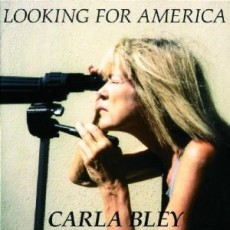
Carla Bley was born Carla Borg on May 11, 1936 is best known for her work as a jazz composer, pianist, organist and band leader in the post bop generation and free jazz movement of the 60s.
Raised in Oakland, California she was encouraged by her father, piano teacher and choirmaster, to sing and learn the piano. Giving up church to immerse herself in roller-skating at fourteen, Carla moved to New York and became a cigarette girl at Birdland. It is here that she met and married Paul Bley, who encouraged her to start composing. Her compositions would later begin to appear on recordings by George Russell and Jimmy Guiffre, with compositions being performed by Gary Burton, Art Farmer and Paul Bley.
In 1964 she was involved in organizing the Jazz Composer Guild bringing together the most innovative musicians in New York and started the JCOA record label, which released albums by Clifford Thornton, Don Cherry and Roswell Rudd, Michael Mantler and herself. With Mantler the two started the New Music Distribution Services, now defunct, that specialized in small, independent labels issuing creative improvised music.
Carla Bley has collaborated with a number of other artists, including Kurt Weill, Jack Bruce, Charlie Haden, Phil Woods, Johnny Griffin, Pink Floyd drummer Nick Mason, Blood, Sweat & Tears, Lew Soloff, Phil Woods and her current partner bassist Steve Swallow. She has continued to record frequently with her own big band and a number of smaller ensembles.
More Posts: bandleader,composer,organ,piano
Daily Dose Of Jazz…
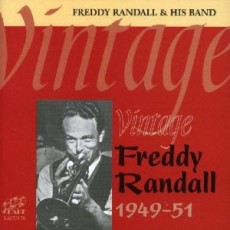
Freddy Randall was born Frederick James Randall on May 6, 1921 in Clapton, East London, England. Becoming interested in music in school the self-taught musician took up the trumpet at 16, never learned to read music but still achieved a high degree of technical proficiency with a flair and exuberance which marked him out. He began playing in local bands including Albert Bale’s Darktown Strutters and Will De Barr’s Band.
Randall’s heroes were the so-called Dixieland players out of Chicago like Wild Bill Davison and Muggsy Spanier and his own playing reflected their influence as he led the St. Louis Four in 1939. After military service he played Freddy Mirfield and John Dankworth before leading his own Dixieland groups in the late forties that featured many well-known English trad jazz stars of the era.
By 1958 Freddy left music due to lung problems, not resurfacing until ’63 playing with Dave Shepherd and recording for Black Lion Records. Over the course of his career Randall played with visiting American jazz musicians Sidney Bechet, Bud Freeman, Wild Bill Davison, Pee Wee Russell, Bill Coleman and Teddy Wilson.
Freddy Randall, trumpeter and bandleader, died on May 18, 1999 in Teignmouth, Devon at age 78.

More Posts: trumpet
From Broadway To 52nd Street
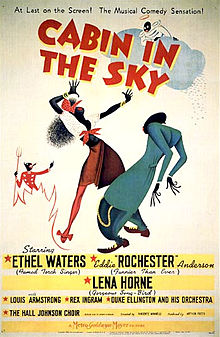
Cabin In The Sky debuted on the Martin Beck Theatre stage on October 25, 1940. Running 156 performances, the show, directed by Albert Lewis and staged by George Balanchine, starred Ethel Waters, Dooley Wilson, Todd Duncan, Rex Ingram and Katherine Dunham. In 1943 it was turned into a silver screen classic with Vincente Minnelli directing Broadway stars Ethel Waters and Rex Ingram, along with Eddie “Rochester Anderson, Lena Horne and Louis Armstrong. The musical spawned such jazz classics as Taking A Chance On Love and Cabin In The Sky.
The Story: When a pious Petunia Jackson prays to the Good Lord to spare the life of her troublesome husband, Little Joe, the Good Lord allows Joe six months in which to redeem himself. He even sends the Lord’s General to help but has turned over a new leaf, he has an argument with Petunia and shoots her. They arrive at the Pearly Gates where Petunia’s loving pleas melt the Good Lord’s heart. So Joe is permitted to enter along with her.
Jazz History: Noted jazz disc jockey Symphony Sid frequently did live broadcasts from 52nd Street, making it famous across the country. By the late 1940s the jazz scene began moving elsewhere around the city and urban renewal took hold of the street. By the 1960s, most of the legendary clubs were razed or fell into disrepair. The last club there closed its doors in 1968.
Today, the street is full of banks, shops, and department stores and shows little trace of its jazz history. The block from 5th to 6th Avenues is formally co-named “Swing Street” and one block west is called “W. C. Handy’s Place”.
The 21 Club is the sole surviving club on 52nd Street that also existed during the 1940s. The venue for the original Birdland at 1674 Broadway located between 52nd & 53rd, which came into existence in 1949, is now a “Gentlemen’s Club”. The current Birdland is on 44th Street, between 8th and 9th Avenues.
Sponsored By
www.whatissuitetabu.com
More Posts: broadway