


Daily Dose Of Jazz…
Art Davis was born in Harrisburg, Pennsylvania on December 5, 1934 where he began studying the piano at the age of 5, switched to tuba and finally to bass while attending high school. He studied at Juilliard and Manhattan School of Music but graduated from Hunter College.
Davis became a busy New York session musician recording with the like of Thelonious Monk, John Coltrane, Dizzy Gillespie and Max Roach. He worked with many pop artists and also with classical symphony orchestras including the Los Angeles Philharmonic.
Art performed with bassist Reggie Workman in Coltrane’s group and pioneered the use of two basses in a jazz combo setting. He also launched a legal case that led to the current system of blind auditions for orchestras. Besides working as a leader, he worked as a sideman with Art Blakey, Curtis Fuller, Eddie Harris, Freddie Hubbard, Elvin Jones, Clifford Jordan, Roland Kirk, Abbey Lincoln, Booker Little, Lee Morgan, Hilton Ruiz and Dizzy Reece among others.
He earned a Ph.D. in clinical psychology from New York University, moved to southern California in 1986, taught at Orange Coast College and balanced his teaching, psychology practice and jazz performances. Bassist Art Davis died on July 29, 2007 from a heart attack.
More Posts: bass
From Broadway To 52nd Street
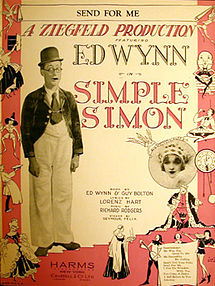
As the decade of despair opens, Broadway opens another musical to lift the spirits of a theatre going society on February 18, 1930 the Ziegfeld Theatre unveils Simple Simon, starring Ed Wynn as a waif who dreams in fairy tales. Wynn played Ziegfeld Follies until butting heads with W.C. Fields who let the back end of a pool cue down on Wynn’s head with a mighty thwack. He went on to sprout into his repertoire inane inventions like a pair of eyeglasses with a windshield to protect you when you ate grapefruit. But from the play Simple Simon, which ran for 135 performances, came the song Dancing on the Ceiling and He Was Too Good For Me composed by Richard Rodgers and Lorenz Hart. The two songs, however, were dropped from the show before the New York opening but get their perpetual encores as jazz standards.
Jazz History: Before the Onyx Club came to life on 52nd Street, Joe Helbock, who may justly claim to be the grandfather of The Street, was bootlegging there in 1927 and ’28 and sold to notables such as Teddy Roosevelt, Babe Ruth, Will Rogers, Marilyn Miller and Jimmy Walker. He hung out with Jimmy Dorsey, Paul “Pops” Whiteman and Roy Bargy at a “speak” called Plunkett’s where all the musicians hung out. In 1927 he opened the Onyx on the parlor floor in the rear of the brownstone at 35 W. 52nd with his partner Fred Hoetter, giving the club its name because of the black marble bar. They started with Art Tatum, Maxine Sullivan, Louis Prima and Stuff Smith. It wasn’t until 1933 that The Onyx put a steady pianist on payroll for the cocktail hour however Willie “The Lion” Smith disputes this claim. As the story goes, one day in 1930, Joe approached Willie saying “Lion, why don’t you stop by every day around five and I’ll give you a little salary for your trouble?” That deal, the Lion emphasizes, established an engagement of the cocktail hour that launched 52nd Street as the Cradle Of Swing.
Sponsored By

www.whatissuitetabu.com
More Posts: broadway
Daily Dose Of Jazz…
Chuck Mangione was born Charles Frank Mangione on November 29, 1940 in Rochester, New York. He attended the Eastman School of Music from 1958 to 1963, afterwards joining Art Blakey’s Jazz Messengers, for which he filled the trumpet seat.
In the late 1960s, Mangione was a member of the band The National Gallery, then served as director of the Eastman jazz ensemble from 1968 to 1972, and during this time returned to recording with the album Friends and Love, with the Rochester Philharmonic Orchestra.
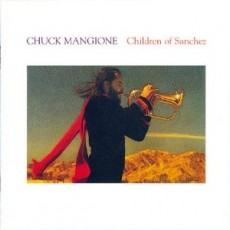
Mangione’s quartet with saxophonist Gerry Niewood recorded “Bellavia” that won him a Grammy for Best Instrumental Composition. His music has been used during two Olympics, performed at the closing ceremonies, and composed the soundtrack for The Children of Sanchez starring Anthony Quinn, winning his second Grammy Award.
Chuck composed and performed the theme for The Cannonball Run among other films. Proficient on both trumpet and flugelhorn, he has performed with a 70-piece orchestra, recorded his hit album Feels So Good, and has worked with Dizzy Gillespie, Steve Gadd, and Chick Corea among other jazz luminaries.
Mangione, along with his brother Gap worked as the Jazz Brothers, recording three albums with Riverside Records. Later worked in one another’s band and orchestra. He has a recurring voice-acting role on the animated King of the Hill, and continues to perform and record with his current band.

More Posts: flugelhorn,french horn,piano,trumpet
Daily Dose Of Jazz…
Gato Barbieri was born Leandro Barbieri on November 28, 1932 in Rosario, Santa Fe Province, Argentina into a family of musicians. He began playing music after hearing Charlie Parker’s “Now’s the Time”, first playing the clarinet and later the alto saxophone while performing with his fellow countryman pianist Lalo Schifrin in the late 1950s.
By the early 1960s in Europe he worked with Don Cherry, became influenced by John Coltrane’s later recordings as well as free jazz saxophonists Albert Ayler and Pharoah Sanders. He developed a warm and gritty sound that became Gato’s trademark and by the late Sixties began fusing music from South America and contributed to Charlie Haden’s Liberation Music Orchestra and Carla Bley’s Escalator Over The Hill.
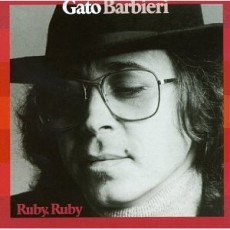
Barbieri earned a Grammy for the score of Last Tango In Paris, which led to a recording deal with Impulse Records. By the mid-70s, he was recording for A&M Records and moved his music towards soul-jazz and jazz-pop with albums like “Caliente!” and “Ruby Ruby”. As a leader he has recorded some thirty albums and as a sideman has played and recorded another nine with Dollar Brand, Gary Burton, the Jazz Composers Orchestra among others. The saxophonist has received the UNICEF Award and continued to compose, perform and record until his passing on April 2, 2016 in New York City.

More Posts: saxophone

Daily Dose Of Jazz…
Art Themen was born Arthur Edward George Themen on November 26, 1939 in Manchester, England. In 1958 he began his medical studies at the University of Cambridge, going on in 1961 to complete his studies at St. Mary’s Hospital Medical School in London, qualifying in 1964. He specialized in orthopedic medicine and eventually became a consultant.
Themen started playing saxophone with the Cambridge University Jazz Group, and then in London playing with blues musicians Jack Bruce and Alexis Korner. In 1965 he played with the Peter Stuyvesant Jazz Orchestra in Zurich, going on to play with such English luminaries as Michael Garrick and Graham Collier’s Music.
In 1974 Art entered into what was to be one of his central musical relationships when he started playing with Stan Tracey that took him throughout the United Kingdom and all over the world. He has also played and toured with musicians such as Nat Adderley, Ian Carr, George Coleman and Al Haig. In 1995 he formed a quartet with pianist John Critchinson.
Themen’s style originally owed much to the influence of Dexter Gordon and Sonny Rollins, but later influences included such disparate saxophonists Coleman Hawkins, Evan Parker and John Coltrane.

More Posts: saxophone