

From Broadway To 52nd Street
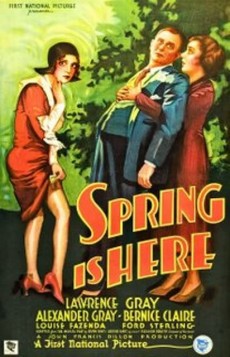
The music composed by Richard Rodgers and Lorenz Hart seven months earlier for a new two act musical called Spring Is Here opened at the Alvin theatre on March 11, 1929 and ran for 104 performances. It starred Dick Keene, Inez Courtney and John Hundley. Adapted from the play Shotgun Wedding, from this production came two songs destined to become a classic in the jazz world, With A Song In My Heart and Spring Is Here.
The Story: Terry loves Betty, Betty falls for Stacy and attempt to elope but are stopped by her father. Terry flirts with other girls to make Betty jealous. It works and she returns to his arms for the happy ending.
Broadway History: The “Great White Way” is a nickname for a section of Broadway in the midtown section of the borough of Manhattan, specifically the portion that encompasses the Theatre District, between 42nd and 53rd Streets, and encompassing Times Square. However, this was not always the location of the theatre district. In 1880, a stretch of Broadway between Union Square and Madison Square was illuminated by Brush arc lamps, making it among the first electrically lighted streets in the United States.
By the 1890s, the portion from 23rd to 34th Street was so brightly illuminated by electrical advertising signs, that people began calling it The Great White Way. When the theatre district moved uptown, the name was transferred to the Times Square area. The phrase Great White Way has been attributed to Shep Friedman, columnist for the New York Morning Telegraph in 1901, who lifted the term from the title of a book about the Arctic by Albert Paine. The headline “Found on the Great White Way” appeared in the February 3, 1902, edition of the New York Evening Telegram.
Sponsored By

www.whatissuitetabu.com
More Posts: broadway
Daily Dose Of Jazz…
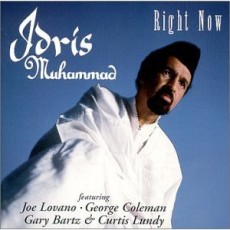
Idris Muhammad was born Leo Morris on November 13, 1939 In New Orleans, Louisiana. Learning to play drums in his youth, at fifteen he played on Fats Domino’s 1956 hit “Blueberry Hill” and by sixteen he turned professional, playing primarily soul and R&B during the early sixties. In 1965 he was a member of Lou Donaldson’s band, then went on to become the house drummer for Prestige Records from 1970-72.
As a sideman Idris would play with Johnny Griffin, Nat Adderley, George Benson, Paul Desmond, Pharoah Sanders, George Coleman and the Paris Reunion Band and record with Ahmad Jamal, Grant Green, Grover Washington, Jr., Hank Crawford, Benjamin Herman, Andrew Hill, Freddie Hubbard, Bobbi Humphrey, Gene Ammons, Rodney Jones and Houston Person among others.
Known for his funky playing style, as a leader he has recorded everything from post-bop to dance music for such labels as Prestige, Kudu, Fantasy, Theresa, and Lipstick. He changed his name in the 1960s upon his conversion to Islam and is endorsed by Istanbul Agop cymbals. Drummer Idris Muhammad continues to compose, record and perform.
More Posts: drums
Daily Dose Of Jazz…
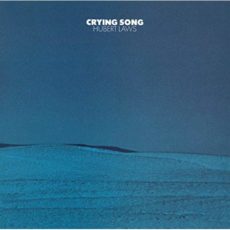
Hubert Laws was born November 10, 1939 in the Studewood section of Houston, Texas, the second of eight children. He grew up across the street from a honky-tonk called Miss Mary’s Place where his grandfather played harmonica and his mother, a pianist, played gospel music. He began playing flute in high school after volunteering to substitute for the school orchestra’s regular flutist. Becoming adept at jazz improvisation he played in the Houston-area jazz group the Swingsters, which eventually evolved into the Modern Jazz Sextet, the Night Hawks, and The Crusaders. At age 15, he was a member of the early Jazz Crusaders while in Texas from 1954–60. Multi-talented, he also played classical music during those years.
A scholarship to Juilliard School of Music in 1960 saw him studying music in the classroom and with master flutist Julius Baker. Laws went on to play with both the New York Metropolitan Opera Orchestra (member) and the New York Philharmonic Orchestra during the years 1969–72. In 971 he recorded renditions of classical compositions by Fauré, Stravinsky, Debussy, and Bach on the CTI album Rite of Spring with strings and enlisted the talents of Airto Moreira, Jack DeJohnette, Bob James, and Ron Carter.
During his years at Juilliard he played flute with Mongo Santamaría and began recording as a bandleader for Atlantic in 1964, releasing the albums The Laws of Jazz, Flute By-Laws, and Laws Cause. He has worked with In the Seventies he can also be heard playing tenor saxophone on some recordings.
The 1980’s saw the minor hit Family on CBS Records getting played on many UK soul radio stations. In the 1990s Hubert resumed his career, recording with opera singers Kathleen Battle and Jessye Norman. His albums on the Music Masters Jazz label—My Time Will Come in 1990 and Storm Then Calm in 1994 show a return to his old form of his early 1970s albums.
Over the course of his career he also recorded with Herbie Hancock, McCoy Tyner, Nancy Wilson, Quincy Jones, Paul McCartney, Paul Simon, Aretha Franklin, Ella Fitzgerald, Sarah Vaughan, Lena Horne, Leonard Bernstein, James Moody, Jaco Pastorius, Sérgio Mendes, Bob James, Carly Simon, George Benson, Clark Terry, Stevie Wonder, J. J. Johnson, The Rascals, Morcheeba Ashford & Simpson, Chet Baker, George Benson, Moondog, his brother Ronnie, Gil Scott-Heron, among others, and was a member of the New York Jazz Quartet. .
Laws has been honored with the Lifetime Achievement Awards from the National Flute Association and the National Endowment for the Arts in the field of jazz, as well as a recipient of the NEA Jazz Masters Award and three Grammy nominations. Flautist and tenor saxophonist Hubert Laws continues to compose, record and perform.

From Broadway To 52nd Street
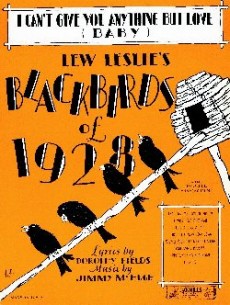
It’s now May 9, 1928 and the crowd is anxiously awaiting the rise of the curtain in the Liberty Theatre to witness The Blackbirds of 1928 – the first of four American editions incorporating a series of revues with Black casts produced by Lew Leslie in London and New York. This revue starred Bill “Bojangles” Robinson, Adelaide Hall and Aida Ward with music composed by Jimmy McHugh and Dorothy Fields. This first offering ran for 518 performances and gave the world the classic standard “I Can’t Give You Anything But Love”
The Story: The shows, relatively simple in mounting, emphasized song and dance and the small amount of comedy present represented the stereotypical black humor of the era.
Jazz History: One may wonder where the name “speakeasy” originated. Well it is said that the term comes from a patron’s manner of ordering alcohol without raising suspicion – a bartender would tell a patron to be quiet and “speak easy”. Though an integral part of Prohibition, the term predates the era by some thirty years. Samuel Hudson, a newspaperman, said he heard the word used for the same purpose in Pittsburgh in the 1880’s by an old Irish woman who sold liquor without a license.
Sponsored By
www.whatissuitetabu.com
More Posts: broadway
Daily Dose Of Jazz…
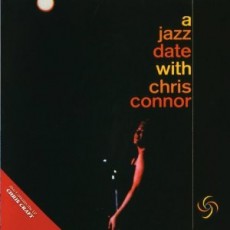
Chris Connor was born Mary Loutsenhizeron November 8, 1927 in Kansas City, Missouri. Her mother died when she was thirteen and her older sister finished raising her. She studied 8 years through junior and high school and became proficient clarinetist. She first sang publicly in 1945, performing “Amor” at the Jefferson City Junior College’s graduation.
Having been well received Chris decided to pursue a singing career full-time, initially working around Kansas City. Her first professional job was with the University of Missouri college band. Moving between local bands from 1946–47; in 1948 she moved to New York City, struggled to acquire work, finally becoming a member of the Claude Thornhill’s vocal group “The Snowflakes”. During her time with the Snowflakes, Connor recorded “There’s A Small Hotel” and “I Don’t Know Why”. She joined Jerry Wald’s big band and recorded more prolifically with songs like “Cherokee” and “Pennies From Heaven”.
Nearing one of her sporadic engagement departures June Christy recommended Connor to Stan Kenton and subsequent recording of Jeepers Creepers, If I Should Lose You, I Get A Kick Out Of You and All About Ronnie, which would become her signature song. Tired of touring by 1953 she left Kenton, she returned to New York, found a manager who got her work at Birdland that eventually landed her a recording contract at Bethlehem Records. Her solo career took flight and a succession of successful albums followed. She moved to much bigger Atlantic label, becoming the first white female signed. She worked with such jazz musicians like Kenny Burrell, Herbie Mann, Lucky Thompson, Hank Jones, Doc Severinsen, Oscar Pettiford and others.
Chris had a long and prolific career through the Sixties and Seventies recording for FM, ABC, Paramount, JVC, Stanyan, Sony Japan, Progressive and Japanese Lobster Record labels. She made her final two recordings in the early 2000s for HighNote Records. Vocalist Chris Connor died on August 29, 2009, from cancer at age 81.

More Posts: vocal