

Daily Dose Of Jazz…
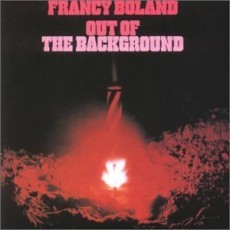
Francy Boland was born François Boland on November 6, 1929 in Namur, Belgium. He first gained notice in 1949 and worked with Belgian jazz greats like Bobby Jaspar. In 1955 he joined Chet Baker’s quintet before moving to the US where he began arranging for Count Basie, Benny Goodman, Woody Herman and Dizzy Gillespie.
Boland set up an octet with drummer Kenny Clarke before returning to Europe and becoming Kurt Edelhagen’s chief arranger. In 1961, based around a rhythm section featuring Clarke, Jimmy Woode and himself, he founded The Kenny Clarke-Francy Boland Big Band, which rapidly became one of the most noted Big Bands assembled outside the United States. A decade later in 1972 the band broke up and he mainly concentrated on composing.
Francy primarily lived in Switzerland, from 1976 wrote musical arrangements for Sarah Vaughan among others, and played as a sideman with Johnny Griffin. He was also part of One World One Peace, an effort involving Pope John Paul II. He recorded some three-dozen albums and Carola covered his song “Just Give Me Time” in 1966,
Belgian composer and pianist Francy Boland passed away on August 12, 2005 in Geneva, Switzerland.

More Posts: piano
Daily Dose Of Jazz…
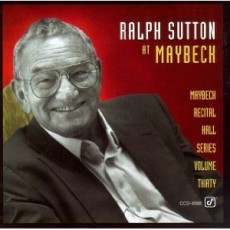
Ralph Earl Sutton was born on November 4, 1922 in Hamburg, Missouri. A stride pianist in the tradition of James P. Johnson and Fats Waller, he had a stint as a session musician with Jack Teagarden’s band before joining the Army during World War II.
After the war, he played at various venues in Missouri, eventually ending up in New York City at Eddie Condon’s club in Greenwich Village. Relocating to San Francisco in 1956, Sutton recorded several albums with Bob Scobey’s Dixieland band.
Ralph recorded for Riverside and Arbors Record labels as a leader and played and recorded with Johnny Varro, Ruby Braff and Dick Cary as a sideman. From the 1960s onward, he worked mostly on his own up until the time of his death on December 30, 2001 in Evergreen, Colorado. The following year pianist Ralph Sutton was inducted into the Big Band and Jazz Hall of Fame.

More Posts: piano

From Broadway To 52nd Street
Two days after Christmas in 1927 Showboat opened at the Ziegfeld and ran for five hundred and seventy-two performances. The music was composed by Jerome Kern and Oscar Hammerstein and rendered just jazz classics as Can’t Help Lovin’ Dat Man and Ol’ Man River. The show starred Jules Bledsoe, Aunt Jemima, Helen Morgan, Charles Winninger, Howard Marsh, Sammy White, and Norma Terris.
The Story: Showboat is a tale set on a Mississippi River gambling boat run by Cap’n Andy Hawks and his irritable wife Parthy and their ingenuous daughter Magnolia. The prominent roles of black servants are in the characters Queenie and Joe and the leading actress in the show, Julie, is discovered to be of mixed heritage. Intrigue enters through marriage, gambling, abandonment, alcoholism sets the characters on a spiral downward but one triumphs in the end.
Broadway History: Broadway was originally the Wickquasgeck Trail, carved into the brush destination of Manhattan by its Native American inhabitants. This trail originally snaked through swamps and rocks along the length of Manhattan Island. Upon the arrival of the Dutch, the trail soon became the main road through the island from Nieuw Amsterdam at the southern tip. The Dutch explorer and entrepreneur David de Vries gives the first mention of it in his journal for the year 1642 – “the Wickquasgeck Road over which the Indians passed daily”.
The Dutch named the road “Heerestraat“. In the mid-eighteenth century, part of Broadway in what is now lower Manhattan was known as Great George Street. In the 18th century, Broadway ended at the town commons north of Wall Street, where traffic continued up the East Side of the island via Eastern Post Road and the West Side via Bloomingdale Road. The western Bloomingdale Road would be widened and paved during the 19th century, and called “The Boulevard” north of Columbus Circle. On February 14, 1899 the name “Broadway” was extended to the entire Broadway/Bloomingdale/Boulevard Roads.
Sponsored By

www.whatissuitetabu.com
More Posts: broadway
Daily Dose Of Jazz…
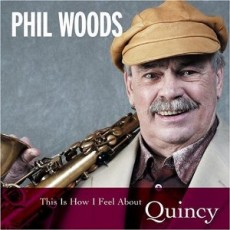
Phil Woods was born Philip Wells Woods on November 2, 1931 in Springfield, Massachusetts. He studied music with his great influence Lennie Tristano, at the Manhattan School of Music and at The Julliard School.
After moving to France in 1968, Phil led the avant-garde jazz group The European Rhythm Machine, and then returned to the United States in 1972 and unsuccessfully attempting to establish an electronic group formed a quintet, which is still performing with some changes of personnel.
Although Woods is primarily a saxophonist he is also a fine clarinet player and solos can be found scattered through his recordings. His pop credits include the alto solos on Billy Joel’s Just The Way You Are, Steely Dan’s Doctor Wu and Paul Simon’s Have A Good Time.
Phil has worked with the likes of Manny Albam, Kenny Burrell, Gary Burton, Ron Carter, Lou Donaldson, Bill Evans, Art Farmer, Dizzy Gillespie. Stephane Grappelli, Milt Jackson, Quincy Jones, Mundell Lowe, the Modern Jazz Quartet, Thelonious Monk, Oliver Nelson, Lalo Schifrin, Shirley Scott, Clark Terry and Ben Webster among others.
He has amassed 34 sessions as a sideman and nearly four-dozen albums as a leader and has been nominated for seven Grammy Awards and won one for Images: “Best Large Jazz Ensemble Performance”, and three for “Best Instrumental Jazz Performance, Individual or Group” for Live from the Show Boat, More Live, and At the Vanguard.
His 2005 documentary film “A Life in E Flat” – Portrait of a Jazz Legend” offers an intimate portrait of Woods during a recording session of the Jazzed Media album This is How I Feel About Quincy. In 2007, Phil received a “Jazz Master” award from the National Endowment of the Arts. Saxophonist, clarinetist and composer Phil Woods was married to Chan Parker, the widow of Charlie Parker, until her death in 1999. He continued to perform, record and tour until his passing on September 29, 2015 in East Stroudsburg, Pennsylvania.

Daily Dose Of Jazz…
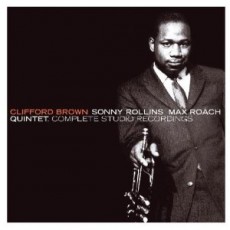
Clifford Brown was born on October 30, 1930 into a musical family in Wilmington, Delaware. Organized into a vocal quartet with three of his youngest brothers buy his father, by age ten he started playing trumpet at school after becoming fascinated with the shiny trumpet his father owned. By age thirteen, he had his own trumpet and was taking private lessons.
Junior year in high school he received lessons from Boysie Lowrey, played in a jazz group that Lowery put together, made trips into Philadelphia while earning a good education from Howard High. He briefly attended Delaware State University as a math major, before switching to Maryland State College that had a more vibrant musical environment. He played in the fourteen-piece, jazz-oriented, Maryland State Band.
In June of 1950, he was seriously injured in a car accident and during his yearlong hospitalization Dizzy Gillespie visited the young trumpeter and pushed him to pursue his musical career. Limited to the piano for months due to his injuries Clifford never fully recovered and would routinely dislocate his shoulder for the rest of his life. However, he quickly became one of the most highly regarded trumpeters in jazz.
Brownie, as he was affectionately called had a sound that was warm and round, and notably consistent across the full range of the instrument. He could articulate every note, even at very fast tempos which seemed to present no difficulty to him; serving to enhance the impression of his speed of execution. He had a highly developed sense of harmony, delivered bold statements through complex chord changes of bebop harmony and fully expressed himself in a ballad.
He performed and recorded with Chris Powell, Tadd Dameron, Lionel Hampton and Art Blakey before forming his own group with Max Roach. The Clifford Brown & Max Roach Quintet was a high water mark of the hard bop style with pianist Richie Powell, tenor saxophonist Harold Land, Teddy Edwards and Sonny Rollins throughout the tenure of the group.
Clifford never touched drugs and had no fondness for alcohol, however his clean living would not save him from his tragic death on the rainy night of June 26, 1956 due to an auto accident on the Pennsylvania Turnpike. That night band member Richie Powell and his wife Nancy would also lose their lives.
At age 25 trumpeter Clifford Brown would leave behind only four years of recordings, nonetheless, he influenced later jazz trumpet players like Donald Byrd, Woody Shaw, Lee Morgan, Booker Little, Freddie Hubbard, Valery Ponomarev, Wynton Marsalis and many others. His compositions “Joy Spring” and “Daahoud” are jazz standards. He won the Down Beat critics’ poll for the “New Star of the Year” in 1954; and was inducted into the Down Beat “Jazz Hall of Fame” in 1972 in the critics’ poll.

More Posts: trumpet