

Daily Dose Of Jazz…
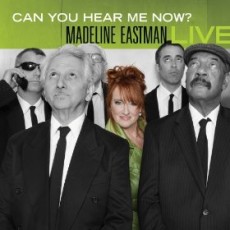
Madeline Eastman was born June 27, 1954 in San Francisco, California. It wasn’t until she turned 18 while watching Lady Sings The Blues that she became enchanted with jazz singing. Listening to Miles Davis’ mid-‘60s quintet and the vocals of Ella Fitzgerald and Sarah Vaughan but gleaned her greatest inspiration from Carmen McRae.
In 2004, Ms. Eastman won 3rd place in the Down Beat Reader’s Poll “Best Female Jazz Vocalist” and was recognized in Down Beat Magazine’s International Critics Poll as “Talent Deserving Wider Recognition.” Eastman has long been heralded for her vocal gifts, interpretive savvy, and irrepressible sense of adventure.
Splitting her time between touring and teaching at Stanford Jazz Workshop and being named Department Chair of Jazz Vocal Studies at the Jazzschool in Berkeley, California, Madeline has performed in Asia and Europe and major clubs in the U.S. such as Yoshi’s, Jack London Square, New York nightclubs and festivals like the Cotati, Monterey and Glasgow.
She has released five CD’s on her own Mad Kat label that she co-founded with vocalist Kitty Margolis and has recorded with such luminaries as Cedar Walton, Kenny Barron, Phil Woods, Rufus Reid and Tony Williams. Vocalist Madeline Eastman continues to record and perform in her bold and original interpretations of the jazz canon and lively onstage persona.

Inspire A Young Mind
More Posts: vocal
Daily Dose Of Jazz…
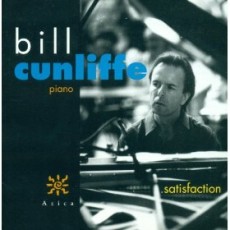
Bill Cunliffe was born June 26, 1956 in Andover, Massachusetts. His musical introduction began as a child listening to his mother play piano and listening to Sixties and Seventies music, especially the jazz oriented music.
Attending Phillips Academy he played in rock and roll bands, spent several years at Wesleyan University, heard an Oscar Peterson record and overnight converted to jazz. Graduating from Duke University he received his masters from Eastman School of Music where he studied with Mary Lou Williams.
Over the course of his career taught music at Central State University at Wilberforce, Ohio, toured as pianist and arranger with the Buddy Rich Big Band, worked with Frank Sinatra, played piano in various hotels and wrote jingles for several music production houses. A move to Los Angeles gave him the opportunity to work with such jazz notables as Ray Brown, Joe Henderson, Freddie Hubbard, Benny Golson and James Moody and joined the Clayton Brothers band.
Pianist and composer Bill Cunliffe, has received several Emmy, Grammy and Down Beat awards, has written several books on jazz, has delved into the music of Latin America and Brazil and in between recording and performing, he teaches at California State University.
Give A Gift Of Jazz – Share
Daily Dose Of Jazz…
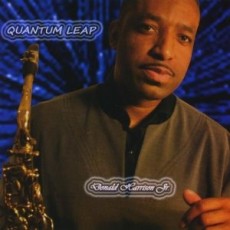
Donald Harrison, Jr. was born June 23, 1960 in New Orleans, Louisiana. He studied at the New Orleans Center for Creative Arts, and then went on to study at Berklee College of Music. In the 80s he became a Jazz Messenger, played with Roy Haynes, Jack McDuff, Terence Blanchard and Don Pullen, and was part of the re-formed Headhunters band in the Nineties.
By1991 Don had recorded “Indian Blues” capturing the sound and culture of New Orleans’ Congo Square in a jazz context and by mid-decade created the “Nouveau Swing” jazz style, merging the swing beat with many of today’s popular dance styles of music as well as those prominent from his cultural experiences in his hometown.
Harrison has performed in the smooth jazz arena, is a producer, singer and rapper in the traditional Afro-New Orleans Culture and hip-hop genres with his group, The New Sounds of Mardi Gras and is the Big Chief of the Congo Nation Afro-New Orleans Cultural Group that keeps alive the traditions of Congo Square.
Not limited by his music crossing genres in his compositions and playing, Don has created large orchestral pieces, was featured in Spike Lee’s HBO documentary “When The Levees Broke”, directed the New Jazz School for the Isidore Newman School, is the director of Tipitina’s Intern Program and has nurtured a number of young musicians including his nephew and Grammy-nominated trumpeter Christian Scott, Mark Whitfield, Cyrus Chestnut, Christian McBride and the Notorious B.I.G.
Give The Gift Of Knowledge
More Posts: saxophone
Daily Dose Of Jazz…
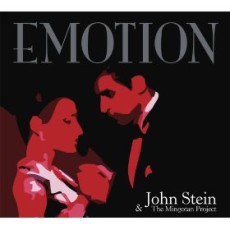
John Stein, born on June 19, 1949, was raised in Kansas City, Missouri and took up the guitar at a very early. His was musically educated on the instrument at Berklee College of Music, where he now holds the position of associate professor.
Stein collaborates with Boston hitters Bill Pierce, Kenneth Weinberger, John LaPorta and Bob Freedman but has graced stages with David “Fathead” Newman, Lou Donaldson, Dr. Lonnie Smith, and Idris Muhammad.
John has published educational columns in Just Jazz Guitar Magazine, focusing on composition and arranging for jazz guitar. He has published arranging materials in a book titled Berklee Jazz Standards For Solo Guitar, as well as his compositional materials into two books. Composing Blues For Jazz Performance, and Composing Tunes For Jazz Performance.
He has also performed in Europe, conducting tours in Germany, France, Switzerland Brasil and the States. As a mainstay on the jazz circuit, guitarist John Stein continues to record, perform and tour with his compositions and performances covering a range of jazz including blues, bebop, bossa nova and swing.
Give A Gift Of Jazz – Share
More Posts: guitar
Daily Dose Of Jazz…
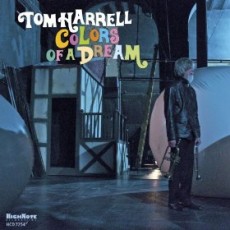
Tom Harrell was born on June 16, 1946 in Urbana, Illinois but by 5 was growing up in San Francisco. He started playing trumpet at eight and within five years, started playing gigs with local bands. Graduating from Stanford University with a music composition degree, he joined Stan Kenton’s orchestra, touring and recording with them throughout 1969.
After leaving Kenton, the post-bop trumpeter played with Woody Herman, Azteca, Horace Silver, the Sam Jones-Tom Harrell Big Band, the Lee Konitz Nonet, George Russell and the Mel Lewis Orchestra. Through the ‘80s he became a pivotal member of the Phil Woods Quintet making seven albums with the group.
Harrell is also plays flugelhorn and is a composer and arranger who has collaborated and recorded albums with Bill Evans, Dizzy Gillespie, Ronnie Cuber, Bob Brookmeyer, Lionel Hampton, Bob Berg, Bobby Shew, Joe Lovano, Charlie Haden’s Liberation Orchestra, Art Farmer, Charles McPherson and Kathleen Battle among others.
Since 1989 Harrell has led his own groups, usually quintets but has expanded ensembles such as chamber orchestra with strings and big bands. He has appeared at virtually every major jazz club and festival venues, and recorded under his own name for such record labels as RCA, Contemporary, Pinnacle, Blackhawk, Criss Cross, Steeplechase, Chesky and HighNote Records.
The Grammy-nominated artist has arranged and composed for Carlos Santana, Arturo O’Farrill, Metropole Orchestra and other big bands as well as his compositions being recorded by Ron Carter, Kenny Barron, Tom Scott, Chris Potter, Steve Kuhn and Hank Jones to name a few. In recent years he has formed and recorded with piano-less sextet “Colors Of A Dream” and piano-less quartet TRIP.
Despite his well-documented schizophrenia, Tom Harrell has successfully coped with the illness through medication and has become an influential figure in the jazz world. Throughout his career he has won numerous awards and grants, including multiple Trumpeter of the Year awards from Down Beat magazine, SESAC Jazz Award, BMI Composers Award, and Prix Oscar du Jazz. He has amassed a recorded discography of over 260 albums and continues to actively compose, record and tour extensively around the world.
Put A Dose In Your Pocket
More Posts: arranger,composer,flugelhorn,trumpet