

Daily Dose Of Jazz…
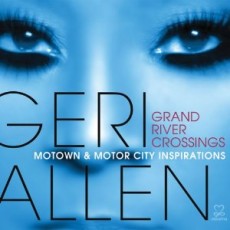
Geri Allen was born on June 12, 1957 in Pontiac, Michigan and received her early jazz education at Cass Technical High School in Detroit and the Jazz Development Workshop under the mentorship of Marcus Belgrave. In 1979 she graduated fro Howard University with a jazz studies degree, moved to New York and studied with Kenny Barron. She went on to get a degree in ethnomusicology from the University of Pittsburgh, returned to New York and joined the Brooklyn based M-Base crowd, recording several albums with Steve Coleman, beginning in 1985.
Geri’s 1984 debut album “The Printmakers” showcased the pianist’s more avant-garde tendencies, followed by “Etudes” and “Twenty-One” in 1995 in which she was the first recipient of Soul Train’s Lady of Soul Award for jazz album of the year. She has played with a luminous list of musicians not the least Ron Carter, Tony Williams, Charlie Haden, Anthony Cox, Betty Carter, Ornette Coleman, Jack DeJohnette, Mary Stallings and Charles Lloyd.
Geri Allen currently teaches as Associate Professor of Jazz Piano & Improvisation Studies at the University of Michigan as well as recording and touring with Charles Lloyd; and in 2007 participated in the documentary film titled “Live Music, Community & Social Conscience” that looks at how music connects us to our humanity, and to each other regardless of borders, politics, culture economics, or religion. She was the 2008 recipient of a Guggenheim Fellowship.
Allen has received many awards such as the “African-American Classical Music Award”, “A Salute to African-American Women: Phenomenal Woman”, nominations in 2011 for the NAACP Image Award for Best Jazz Album, “Geri Allen & Timeline Live” and for both The 10th Annual Independent Music Awards for “Live Performance Album” and for “Best Jazz Pianist”, by the Jazz Journalists Association.
As an educator Geri has taught Jazz & Contemporary Improvisation at the School Of Music Theatre & Dance, at the University Of Michigan and was a curator in New York City at the STONE. Since 2013 she’s been teaching at her alma mater, the University of Pittsburgh, as an Associate Professor of Music and as the Director of the Jazz Studies Program.
Pianist Geri Allen continued to perform, tour and record until she passed away on June 27, 2017, two weeks after her 60th birthday in Philadelphia, Pennsylvania after losing her battle with cancer..

Inspire A Young Mind
More Posts: piano
Hollywood On 52nd Street
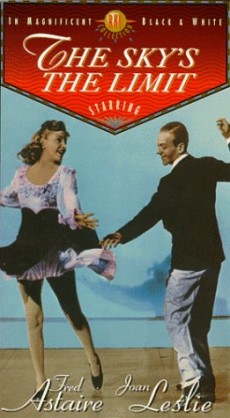
My Shining Hour and One For My Baby (And One More For The Road) are from a 1943 musical comedy movie titled “The Sky’s The Limit”. Harold Arlen composed the music and Johnny Mercer wrote the lyrics. It starred Fred Astaire and Joan Leslie.
My Shining Hour was introduce by Sally Sweetland and was nominated for an Academy Award for Best Song. It is believed that the opening line “this will be my shining hour” to have been a reference to Winston Churchill’s famous rallying call to British citizens during the war: “This will be our finest hour”.
One For My Baby (And One For More The Road) took two and a half days to shoot, after seven days of full set rehearsal. After a drunken rendition of the song, he furiously tap dances up and down the bar, pausing only to smash stacked racks of glasses and a mirror. The number was first performed in the film by Fred Astaire but popularized by Frank Sinatra.
Sponsored By

www.whatissuitetabu.com
Daily Dose Of Jazz…
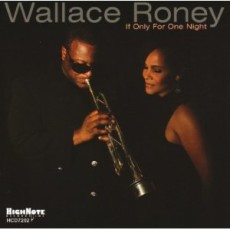
Wallace Roney was born May 25, 1960 in Philadelphia, Pennsylvania and at the age of 4 it was discovered he had perfect pitch. He began his musical and trumpet studies at the Settlement School of Music, then from the age of 7 studied with Sigmund Herring of the Philadelphia Orchestra and under the watchful eye of Eugene Ormandy was regularly presented at the Settlement recitals with the Philadelphia Brass Ensemble.
Having already made his recording debut at 14 by the time he entered the Duke Ellington School of the Arts in Washington, D.C., Wallace made his mark in D.C. as a gifted local performer by his graduation. He studied with Langston Fitzgerald of the Baltimore Symphony, attended Howard University and Berklee College of Music, took lessons from Clark Terry and Dizzy Gillespie.
Wallace studied with Miles Davis from 1985 until his death in ’91 and credits Miles as having helped to challenge and shape his creative approach to life as well as being his music instructor, mentor and friend and holds the distinction of being the only trumpet player Davis ever personally mentored.
With all of his skills and early accomplishments, Roney early career was bleak, bordering on homelessness, until he got a call to tour with drummers Tony Williams and Art Blakey. This shot in the arm culminated in him becoming one of the most in-demand trumpeters on record, movie and commercial recording sessions. In 1979 and again in 1980, Wallace Roney won the Down Beat Award for Best Young Jazz Musician of the Year. In 1989, and again in 1990, Wallace won Down Beat Magazine’s Critic’s Poll for Best Trumpeter to Watch.
He has played with Herbie Hancock, Ron Carter, Wayne Shorter, Elvin Jones, Jay McShann, Walter Davis Jr., Sonny Rollins and Curtis Fuller to name the short list and has recorded on over 250 sessions by the time he turned 40. The hard bop and post bop trumpeter Wallace Roney continued to perform, record and tour until he passed away at age 59 from complications arising from COVID~19 on March 31, 2020 in Paterson, New Jersey.
Give A Gift Of Jazz – Share
More Posts: trumpet
Daily Dose Of Jazz…
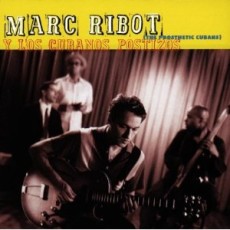
Marc Ribot was born on May 21, 1954 in Newark, New Jersey and worked extensively as a session musician. His early sessions with Tom Waits helped define Waits new musical direction in 1985.
His own work has touched on many styles, including n wave, free jazz and Cuban music. Ribot’s first two albums featured The Rootless Cosmopolitans, followed by an album of works by Frantz Casseus and Arsenio Rodriguez. Further releases found him working in a variety of band and solo contexts including two albums with his self-described “dance band”, Marc Ribot y Los Cubanos Postizos.
His relatively limited technical facility is due to learning to play right-handed despite being left-handed. He currently performs and records with his group Marc Ribot’s Ceramic Dog. Marc’s studio work involves several tracks accompanying the legendary pianist McCoy Tyner’s “Guitars” project. He has performed and recorded with Jack McDuff, John Scofield, Wilson Pickett, Cibo Matto, Bela Fleck, Derek Trucks, Madeline Peyroux, Medeski Martin & Wood, Elton John and many others.
He has toured Europe with his band Sun Ship, had a biographical documentary film called the The Lost String and has also judged the 8th Annual Independent Music Awards to support indie careers in music. He has twenty-one albums as a leader, a filmography that includes five and a biographical documentary about him titled The Lost String. Guitarist Marc Ribot also plays banjo, trumpet, cornet and sings and continues to perform, record and tour.
Dose A Day-Blues Away
Daily Dose Of Jazz…
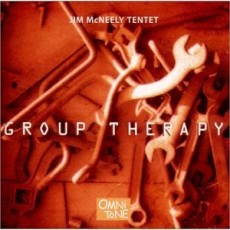
Jim McNeely was on born May 18, 1949 in Chicago, Illinois. After graduating from the University of Illinois he moved to New York City in 1975. By ’78 he joined the Thad Jones/Mel Lewis Big Band, spending six years as a featured soloist.
In 1981 Jim joined Stan Getz’s quartet and for the next four years served as pianist/composer. The early part of the ‘90s he held the piano chair with the Phil Woods Quintet, and from 1996 to the present day McNeely holds the position as pianist/composer-in-residence for the Vanguard Jazz Orchestra.
Jim has been the chief conductor for the Danish Radio Big Band in Copenhagen, Denmark, is currently artist-in-residence with the HR Big Band in Frankfurt, Germany and continues to appear as guest with many of Europe’s leading jazz orchestras such as The Metropole Orchestra in The Netherlands and The Stockholm Jazz Orchestra in Sweden.
The Grammy award winning jazz pianist, composer and arranger has recorded more than a dozen CDs under his own name, earning nine Grammy nominations between 1997 and 2006. In 2008, he was awarded a Grammy with the Vanguard Jazz Orchestra for their album Monday Night Live at the Village Vanguard.
Grammy-winning pianist Jim McNeely leads his own tentet, his own trio, and appears as soloist at concerts and festivals worldwide while serving on the faculties of The Manhattan School of Music, William Patterson University and is musical director of the BMI Jazz Composers Workshop.
Jazz Is Global – Share
More Posts: piano