

Daily Dose Of Jazz…
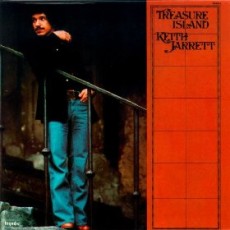
Keith Jarrett was born on May 8, 1945, in Allentown, Pennsylvania and had significant early exposure to music. He possessed absolute pitch and displayed prodigious musical talents as a young child. He began piano lessons just before his third birthday, and at age five he appeared on a TV talent program and by seven had given his first classical piano recital. During his teens he began leaning towards jazz, turned down classical training in Paris and attended Berklee College of Music
He started his career with Art Blakey and after his tenure as a Jazz Messenger moving on to play with Charles Lloyd and Miles Davis. Since the early 70s he has enjoyed a great deal of success in jazz, jazz-fusion, and classical music; as a group leader and a solo performer. His improvisations draw not only from the traditions of jazz but from other genres as well, especially Western classical music, gospel, blues, blues and ethnic folk music.
Jarrett has received the Polar Music Prize, the Leonie Sonning Music Prize, was inducted into the Down Beat Down Beat Hall of Fame, played with Jack DeJohnette, Charles Lloyd, Charlie Haden, Paul Motian, Dewey Redman, Airto Moreira, Palle Danielson and Jan Garbarek among others.
Jarrett’s compositions and the strong musical identities of the group members gave this ensemble a very distinctive sound. The quartet’s music is an amalgam of free jazz, straight-ahead post-bop, gospel music, and exotic, Middle-Eastern-sounding improvisations. He has played as a soloist, trio, returned also to classical music, incorporates vocalizations of grunts, squeals and tuneless singing. He continues to compose, record, perform and tour.
In 2003, Jarrett received the Polar Music Prize, the first (and to this day only) recipient not to share the prize with a co-recipient,[1] and in 2004 he received the Leonie Sonning Music Prize. In 2008, he was inducted into the Down Beat hall of Fame in the magazine’s 73rd Annual Readers’ Poll. He continues to tour and record.

Take A Dose On The Road
Daily Dose Of Jazz…
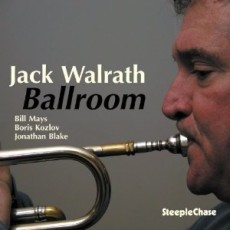
Jack Walrath was born on May 5, 1946 in Stuart, Florida and began playing the trumpet at the age of nine while living in Edgar, Montana. He graduated from Joliet High School in 1964 and attended the Berklee College of Music. Pursuing a composition diploma program instead of a full degree program, he concentrated specifically upon music classes. During his Berklee years he backed a number of R&B singers in the Boston and Cambridge areas, gigged with his fellow students and worked in the band Change with bassist Gary Peacock.
In 1969 Jack relocated to the West Coast, found work in the Los Angeles jazz scene, became a member of the band Revival, joined the West Coast Motown Orchestra, toured with Ray Charles and by the next year was back in New York City working with mainstream and Latin jazz bands. By 1974 he met and joined Charles Mingus’ quintet that broke new ground in free jazz and non-chordal improvisation. He continues the legacy working with Mingus Dynasty and the Charles Mingus Big Band.
Walrath has been a sideman for such luminaries as Miles Davis, Quincy Jones, Larry Willis, Bobby Watson, Hal Galper, Sam Rivers, Mike Longo, Elvis Costello, Richie Cole and others. He has worked with the WDR Big Band, the Jazz Tribe and the Charlie Persip Superband. He has led ensembles under the names of The Jack Walrath Group, Wholly Trinity, Hard Corps, The Masters of Suspense, and The Jack Walrath Quintet.
Post-bop jazz trumpeter Jack Walrath has amassed a catalogue of twenty-six albums as a leader and 28 as a sideman; has been nominated for a Grammy, received composition grants from the National Endowment for the Arts, has been commissioned to compose for symphony to solo piano and continues to conduct seminars, master classes, music camps and clinics around the world. He has also written an instruction book, 20 Melodic Jazz Studies for Trumpet, and is currently working on an autobiography, CD and record guide.
More Posts: trumpet
Daily Dose Of Jazz…
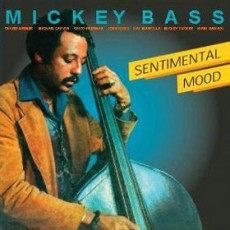
Mickey Bass was born in Pittsburgh, Pennsylvania on May 2, 1943. By the time he was nine years old he had just about every record that ‘Bird’ ever cut, not to mention living in an atmosphere that was permeated by ‘Dizzy Gillespie, Duke Ellington, Count Basie, Sarah Vaughan, Billie Holiday and Miles Davis.
1961 saw Bass matriculating through Howard University in an atmosphere hostile to jazz, failing along with classmates Harold Vick, Marion Brown and Charles Tolliver, due to the playing of jazz being forbidden on campus. Two years later he landed in New York City, getting his early breaks with Hank Mobley, Sonny Rollins and Bennie Green. His first session was with Lee Morgan on The Sixth Sense that included on of his compositions and arrangements of “Mickey’s Tune”.
As an educator from 1975 to 1978, Mickey taught Acoustic Bass & Jazz Improvisation at “The Ellington School of The Arts”, Washington, D.C. and Director of the Jazz Ensemble. He also taught in New York City for the Jazzmobile.
He has performed and recorded with John Coltrane, Charlie Parker, Freddie Hubbard, Art Blakey, Lee Morgan, Jackie McLean, Bobby Timmons, Gloria Lynne, Jimmy McGriff, Curtis Fuller, Hank Mobley, Billy Eckstine, Reuben Wilson, Chico Freeman and John Hicks among others. He led a sextet called The Cooperation, composed A Chant Blu, One For Trane, Meditation, Gayle’s Groove and Siempre Me Amor, and has cut three sessions as a leader for Chiaroscuro and Early Bird labels.
Hard bop bassist Mickey Bass, who was also an arranger and educator who also plays saxophone and has been active on the jazz scene for more than 40 years, continued to perform, compose and record until his transition on February 3, 2022.

More Posts: bass
Daily Dose Of Jazz…
Rodney Kendrick was born April 30, 1960 in Philadelphia, Pennsylvania and grew up in Miami, Florida where his parents moved soon after his birth. Growing up in a musical and Pentecostal church-going family, his mother is a gospel singer named Juet and his father is pianist James “Jimmy Kay” Kendrick, who worked with saxophonist Illinois Jacquet for seven years and played with saxophonist Sonny Stitt and Sam Rivers.
At eighteen Rodney turned professional, touring and playing keyboards with R&B and funk bands, traveling internationally with Harold Melvin & the Blue Notes, James Brown and George Clinton. Three years later Kendrick began to primarily focus on jazz and moved to New York in 1981. He played keyboards for Freddie Hubbard, Terence Blanchard, Stanley Turrentine, Clark Terry, J.J. Johnson and numerous others.
Studying with pianist Barry Harris, who remained his teacher and mentor for over 20 years, Kendrick cites Randy Weston and Sun Ra as influences. In the early Nineties he served as Abbey Lincoln’s musical leader for seven years. In 1994 he signed a contract with Verve Records and released his debut album “The Secrets of Rodney Kendrick”, and a year later his sophomore project “Dance World Dance”. Both recordings showcase his arranging skills as well as his compositions and feature Houston Person, Graham Haynes, Arthur Blythe and Bheki Mseleku among his guests.
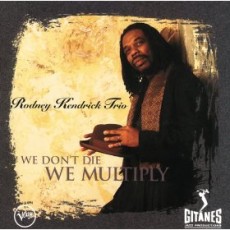
He went on to record his next album “We Don’t Die, We Multiply” with his wife Rhonda composing “Led Astray” and several tracks featuring saxophonist Dewey Redman. Rodney has produced several albums, including a solo piece titled “Thank You”, a duo-piano piece with his mentor Randy Weston, an album with his wife titled “Rhonda Ross Live: Featuring Rodney Kendrick”, as well as a project with his father, Jimmy Kay, titled “Black is Back”.
Rodney Kendrick, jazz pianist, bandleader, composer and producer who has been described as one who swings hard with a Monkish wit and drive, continues to perform, compose and record.
Give The Gift Of Knowledge
More Posts: bandleader,piano
Daily Dose Of Jazz…
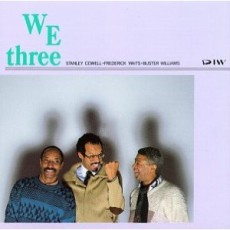
Freddie Douglas Waits was born on April 27, 1943 in Jackson, Mississippi. He played flute early on and majored in flute in at Jackson Street College but soon turned to drums as a profession. His earliest gigs were with blues artists including Memphis Slim and John Lee Hooker followed by performing soul music.
By 1962 Waits was in Detroit playing with the Jimmy Wilkins Orchestra, then the Johnny Winter band. A move to Los Angeles put him with the Gerald Wilson Orchestra before relocating to New York in the mid-‘60s. This period began some of his most important musical collaborations with Sonny Rollins, Andrew Hill, McCoy Tyner, Lee Morgan, Pharoah Sanders, Gene Harris and Max Roach.
Freddie was a founding member of M’Boom, the group Colloquim and during the Eighties played with Bill Dixon and Cecil Taylor. A respected sideman, he never led a recording session. However, he left a legacy of music along with his son, drummer Nasheet Waits.
Hard bop and post-bop drummer Freddie Waits passed away on November 18, 1989 in New York City.
Inspire A Young Mind